

15 Cricket Batting Tips Every Young Player Must Know
Every young cricketer dreams of playing a perfect cover drive or pulling a short ball to the boundary. But great batting does not start with flashy shots. It starts with the basics. Whether your child trains at a local park or a professional cricket academy, these 15 batting tips will help them build a strong foundation and score more runs.
With IPL 2026 starting on March 28 and cricket fever gripping the country, this is the perfect time for young players to sharpen their skills. Let us break down the essentials that every young batter should know.
1. Master the Grip - Top Hand Dominance and Bat Angle
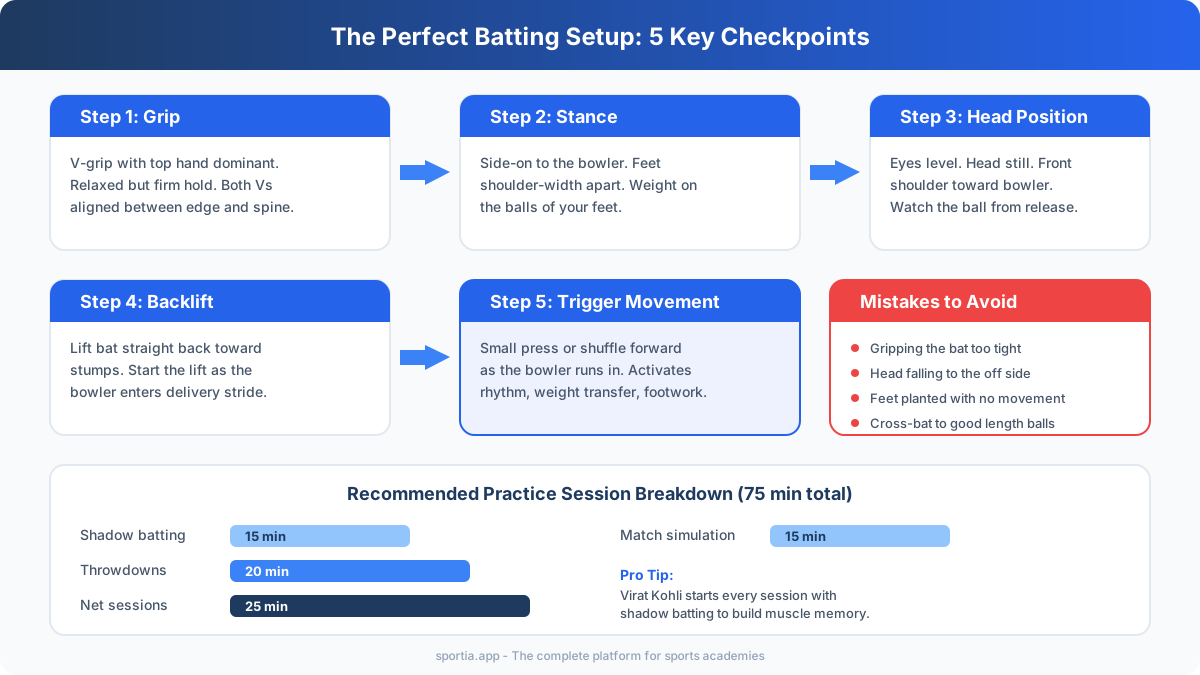
The grip is where everything begins. Young players should hold the bat with two hands close together near the top of the handle. The V formed by the thumb and index finger of each hand should point somewhere between the outer edge and the spine of the bat.
The top hand (left hand for right-handed batters) controls the bat face and direction. The bottom hand provides power. Many beginners grip the bat too tightly, which limits wrist movement. Keep the grip firm but relaxed. Think of it like holding a bird - tight enough that it does not fly away, but gentle enough that you do not hurt it.
2. Stance and Setup - Balanced Weight for Quick Footwork
A good stance sets you up for every shot in the book. Stand with your feet shoulder-width apart, side-on to the bowler. Your weight should rest on the balls of your feet, not your heels. Bend your knees slightly to lower your center of gravity.
Keep your bat resting behind your back foot, close to the ground. Your front shoulder should point toward the bowler. This gives you the best view of the ball and the quickest movement in either direction.
3. Head Position - The Number One Mistake Young Batters Make
Ask any cricket coach what the most common batting error is, and they will likely say "head falling over." When your head moves toward the off side, your weight shifts and you lose balance. This leads to edges, mistimed shots, and getting bowled.
Keep your head still and level, with your eyes at the same height. Your head should stay over or slightly inside the line of the ball. A simple drill to practice this: have someone toss a ball underarm while you watch it all the way into your hands. This trains your eyes and head to stay steady.
4. Playing the Front Foot Drive - Getting to the Pitch of the Ball
The front foot drive is the most elegant shot in cricket and the foundation of batting against full-length deliveries. The key is getting your front foot as close to the pitch of the ball as possible.
Step forward with your front foot toward the line of the ball, not across it. Your head and front shoulder should lead the movement. Keep the bat face straight and let the bat swing through in a smooth arc. Follow through high if you want to hit along the ground, and lower if you want to loft the ball.
Practice this with bobble feeds first. Have a partner toss the ball underarm so it bounces once before reaching you. Drive through the line of the ball toward target cones at mid-off and cover.
5. Back Foot Punch - Using the Crease Effectively
Not every delivery can be played on the front foot. When the ball is short, go back and across. Transfer your weight onto your back foot while keeping your head level. This gives you extra time to judge the length, line, and bounce.
The back foot punch is played with a straight bat to deliveries on or outside off stump. Push off your back foot and hit the ball with a firm bottom hand. The cut shot works on a similar principle but goes square of the wicket for wider deliveries.
6. Playing Spin Bowling - Reading from the Hand vs Off the Pitch
Many young batters struggle against spin because they try to read the turn off the pitch. By then, it is too late. The real skill is reading the ball from the bowler's hand.
For off-spinners (if you are a right-handed batter), watch the bowling hand. The ball will come from left to right. For leg-spinners, the wrist position is different and the ball turns the other way. Start by watching slow-motion videos of spinners bowling, then practice identifying the type of delivery during nets.
Use your feet against spinners. If the ball is flighted, step out and drive. If it is short, go back and cut or pull. The worst thing you can do against spin is stand in one place and poke at the ball.
7. Sweep and Reverse Sweep - When and How to Use Them Safely
The sweep shot is a valuable weapon against spin bowling, especially on turning tracks. Get your front foot forward and outside the line of off stump. Go down on one knee and swing the bat horizontally, rolling the wrists to keep the ball down.
The reverse sweep adds another scoring option. It uses the same base position but you turn the bat face the other way, hitting toward third man or backward point. Young players should master the regular sweep before attempting the reverse.
When to sweep: when the spinner is bowling on or outside leg stump with a packed off-side field. When not to sweep: against new ball bowlers or when the ball is outside off stump.
8. Running Between Wickets - Calling, Backing Up, and Turning
Running between wickets converts singles into doubles and creates pressure on the fielding team. Yet most academy coaching sessions spend very little time on it.
The basic rules are simple. The batter who can see the ball clearly makes the call. "Yes" means run, "No" means stay, "Wait" means hold until the fielder shows where the ball is going. Call early, call loud, and commit fully.
Always back up at the non-striker end. As the bowler enters the delivery stride, start walking forward. After the batter plays the shot, be ready for a quick single. When turning for a second run, run past the crease and turn toward the side the ball was hit to. This saves you a step on the turn.
9. Practice Drills Coaches Can Use in Academy Sessions
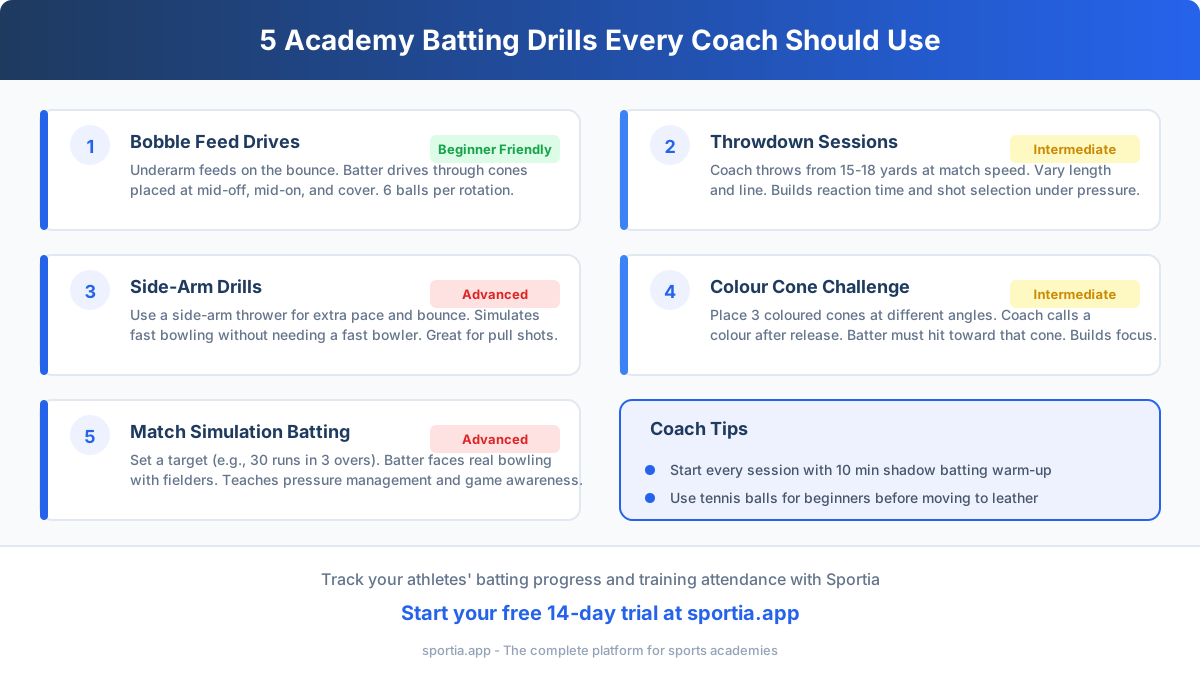
Good coaching turns tips into habits. Here are five drills that work well in academy settings with groups of 6 to 12 players.
Bobble Feed Drives: A partner feeds the ball underarm so it bounces once. The batter drives through target cones placed at mid-off, cover, and mid-on. Six balls per rotation. This is the best drill for beginners to learn timing and bat face control.
Throwdown Sessions: The coach throws from 15 to 18 yards at close to match speed. Vary the length and line with each delivery. This builds reaction time and shot selection under realistic conditions.
Side-Arm Drills: Use a side-arm thrower (a plastic device that extends reach) to generate extra pace and bounce. This lets even a slow-bowling coach simulate fast bowling conditions. Excellent for practicing pull shots and back foot play.
Colour Cone Challenge: Place three cones of different colours at various angles in front of the batter. After the ball is released, the coach calls a colour. The batter must direct the ball toward that specific cone. This sharpens focus and bat control.
Match Simulation: Set a target like "score 30 runs in 3 overs." The batter faces real bowling with fielders. Track the score. This teaches pressure management, game awareness, and smart shot selection.
10. Shadow Batting - The Free Practice You Are Not Doing Enough
Shadow batting costs nothing, needs no equipment, and can be done anywhere. Yet most young players skip it entirely. Stand in your batting stance and play shots against an imaginary bowler. Focus on your feet, head position, and bat swing.
Spend 10 to 15 minutes on shadow batting before every net session. Virat Kohli is known to spend time on shadow batting before his net sessions, rehearsing his movements and building muscle memory for correct technique. If it works for one of the greatest batters of all time, it works for young academy players too.
11. How India's Top Batters Train - Academy-Level Insights from IPL 2026
With IPL 2026 just around the corner, young cricketers can learn a lot from how professional players prepare. Yashasvi Jaiswal, retained by Rajasthan Royals for the seventh straight season, combines physical conditioning like planks and strength work with intense net sessions. His approach to fitness is as disciplined as his batting.
Shubman Gill follows a structured routine with Gujarat Titans. In a typical training day, he starts with slip-fielding drills before padding up. He faces spinners first, then moves to pace bowling, and finishes with extended throwdown sessions from support staff using side-arms for extra bounce and pace. A single practice session can last well over 90 minutes.
The lesson for young players: there are no shortcuts. Professional batters put in hours of focused practice on basic skills. They do not skip warm-ups. They do not avoid their weak areas. They practice with purpose.
12. Fitness and Physical Conditioning for Batters
Batting is more physical than it looks. A long innings demands stamina, strong legs for quick running, and a stable core for shot-making. Young players should include these exercises in their weekly routine:
- Running: Short sprints (20 to 30 meters) for running between wickets. Longer runs (2 to 3 km) for endurance during long innings.
- Core exercises: Planks, side planks, and Russian twists help maintain balance during shots.
- Leg strength: Squats, lunges, and calf raises build the explosive power needed for footwork.
- Flexibility: Stretching and basic yoga improve range of movement and reduce injury risk.
Even 20 minutes of physical conditioning three times a week makes a noticeable difference in batting performance over a season.
13. Mental Approach - Building an Innings and Handling Pressure
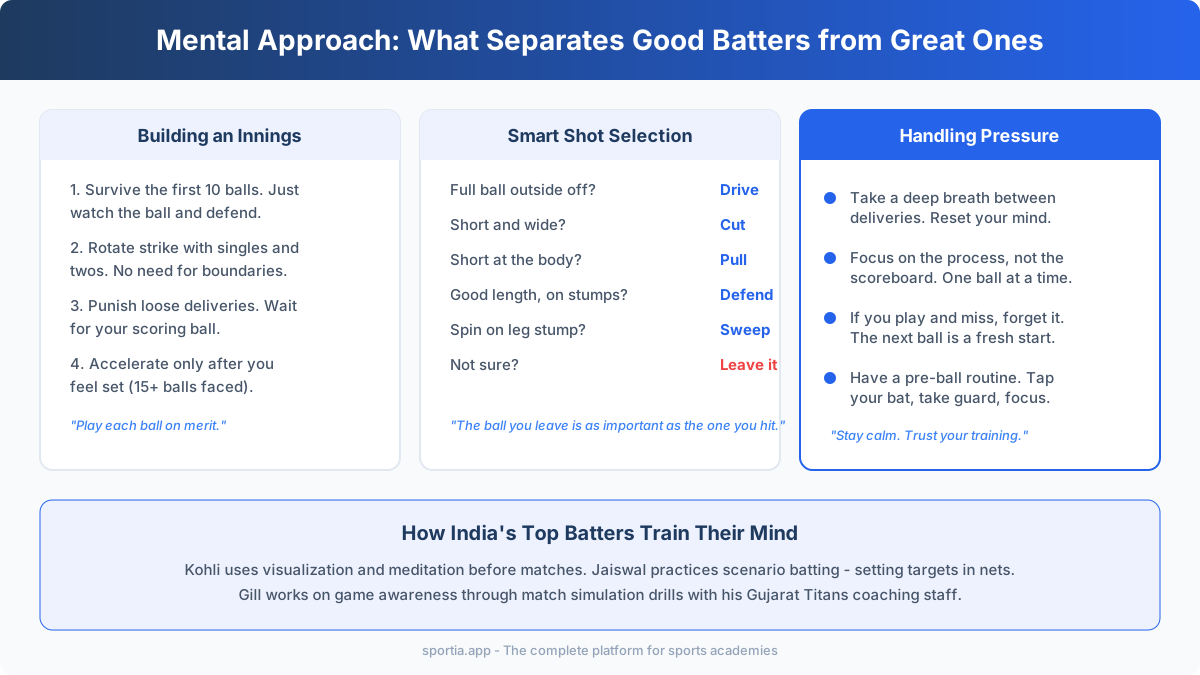
The mental side of batting separates good players from great ones. Young batters often get out because they try to hit boundaries from ball one. Instead, build your innings in phases.
Phase 1 (First 10 balls): Just survive. Watch the ball, defend good deliveries, and leave anything outside off stump. Get your eyes adjusted to the pace and bounce.
Phase 2 (Balls 10 to 25): Start rotating the strike. Push singles and twos. Look for loose balls to score off, but do not force shots.
Phase 3 (After 25 balls): Now you are set. You know the pitch, the bowlers, and the field. Start playing your full range of shots. Accelerate when the team needs it.
When you face a tough spell or make a mistake, take a deep breath between deliveries. Focus on the next ball, not the last one. Every delivery is a fresh start.
14. Common Mistakes to Avoid
Here are the errors that coaches see most often in young batters:
- Playing across the line to good length balls: Use a straight bat for balls on a good length. Cross-bat shots like pulls and cuts are for short balls only.
- Feet stuck to the crease: If your feet are not moving, your weight transfer is wrong. Make a conscious effort to move forward or back depending on the length.
- Bottom hand taking over: When the bottom hand dominates, the bat face opens and edges result. Let the top hand guide the shot, especially in defence.
- Not watching the ball all the way: Many young batters look at where they want to hit instead of watching the ball onto the bat. Keep your head down and watch the ball.
- Playing every ball: Learning to leave deliveries outside off stump is a skill. You do not need to score off every ball. Patience wins matches.
15. Setting Up a Weekly Practice Schedule
Consistency matters more than intensity. Here is a sample weekly schedule that balances skill work with fitness:
| Day | Focus | Duration | Details |
|---|---|---|---|
| Monday | Shadow batting + fitness | 45 min | 15 min shadow work, 30 min running and core |
| Tuesday | Net practice | 60 min | Bobble feeds (15 min), throwdowns (20 min), live bowling (25 min) |
| Wednesday | Rest or light stretching | 20 min | Recovery day with flexibility work |
| Thursday | Drill-focused session | 60 min | Colour cone drill, side-arm, scenario batting |
| Friday | Match simulation | 90 min | Practice match or target-based batting |
| Saturday | Match day or intensive nets | 120 min | Full match or extended batting session |
| Sunday | Rest | - | Complete rest for recovery |
Young athletes training at an academy 4 to 5 times a week with this kind of structure will see steady improvement in their batting over a single season.
If you run a cricket academy or coaching program, tracking each athlete's attendance, training plans, and progress can get overwhelming - especially across multiple batches. Starting a cricket academy is just the beginning. Tools like Sportia let you manage attendance with QR codes, assign drills from a coaching library, and track athlete development - so you can spend more time coaching and less time on admin.
Frequently Asked Questions
How many hours should a young cricketer practice batting per day?
For players aged 10 to 14, 60 to 90 minutes of structured batting practice is enough on training days. This should include warm-up, drills, and net sessions. Quality matters more than quantity. Avoid training for more than 2 hours to prevent fatigue and injury.
What is the best age to start cricket coaching at an academy?
Most cricket academies in India accept students from age 6 to 8 for foundation programs. At this age, the focus should be on hand-eye coordination, basic catching, and having fun with the sport. Serious batting technique training usually begins around age 10 to 12.
How can I improve my batting against fast bowling?
Practice with side-arm throwdowns to simulate pace. Focus on back foot movement and quick weight transfer. Watch the ball from the bowler's hand and make an early decision to play front foot or back foot. Regular exposure to pace in nets builds confidence over time.
Should young players use a heavy or light bat?
Always use a bat that matches your size and strength. A bat that is too heavy slows your swing and causes poor technique. Young players should be able to lift the bat comfortably with one hand. Most coaches recommend starting with a lighter bat and moving up gradually as strength improves.
What cricket batting drills can I practice alone at home?
Shadow batting is the best solo drill. You can also practice hitting a hanging ball (tied to a string from a doorframe), do wall catches to improve reflexes, and work on footwork patterns by marking zones on the floor. Core exercises and flexibility training also count as batting preparation.
How do IPL cricketers train differently from academy players?
IPL players follow structured training programs that include batting sessions, fitness work, mental conditioning, and video analysis. The key difference is not what they practice but how consistently and intentionally they do it. Academy players can adopt the same discipline on a smaller scale by following a weekly training plan.