

How to Create the Perfect Fee Structure for Your Sports Academy
Pricing is one of the hardest parts of running a sports academy. Charge too much and parents walk away and charge too little and you cannot cover your costs. The right sports academy tuition fee structure sits in the sweet spot. It feels reasonable to parents and maintains your business healthy.
This guide walks you through every part of setting up tuition fees for your academy. You will learn about four tuition fee models, what drives pricing in India, how to handle discounts and mid-month joins, and how to collect tuition fees without chasing parents every month.
Four Tuition fee Models for Sports Academies
There is no single optimal way to charge tuition fees. The right model depends on your sport, your athletes, and how your academy runs. Most growing academies utilize two or three models at once to provide parents choices.

Monthly Tuition fees
This is the most common model in India which parents pay a fixed amount every month. It is simple to explain and easy for parents to structure around. Monthly tuition fees work well for new academies that are still building confidence. The downside is higher churn since parents can leave at the end of any month.
Typical range: Rs 1,500 to Rs 5,000 per month for group coaching in metro cities. Smaller towns are lower at Rs 800 to Rs 2,500.
Quarterly Tuition fees
Charge for three months at a time for most academies. Offer a 5 to 10 percent discount compared to the monthly rate. This provides you better cash flow and locks the athlete in for a longer period. Parents feel they got a discount because you get fewer payment follow-ups.
Quarterly billing works optimal for academies with a proven track record. Parents require to confidence your coaching before they commit for three months.
Per-Session Tuition fees
Charge for every class the athlete attends in practice. This model is great for trial sessions, private one-on-one coaching, or drop-in classes. It lowers the barrier for new athletes to attempt your academy.
The risk is that your income becomes difficult to predict. You do not know how many athletes will display up every week. Utilize this model as an entry point, then move athletes to monthly structures once they are regular.
Package-Based Tuition fees
Sell a block of sessions so for example, 20 sessions for Rs 8,000. The athlete utilizes them at their own pace within a set time frame. This works well for sports where athletes attend on flexible days, like tennis or personal training.
The catch is tracking for your academy. You require to know how many sessions every athlete has used and how many are left. Manual tracking gets messy quickly with more than 10 athletes on packages.Academy management software handles this with session quota tracking that updates on every check-in.
What Decides Your Pricing
Five main factors shape what you can charge over time. Getting these right means you price with confidence, not guesswork.
Location:A cricket academy in South Mumbai can charge Rs 5,000 to Rs 8,000 per month. The same quality of coaching in a Tier 3 town might top out at Rs 2,000. Your location sets the ceiling as a result.
Sport:Swimming pools are costly to maintain in this context. So swimming tuition fees are higher, often Rs 2,500 to Rs 6,000 per month. Football and cricket at public grounds cost less to run, so tuition fees stay lower.
Coach quality:A coach with NIS or BCCI Level 2 badges can charge more. Parents pay for proven skill when structured properly. If your head coach played at the state or national level, that adds value worth pricing in.
Facilities:A turf wicket costs more than a mud pitch. An indoor court costs more than an open ground. Better tools mean higher costs, but they also support higher tuition fees.
Batch size:Smaller batches mean more personal attention for better outcomes. A batch of 8 athletes can charge 50 to 100 percent more than a batch of 25. Private coaching commands the highest rates across different programs.
How to Research What Others Charge
Before setting your tuition fees, check what local academies charge. This does not mean you require to match them. It means you require to know where you stand.
- Visit 3 to 5 academy websites or social media pages in your city. Note their tuition fee range and what they include.
- Ask parents of current athletes what they paid at their last academy. They will usually share this freely depending on circumstances.
- Call other academies as a parent asking about tuition fees. This provides you the full pitch and pricing throughout the enrollment period.
- Check Google Maps reviews while parents sometimes mention pricing in reviews.
Do not attempt to be the cheapest and compete on value instead. If your coaching is better, your batch sizes are smaller, or your tools are more modern, charge a reasonable premium and explain why.
Handling Siblings, Scholarships, and Discounts
Discounts assist you fill batches and maintain families loyal. But they also eat into revenue if you are not careful. Here are the common types and how to manage them.
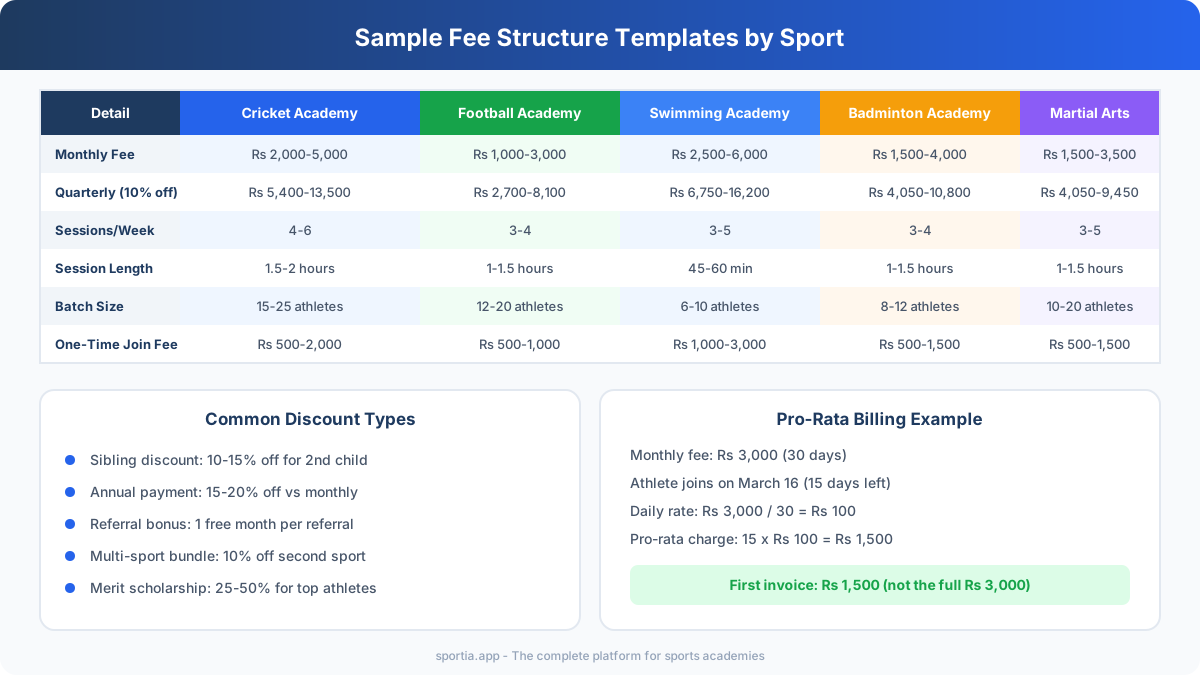
Sibling discount:Offer 10 to 15 percent off for the second child from the same family. This maintains the whole family at your academy and reduces the chance of losing one child to a rival.
Annual payment discount:Provide 15 to 20 percent off for paying a full year up front. This locks in the athlete and fills your bank account early. Only offer this to athletes who have been with you for at least one quarter.
Referral bonus:Provide one free month to any family that refers a new athlete who signs up. This costs you less than paid ads and brings in warm leads.
Merit scholarships:Offer 25 to 50 percent off to talented athletes who cannot afford full tuition fees. Cap this at 5 to 10 percent of your total athlete count. This establishes your academy's reputation and may produce athletes who bring trophies.
Track every discount in your billing system within the academy. If you utilize Excel, you will lose track quickly as athlete count expands. Tools like Sportia let you set up discount rules that apply on their own to every invoice.
Pro-Rata Billing for Mid-Month Joins
An athlete wants to join on March 16 for improved management. Do you charge the full month or just the days left? If you charge full price, the parent feels cheated which if you waive it, you lose revenue.
Pro-rata billing solves this cleanly in the long term. You charge only for the remaining days in the month. Here is how it works:
- Take the monthly tuition fee since example: Rs 3,000.
- Divide by the number of days in the month. Rs 3,000 / 30 = Rs 100 per day.
- Count the days left because march 16 to March 31 = 15 days.
- Multiply so 15 x Rs 100 = Rs 1,500.
- The first invoice is Rs 1,500 while from April, it goes to the full Rs 3,000.
This is reasonable and transparent and parents respect it. And it removes the common objection of "why should I pay for a full month when my child is joining halfway through?"
Doing this math by hand for every new athlete is slow. Sportia does pro-rata billing on its own when you set the join date. The system creates the first invoice with the right amount.
Grace Periods and Overdue Tuition fee Management
Not every parent pays on time for greater efficiency. You require a transparent policy for late payments that is firm but not harsh.
Set a grace period:Provide 5 to 7 days after the due date before any action. Life gets busy and parents sometimes forget which a short grace period avoids conflict.
Send reminders early:Send a payment reminder 3 days before the due date. Send another on the due date since send a final notice when the grace period ends. These should be polite and factual, not angry.
Define what happens after the grace period:Be transparent in your terms. After the grace period, the athlete may not attend sessions until tuition fees are paid. Put this in writing when the family first joins because this way, there are no surprises.
Avoid public shaming:Never post a list of unpaid parents in a WhatsApp group. This is common in India and it destroys confidence. Handle tuition fee issues in private, one family at a time.
The optimal way to reduce late payments is to make paying easy. Offer UPI, bank transfer, and online payment links so the fewer steps it takes, the faster parents pay.
Putting It All Together: Your Tuition fee Structure Checklist
Utilize this list to establish your tuition fee structure from scratch:
- Select 2 to 3 tuition fee models (monthly + quarterly is a good begin)
- Research local pricing for your sport and city
- Set tuition fees based on your costs, location, and batch size
- Create a discount policy (siblings, referrals, annual payment)
- Define your pro-rata rules for mid-month joins
- Set a grace period and late payment policy
- Write it all down and share with parents at sign-up
- Utilize billing software to track invoices, discounts, and overdue payments
A transparent tuition fee structure removes friction from your academy. Parents know what they owe while you know what you are earning. And nobody wastes time on billing disputes and if you are starting a new academy, getting this right from day one saves you months of billing headaches later.
Frequently Asked Questions
What is the average tuition fee for a cricket academy in India?
Cricket academy tuition fees in India range from Rs 1,500 to Rs 5,000 per month for group coaching. Metro cities like Mumbai, Delhi, and Bangalore are at the higher end. Tier 2 and Tier 3 cities charge Rs 800 to Rs 2,500. Private coaching costs more, often Rs 500 to Rs 1,500 per session.
Should I charge monthly or quarterly tuition fees?
Begin with monthly tuition fees if your academy is new. This lowers the barrier for parents to attempt your coaching. Once you establish confidence, offer a quarterly option with a 10 percent discount. Most growing academies offer both and let parents choose.
How do I handle tuition fee collection without chasing parents?
Send payment reminders 3 days before the due date via WhatsApp or SMS. Offer easy payment options like UPI and online links. Set a transparent grace period of 5 to 7 days. Academy billing software can send reminders on its own and track who has paid.
What is pro-rata billing for sports academies?
Pro-rata billing means charging only for the days an athlete trains in a partial month. If an athlete joins on the 16th of a 30-day month, you charge half the monthly tuition fee. This is reasonable to parents and removes a common objection to mid-month sign-ups.
How much discount should I provide for sibling sign-ups?
A 10 to 15 percent discount on the second child is standard at most Indian academies. This maintains the whole family at your academy which some academies offer 20 percent off the third child. Maintain the first child at full price and apply the discount only to extra children.
Do sports academies require to charge GST?
Yes, if your academy is a private or commercial business. Sports coaching is a taxable service at 18 percent GST. However, if your academy is run by a registered charitable trust or non-profit body, coaching may be exempt. Check with a CA to confirm your GST status.