

Balancing Studies and Sports: A Parent's Complete Guide for Indian Families
Every Indian parent faces the same question at some point: should my child focus on studies or sports? The pressure to choose starts early. Relatives ask, "But what about board exams?" Teachers warn about falling grades. And the child is caught in between, loving both the classroom and the playing field.
Here is the truth: your child can do both. Research shows that kids who play sports do better in school, not worse. They build discipline, focus, and time skills that help in exams just as much as on the field.
This guide is for parents of young athletes in India. It covers how much training is right for each age, how to handle board exam years, what burnout looks like, and how academies can help families find the right balance.
How Sports Actually Help Academics
Many parents assume sports take time away from studies. The data says the opposite.
A review of 50 studies found a clear link between sports and better grades. Exercise sends more blood to the brain. It boosts memory, focus, and mood. Kids who train in the morning often focus better in class that same day.
Sports also build skills that help in school:
- Discipline: Showing up to practice every day builds the same habit needed for daily study
- Time management: Athletes learn to plan their day because they have to
- Handling pressure: A child who has played in a tournament handles exam stress better
- Goal setting: Working toward a personal best teaches long-term thinking
The problem is not sports. The problem is poor planning. A child with no schedule will struggle. A child with a clear weekly plan can do both.
Age-Wise Guide: How Much Training Is Right?
The biggest mistake parents make is applying the same rules to an 8-year-old and a 15-year-old. Training needs change with age. So do academic demands.
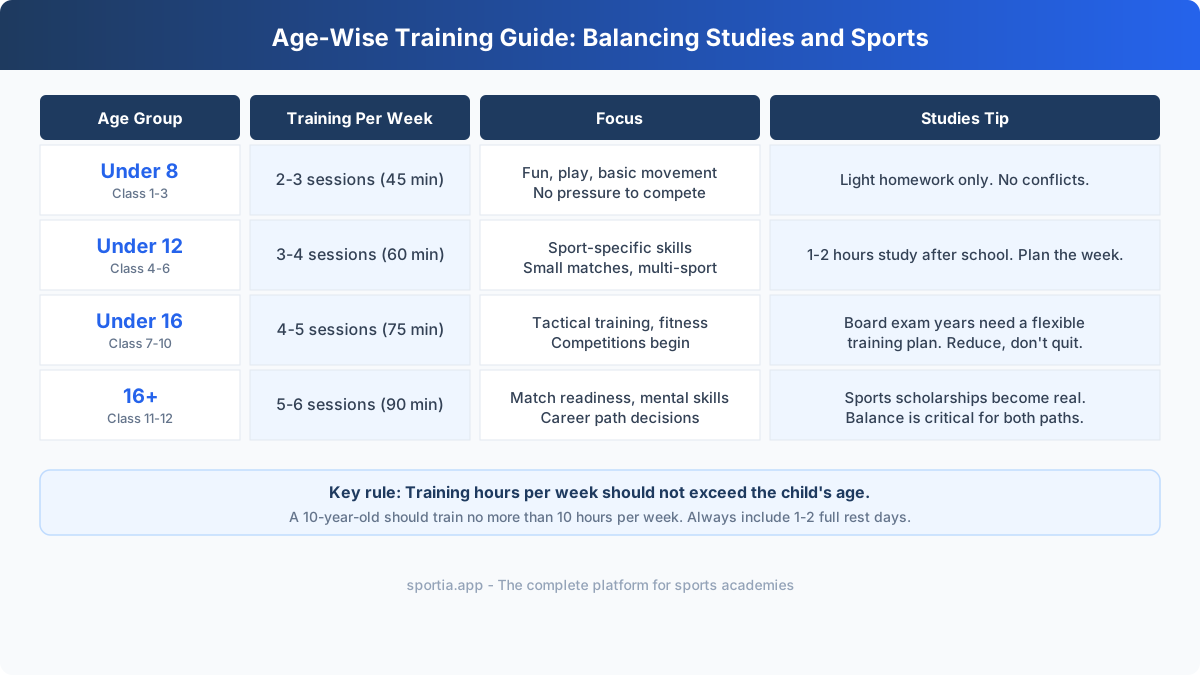
Under 8 (Class 1-3)
At this age, sports should be pure fun. Two to three sessions per week, 45 minutes each. No pressure to compete or perform. The child is building basic movement skills and a love for the sport.
Academic load is light. There is no real conflict at this stage. Let the child play.
Under 12 (Class 4-6)
Training can increase to 3-4 sessions per week, 60 minutes each. The child starts learning sport-specific skills. Small matches and friendly events begin.
School work gets heavier. Help the child build a weekly schedule. Block 1-2 hours for study after school, then training in the evening. Weekends should include one free day with no study or sport.
Under 16 (Class 7-10)
This is where the tension peaks. Board exams in Class 10 create pressure from all sides. Training is 4-5 sessions per week, 75 minutes each. The child may be competing at district or state level.
The key rule: reduce training during exam months, but do not quit. Dropping from 5 sessions to 2-3 during boards keeps the child fit and mentally fresh without hurting exam prep. A complete break often backfires because the child loses routine and fitness, which adds stress.
16 and Above (Class 11-12)
This is when career decisions start. Some athletes aim for sports scholarships or professional careers. Others treat sport as fitness and focus on entrance exams (JEE, NEET, etc.).
Either path works. But the child needs an honest talk about goals. If the aim is a sports career, train 5-6 times per week and plan studies around it. If sport is for fitness and fun, 3 sessions per week is plenty.
The Board Exam Question: Should Athletes Take a Break?
This comes up every year in Class 10 and 12. Parents panic. Coaches worry about losing athletes. The child feels pulled in two directions.
The answer is clear: reduce, do not remove.
- Cut training to 2 sessions per week during the 2 months before boards
- Keep sessions short (45 minutes) and focused on fitness, not new skills
- Use training as a study break, not a time thief
- Many students say their best study sessions happen right after a workout
Athletes who stop for 3-4 months face a hard return. They lose fitness, fall behind peers, and often do not come back. A smart coach will offer a lighter schedule during exams rather than lose the athlete for good.
5 Signs Your Child Is Struggling with the Balance
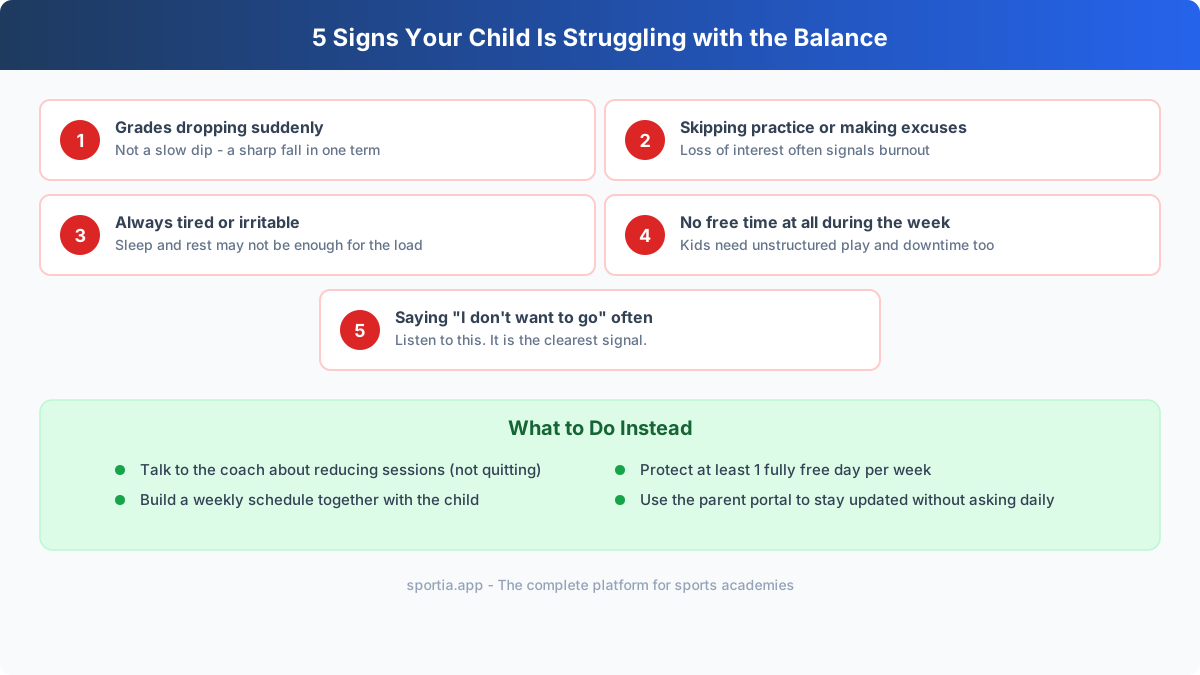
Not every child will tell you they are overwhelmed. Watch for these signals:
- Grades drop sharply in one term (not a slow dip, a sudden fall)
- Skipping practice or making excuses not to go
- Always tired or irritable even after a full night of sleep
- No free time at all during the week (kids need unstructured play too)
- Saying "I don't want to go" regularly. Listen to this. It is the clearest signal.
If you see these signs, do not force the child to push through. Talk to the coach about reducing sessions. Build a weekly plan together. Protect at least one fully free day each week.
How Academies Can Help Parents
The best academies do not just coach athletes. They support the family. Here is what good academies do:
- Flexible schedules: Offer morning and evening batches so families can pick what works with school hours
- Exam-season plans: Reduce training load during boards instead of forcing the same schedule year-round
- Progress updates: Share regular reports so parents see the value of training, not just the time cost
- Parent communication: Keep parents informed about schedules, attendance, and goals through a parent portal instead of scattered WhatsApp messages
Tools like Sportia help academies share schedules, attendance, and progress updates with parents through a dedicated portal. Parents stay informed without calling the coach every day. Coaches track who is showing up and who might be dropping off due to exam stress.
Success Stories: Indian Athletes Who Balanced Both
The "studies or sports" debate assumes you must choose. Many top Indian athletes prove otherwise.
- PV Sindhu trained 6-8 hours daily while completing her schooling. She managed through a strict daily routine and support from her school.
- Neeraj Chopra attended school in Panipat while training at the Tau Devi Lal Stadium. He balanced both until he chose to focus fully on javelin after initial national success.
- Rohit Sharma attended Swami Vivekanand International School in Mumbai on a sports scholarship, proving that academic institutions can support sporting talent when they choose to.
These athletes did not abandon studies for sport. They found a rhythm that worked, often with the help of flexible schools and understanding coaches.
A Sample Weekly Schedule
Here is what a balanced week looks like for a 12-year-old cricketer in Class 7:
| Day | Morning | After School | Evening |
|---|---|---|---|
| Monday | School | Study (1.5 hrs) | Cricket practice (5-6:30 PM) |
| Tuesday | School | Study (1.5 hrs) | Cricket practice (5-6:30 PM) |
| Wednesday | School | Study (2 hrs) | Free time |
| Thursday | School | Study (1.5 hrs) | Cricket practice (5-6:30 PM) |
| Friday | School | Study (1.5 hrs) | Cricket practice (5-6:30 PM) |
| Saturday | Cricket match/practice | Study (2 hrs) | Free time |
| Sunday | Free | Free | Free |
Four training sessions, daily study time, one rest day, and free time on three evenings. This schedule works for most sports and most school loads.
Frequently Asked Questions
Should my child stop sports during board exams?
No. Reduce training to 2 sessions per week during the 2 months before boards. Short sessions keep the child fit and mentally fresh. A complete break often backfires as the child loses routine and fitness.
How many hours per week should a young athlete train?
A good rule is that training hours per week should not be more than the child's age. An 8-year-old should train no more than 8 hours. A 14-year-old can go up to 14 hours. Always include at least one full rest day.
Do sports hurt academic performance?
Research shows the opposite. A review of 50 studies found a positive link between sports and grades. Physical activity improves memory, focus, and mood. The key is having a clear weekly schedule that includes both study and training time.
At what age should a child start serious sports training?
Before age 8, keep it fun and play-based. From 8 to 12, start sport-specific skills with 3-4 sessions per week. Serious training with competitions can begin around age 13-14, but only if the child wants it.
How can academies help parents manage the studies-sports balance?
Good academies offer flexible batch timings, reduce training during exam months, and share progress reports with parents. A parent portal that shows schedules, attendance, and progress helps families stay informed without daily calls to the coach.
What are signs that my child is burning out from too much sport?
Watch for sudden grade drops, skipping practice, being always tired or irritable, having zero free time, and repeatedly saying they do not want to go. If you see these, reduce the load and talk to the coach.