
Careers in Sports Beyond Playing: Paths for Young Athletes in India
There are many careers in sports in India beyond playing. A young athlete can build a life in coaching, sports science, management, media, officiating, or government service. Most of these paths need deep sport knowledge, not elite playing talent. India's sports economy is growing. The demand for trained people off the field is rising fast. This guide maps the real options, the pay, and where to study. It helps coaches and parents guide young athletes early.
Ask most Indian parents about a sports career, and you hear the same worry. "What if my child does not make the national team?" It is a fair fear. Very few players reach the top. But it rests on a wrong idea: that sport is only a career if you play at the highest level. That is no longer true.
Why "You Will Not Make It as a Player" Is the Wrong Conversation
The Indian sports industry has changed. The IPL, the Pro Kabaddi League, and other leagues have built a whole economy around sport. Franchises, brands, media houses, and academies all need skilled people. Very few of them play as pros.
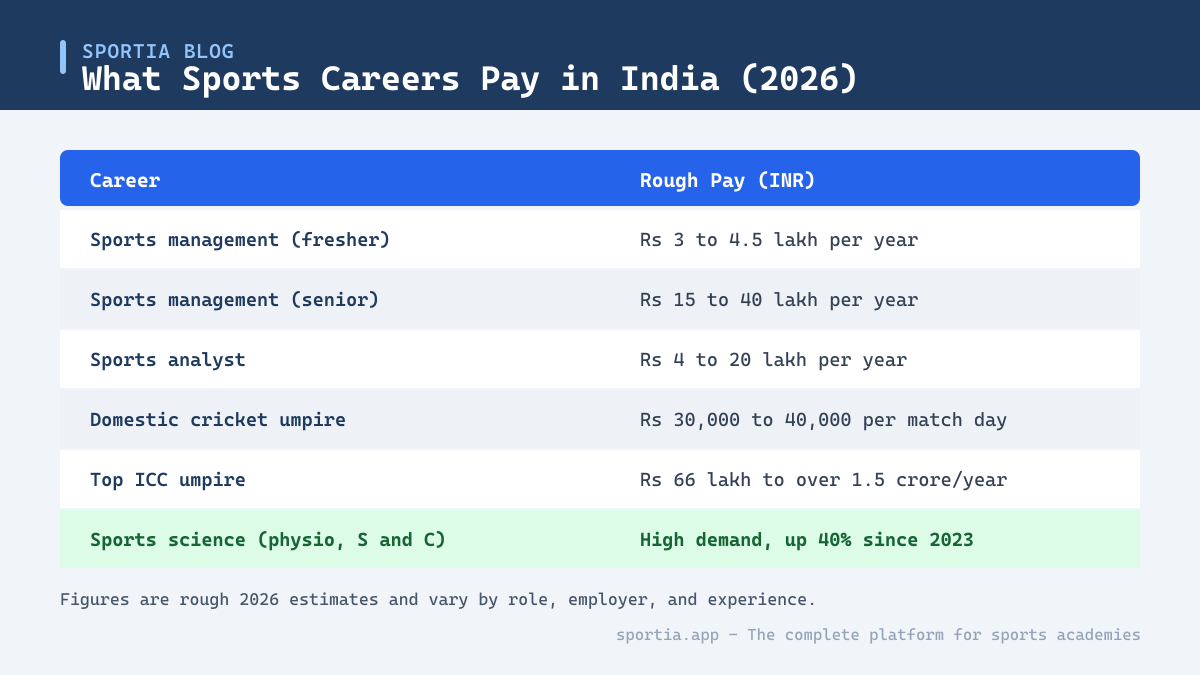
The demand is real and growing. The need for qualified sports scientists in India has risen by about 40 percent since 2023. New leagues, better funding, and a focus on winning have created jobs that did not exist a decade ago.
So the better question is not whether a child will go pro. It is how they want to stay in the game. A child who loves sport can turn that love into a stable, respected career. Here are the main paths.
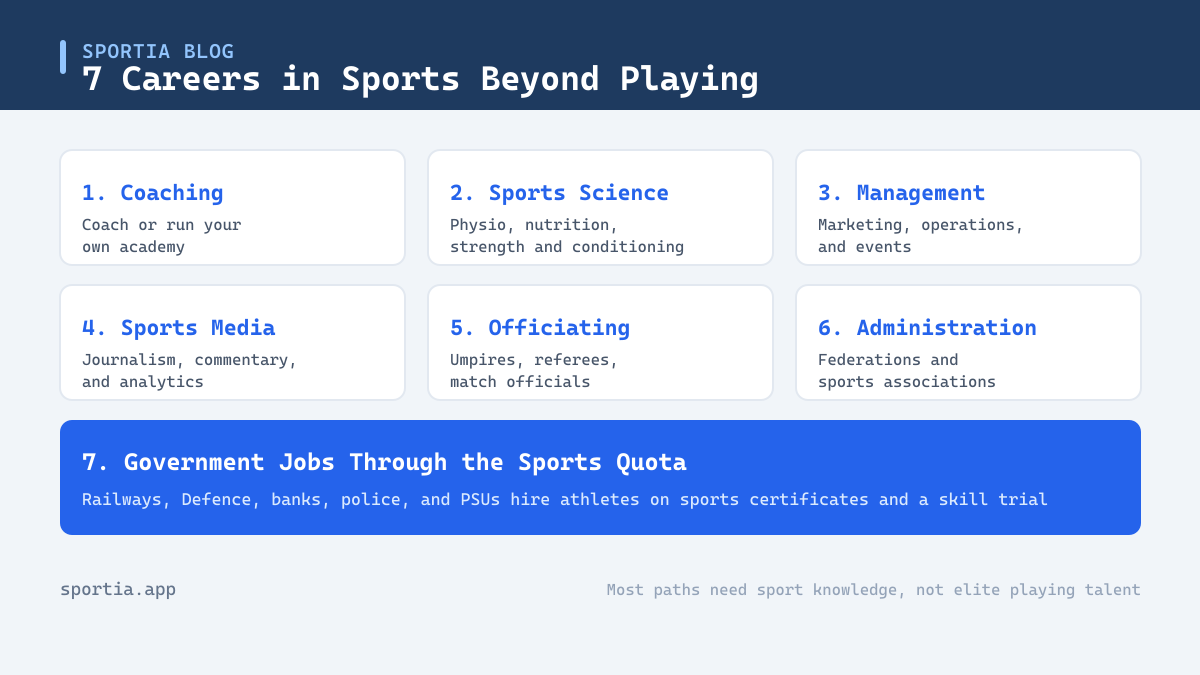
1. Coaching and Academy Ownership
Coaching is the most natural path for a former player. You already know the sport. With a coaching certificate, you can turn that into a profession. National bodies like Hockey India, the AIFF, and the BCCI run coaching courses that build a clear career ladder.
Coaching also opens the door to running your own academy. This is a real business, not just a job. An academy owner manages athletes, coaches, fees, and growth. For someone who loves both sport and building things, it is a strong option. If you go this route, use proper software from day one. It saves hours every week and keeps the business sharp.
2. Sports Science: Physiotherapy, Nutrition, and Conditioning
This is one of the fastest growing fields in Indian sport. Every serious team now wants experts who keep athletes fit and fast. These roles pay well and are in short supply.
Key careers in sports science include:
- Sports physiotherapist: treats injuries and manages return to play.
- Strength and conditioning coach: builds athletes' power, speed, and stamina.
- Sports nutritionist: plans diets for performance and recovery.
- Performance analyst and biomechanist: studies movement and match data.
These jobs suit students who love both sport and science. As wearables and AI spread through Indian sport, someone must read the data and guide coaches. That someone can be a well-trained young athlete who moved into science.
3. Sports Management, Operations, and Events
Sports management is a business career built around sport. You work in marketing, operations, sponsorship, or athlete relations. You do not need to be an athlete. You need to understand how the sports business runs.
The pay reflects the growth. A fresher in sports management often starts between Rs 3 lakh and Rs 4.5 lakh a year. An MBA graduate can start around Rs 6 lakh. After five years, salaries can reach Rs 15 lakh to Rs 20 lakh. Senior marketing and general managers can earn Rs 25 lakh to Rs 40 lakh.
The employers are well known. IPL franchises, sports federations, and brands like JSW Sports and Nike India all hire. So do media houses like Star Sports. Event management is a close cousin. It covers tournaments, leagues, and academy events.
4. Sports Media: Journalism, Commentary, and Analytics
Sport needs storytellers. Journalists, commentators, analysts, and content creators keep fans engaged. This field has exploded with digital media and streaming.
Modern sports media rewards deep knowledge. Networks no longer want just a loud voice. They want analysts who understand a bowler's action or a team's tactics. A young athlete who knows the game from the inside has a real edge here.
Sports analytics is a strong sub-path. Entry-level analysts can earn Rs 4 lakh to Rs 8 lakh a year. Experienced analysts can earn Rs 10 lakh to Rs 20 lakh or more. They turn match data into insights for teams, broadcasters, and fans.
5. Officiating, Umpiring, and Administration
Every match needs officials. Umpires, referees, and match officials are always in demand. This path has no elite-playing requirement at all. It rewards knowledge, calm, and fairness.
The cricket umpire path is a clear example. You must be at least 18. You join your state cricket association, then enrol with the BCCI Umpire Academy for a certificate. After you pass, you officiate state matches. Then, after two to three years, you can attempt the BCCI Level 1 exam. Clear the Level 2 exam next to reach national cricket.
The rewards can be strong. Domestic umpires earn around Rs 30,000 to Rs 40,000 per match day. Top ICC umpires can earn between Rs 66 lakh and over Rs 1.5 crore a year. Other sports, like hockey and football, have their own officiating pathways through their national bodies. Sports administration, in federations and associations, is another steady route.
6. Government Jobs Through the Sports Quota
This path is unique to how India works, and it is a big one. Many government bodies hire athletes through the sports quota. This includes the Railways, Defence, banks, police, and public sector companies.
The route rewards competition, not just elite success. In most cases, there is no written exam. Selection is based on your sports certificates and a skill trial. You usually need proof that you played at the state or national level. For many families, this makes sport a safe bet, not a risky one. A child who competes seriously can earn a stable government job through it.
7. Where to Study Sports in India
Good training opens all of these doors. India has strong institutions for sport education. Knowing them helps you guide a young athlete's next step.
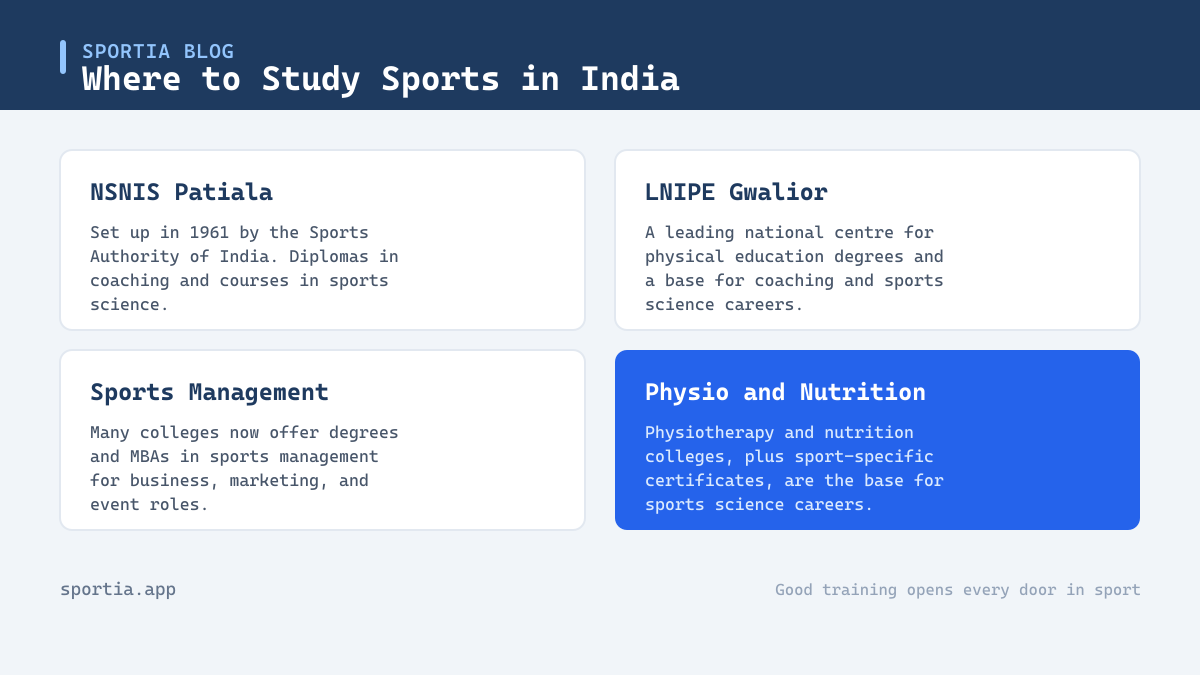
- NSNIS Patiala: the Netaji Subhas National Institute of Sports, set up in 1961 by the Sports Authority of India. It offers diplomas in sports coaching and courses in sports science.
- LNIPE Gwalior: the Lakshmibai National Institute of Physical Education, a leading centre for physical education degrees.
- Sports management institutes: many colleges now offer degrees and MBAs in sports management.
- Physiotherapy and nutrition colleges: the base for sports science careers, often with sport-specific certificates on top.
NSNIS Patiala also runs certificate courses in strength and conditioning, sports psychology, sports nutrition, and sports physiotherapy. These give a clear, respected route into the field.
How Coaches and Parents Can Open These Doors Early
Young athletes rarely find these paths alone. Coaches and parents are the guides. You can start planting the seeds early, long before a child has to choose.
- Talk about the whole industry. Show that sport has many careers, not just playing.
- Invite guests. Bring a physio, a sports journalist, or an academy owner to talk to your batch.
- Encourage all-round skills. Praise a student who analyses a match or helps organise an event.
- Keep good records. Track achievements and certificates. These matter for the sports quota and for college admissions.
An academy that tracks progress well gives students proof of their journey. That record supports scholarship and sports-quota applications later. To go deeper, read the guide on sports scholarships in India and the guide on balancing studies and sport , which both help families plan a longer path.
A platform like Sportia helps academies track athlete progress, attendance, and achievements over years. That clean history is just what a student needs later. It helps with a scholarship, a college seat, or a sports-quota job. When you run your academy on proper software, you are not just managing today. You are building each athlete's record for tomorrow.
The Bigger Picture
Sport is no longer a gamble that only pays off for a lucky few. It is a growing industry with room for coaches, scientists, managers, journalists, officials, and administrators. The child who does not make the national team can still build a full life in the game they love. As a coach or parent, your job is to show them the map. The paths are real, and they are open.
Frequently Asked Questions
What are the best career options in sports in India besides playing?
Strong options include coaching, academy ownership, sports physiotherapy, strength and conditioning, sports management, sports media, and officiating. Government jobs through the sports quota are also popular. Most of these need sport knowledge and a relevant course, not elite playing ability.
Can you earn a good salary in sports without being a player?
Yes. Sports management freshers often start at Rs 3 lakh to Rs 4.5 lakh a year, rising to Rs 15 lakh or more with experience. Sports analysts, physiotherapists, and senior managers can earn well above that. Top umpires and agents can earn even more.
Where can I study sports management or sports science in India?
NSNIS Patiala and LNIPE Gwalior are leading government institutes for coaching and physical education. Many colleges now offer sports management degrees and MBAs. Physiotherapy and nutrition colleges, often with sport-specific certificates, are the base for sports science careers.
How does the sports quota help athletes get jobs?
The sports quota lets athletes get government jobs in the Railways, Defence, banks, police, and PSUs. Selection is usually based on sports certificates and a skill trial, with no written exam in most cases. You typically need proof of playing at the state or national level.
What should a young athlete study to become a sports physiotherapist?
Start with a Bachelor's degree in physiotherapy, then add sport-specific training. Institutes like NSNIS Patiala offer certificate courses in sports physiotherapy for those with the right base qualification. Demand for these roles is rising fast across Indian sport.
How can coaches guide students toward sports careers?
Talk openly about the many careers in sport, not just playing. Invite professionals like physios and journalists to meet your batch. Encourage all-round skills, and keep clean records of each student's achievements. Those records support scholarship, college, and sports-quota applications later.