
Cricket Coaching Certification in India: BCCI, NIS, and What Actually Matters
Very few parents walk into a cricket academy and ask which coaching certification you hold. They ask something considerably harder: who have you coached, and where did those boys end up?
That gap explains why cricket coaching certification in India is so widely misunderstood. Coaches assume a badge will fill their nets, and it will not. What a certificate really buys you is access, standing with selectors, and a frame for your own knowledge.
This guide covers the real routes, what each level is for, what they cost, and the one bottleneck almost nobody warns you about. It also covers what these courses will not teach you, which is the part that catches most new academy owners.
What Parents Are Really Asking
When a parent asks what you are qualified in, they are really asking three questions at once.
- Are you safe? Will my child be handled properly, and does this coach know about injuries and workload?
- Are you serious? Is this a real academy, or a side business run in the evenings?
- Can you open doors? Do you know the selectors and the district circuit?
A certificate answers the first two well, but it barely touches the third. Knowing that difference tells you how much to spend, and how loudly to talk about it.
The Certification Ladder at a Glance
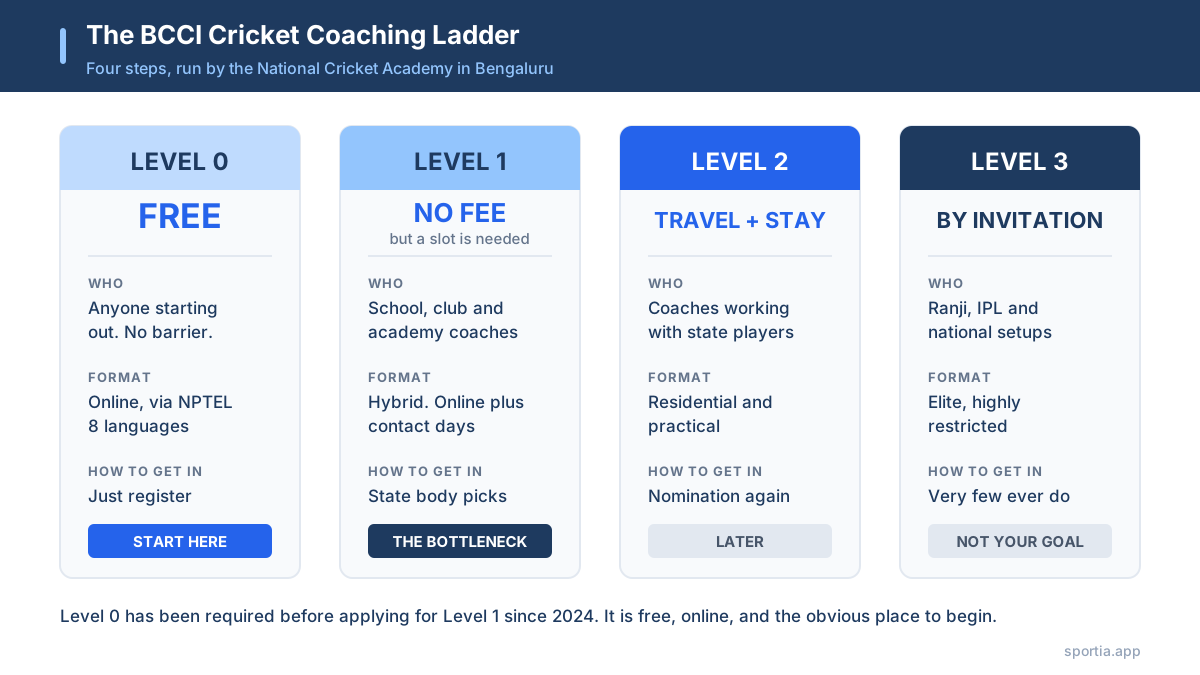
The main route in Indian cricket runs through the BCCI, run by the National Cricket Academy in Bengaluru. There are four steps, and the first is new to many coaches.
| Level | Who it is for | Format | Realistic cost |
|---|---|---|---|
| Level 0 | Anyone starting out | Online e-learning | Free |
| Level 1 | School, club and academy coaches | Hybrid, online plus contact days | No course fee, but nomination needed |
| Level 2 | Coaches working with state level players | Residential and practical | Nomination, plus travel and stay |
| Level 3 | Ranji, IPL and national setups | Elite, highly restricted | Invitation in practice |
Level 0: the free gate everyone must pass
Since 2024, the BCCI has asked new coaches to clear a Level 0 module before they apply for Level 1. This is easily the most useful item on this page for a new coach, because it is free and open to absolutely anyone.
It is an online course run through the NPTEL platform. It runs in eight languages: English, Hindi, Gujarati, Marathi, Kannada, Tamil, Bengali and Telugu. That range matters, because it opens the route to thousands of coaches in small towns who were shut out before.
The syllabus covers a coach's duties, batting, bowling and fielding basics, fitness, goal setting, practice design, how skills are learned, video work and safety.
If you take one action after reading this, register for Level 0, because there is no reason whatsoever to wait.
Level 1: the working academy coach's certificate
Level 1 is built precisely for the person reading this. It is aimed at school, club and grassroots academy work, which is where most Indian coaching happens.
It runs in a hybrid format, mixing online sessions with contact days on the ground. Expect a heavy daily load, with several hours of online teaching plus tasks.
Level 2 and Level 3: for a smaller group than you think
Level 2 targets coaches working with state level players. It is a real step up in sports science, planning and man management.
Level 3 is genuinely elite. It is aimed at coaches in Ranji Trophy, IPL and national setups. Very few coaches ever need it, and fewer still get the chance. If you run a 60 athlete academy in a tier 2 city, Level 3 is not a real goal, and it should not worry you.
The Bottleneck Nobody Warns You About
Here is the thing that surprises most coaches: you cannot simply pay a fee and enrol in BCCI Level 1.
The NCA courses do not work like a private certificate you buy online. Places are few, and coaches come through state cricket association picks rather than open sign up. The course itself carries no real fee, which sounds great until you see that the true currency is a nod from your state body.
That changes your entire strategy completely.
- Your state body is the gatekeeper, not the BCCI website. Build a bond there.
- Clear Level 0 first, so you are ready the moment a slot opens.
- Get on the mailing list of your state body and check notices often.
- Coach where people can see you. District events, school teams and age group sides make you a name, not a form.
- Expect to wait. Slots are few and demand is extremely high.
Coaches who understand this eventually get certified. Coaches who keep refreshing a website simply do not.
The NIS Patiala Route
The other serious pathway runs through the Netaji Subhas National Institute of Sports, usually called NIS Patiala. This is a Sports Authority of India body, and it is a different animal from the BCCI ladder.
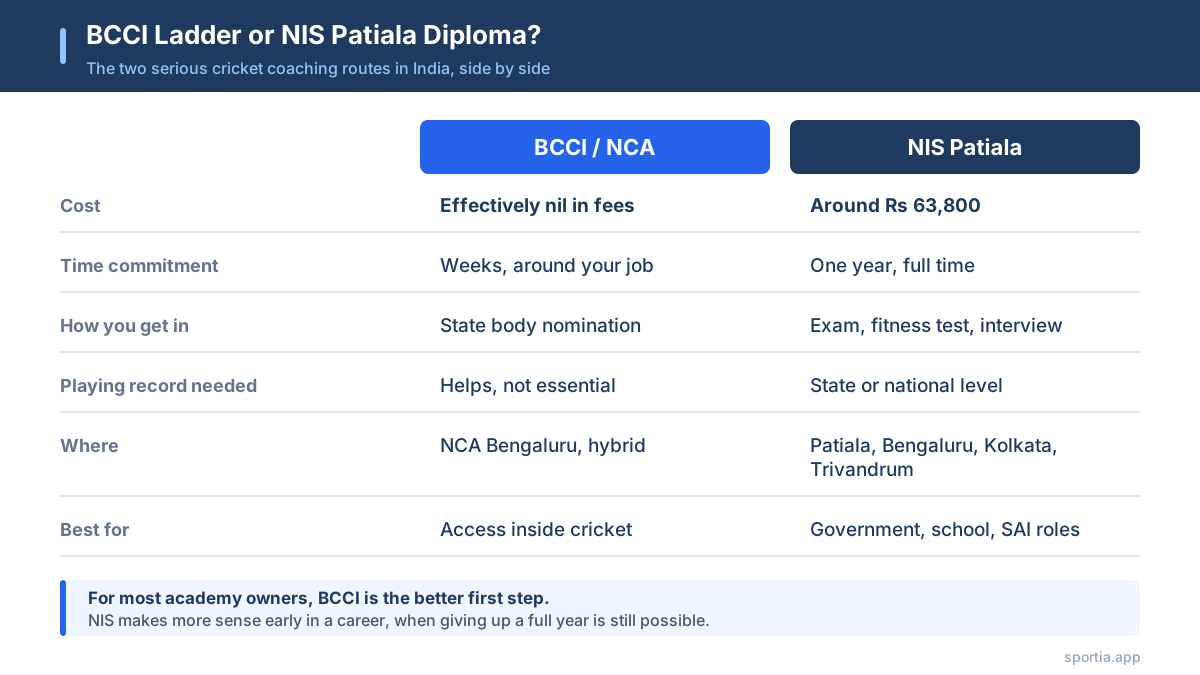
NIS runs a one year Diploma in Sports Coaching covering more than 26 sports, cricket among them. Courses run at Patiala, Bengaluru, Kolkata and Trivandrum.
The practical details matter here.
- Cost: the academic fee is around Rs 63,800 for the full diploma.
- Duration: one year, full time, so this is definitely not an evening course.
- Who can apply: 10+2 from a known board, plus a real playing record at state or national level.
- Selection: a written examination, a physical fitness test and a personal interview.
- Timing: forms usually open early in the year and close around April.
Which route should you take
The honest answer depends on what you want the badge to do.
Choose the BCCI ladder if you want to coach inside cricket. It is the currency selectors and state bodies know, and it costs almost nothing in fees.
Choose NIS if you want a formal coaching degree known across sport, mainly for government roles, school and college posts, or SAI centres. It is also stronger on sports science than Level 1.
For most academy owners, the BCCI route is the better first step. NIS makes more sense if you are early in your career and can give up a year.
State Association Courses: The Realistic First Step
Between Level 0 and Level 1 sits a route most coaches miss. State bodies such as the Mumbai Cricket Association, the Tamil Nadu Cricket Association and the Delhi and District Cricket Association run their own coaching courses.
These are worth far more than their name suggests, for three reasons.
- They are open. Entry rules are lower and slots are considerably less scarce than at NCA level.
- They put you in the room. You meet the people who later decide the picks.
- They are local. No moving house, and the content fits the grounds you coach on.
Clear Level 0, then a state body course, then coach a district side for two seasons. That coach is in a far stronger spot for a Level 1 slot than one holding Level 0 alone.
What Certification Does Not Teach You
This is the section most guides skip, and it is where new academy owners get hurt.
Coaching courses teach you cricket, but they do not teach you how to run an academy. The gap includes almost everything that decides whether your business survives.
- Handling 40 children with two nets. Courses assume small groups and good grounds.
- Parents. Fees, selection rows, and the father who thinks his son is being ignored.
- Money. Pricing, collections, and what to do when six families pay late in the same month.
- Drop off. Spotting the child who is drifting away before they stop coming.
- Staff. Hiring, keeping and growing your assistant coaches.
None of that is on a syllabus, and all of it lands in your first year. The day to day side is covered in the guide on how to start a cricket academy in India .
Certify Your Assistants, Not Just Yourself
Most Indian academies have one certified coach, and that coach is the owner. It feels lean, but it is actually a serious weakness.
When one person holds all the badges, that person becomes the bottleneck. Every session needs them, no batch runs without them, and you cannot open a second site. Worse, when they fall ill, quality drops overnight.
Putting your assistants through Level 0 costs nothing but their time. It is the best value move open to a small academy.
A sound setup gives each coach a level to work towards, with clear duties at each stage. That approach is set out in the guide on building a coaching staff hierarchy .
Talking About Qualifications Honestly
Overstating your badges is common in Indian cricket coaching, and parents have grown wary of it.
Some reasonably clear rules apply.
- Name the exact level. "BCCI Level 1 certified" is honest. "BCCI certified coach" is vague and invites doubt.
- Never imply you work for the BCCI. Holding a BCCI certificate does not make you a BCCI coach.
- Separate playing from coaching. Ranji years are a strong selling point, but they are not a coaching badge.
- Say who trained where. If an assistant holds the certificate and you do not, name them properly.
- Lead with results. District picks and improved players convince parents faster than any badge.
Honest, exact claims age well. Inflated ones get picked apart in parent WhatsApp groups.
A Realistic Three Year Plan
For a working coach running an academy, here is a plan that fits around real coaching hours.
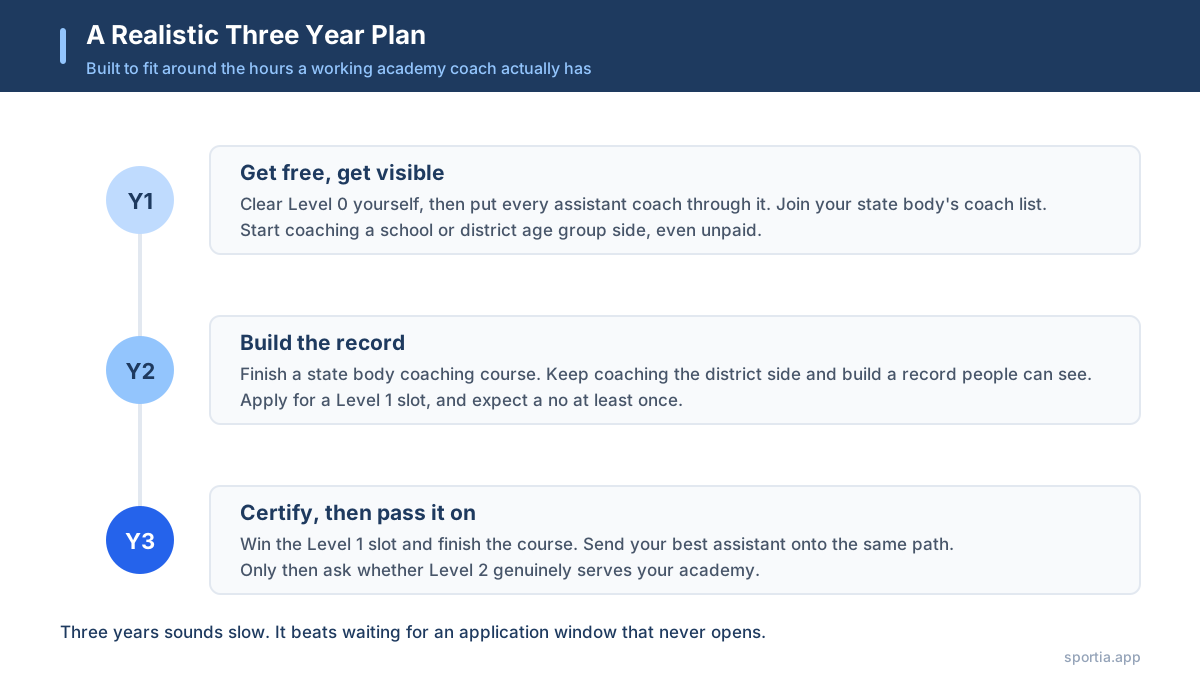
Year 1. Clear Level 0 yourself, then put every assistant through it. Join your state body's coach list and attend any local course they run. Start coaching a school or district age group side, even unpaid.
Year 2. Finish a state body coaching course. Keep coaching the district side and build a record people can see. Apply for a Level 1 slot and expect a no at least once.
Year 3. Win the Level 1 slot and finish the course. Send your best assistant onto the same path. Only then ask whether Level 2 really serves your academy.
Three years probably sounds slow. It is much faster than the coaches who spend those years waiting for a window that never opens.
Frequently Asked Questions
How do I become a certified cricket coach in India?
Start with the free BCCI Level 0 online module, which is now needed before you can apply for Level 1. Then sign up with your state cricket association, finish any local course they run, and build a coaching record people can see. Level 1 places come through state body picks, not open sign up.
What is the fee for the BCCI Level 1 coaching course?
The NCA course itself carries no real fee, because the BCCI runs it through the National Cricket Academy. The true barrier is not money but access, since places are few and state bodies put names forward. Budget for travel and stay during contact days, and check current details with your own state body.
Is the BCCI Level 0 course really free?
Yes. It is an online module run through the NPTEL platform, in eight Indian languages. It is the one part of the route open to anyone, which makes it the clear first step for any new coach.
Which is better, BCCI certification or an NIS Patiala diploma?
The BCCI ladder is the currency inside cricket and costs almost nothing in fees, so it suits most academy coaches. The NIS diploma is a one year, full time course costing around Rs 63,800 and is known across sports, which helps for government, school and SAI roles. Choose BCCI for cricket access and NIS for a formal, cross sport degree.
Do I need a certification to open a cricket academy in India?
No law needs a coaching certificate to run a private cricket academy. But a badge builds parent trust, improves your coaching, and matters a lot if you want district and state routes open for your players. Most good academy owners get certified even though nobody makes them.
Can I become a cricket coach without playing first class cricket?
Yes. The BCCI Level 0 module is open to anyone, and many good academy coaches never played at a high level. First class years help with standing and with the NIS route, which needs a state or national playing record, but it is not needed for grassroots coaching.
How long does it take to become a qualified cricket coach?
Level 0 can be done in a few weeks. Reaching BCCI Level 1 takes two to three years for most coaches, because the wait for a slot is longer than the course itself. The NIS diploma takes one full year.
Build the Knowledge, Not Just the Badge
A certificate merely proves you learned something once. What actually raises standards at your academy is whether that knowledge reaches every coach on your staff, every week.
Sportia's coaching library lets you build your own drill and workout set, turn it into training plans, assign those plans to batches or athletes, and track whether sessions were run. A junior coach then works from the same plan as your head coach, not from memory.
There is a fuller walkthrough in the guide on the coaching library for sports academies .
Start a free 14 day Sportia trial and put your coaching knowledge somewhere the whole academy can use it.