
How to Build a Coaching Staff Hierarchy for Your Sports Academy
When your academy has one or two coaches, everyone knows their job. You coach, your partner assists, and things run smoothly. But the moment you add a third or fourth coach, cracks appear. Who handles attendance for which batch? Can the new coach see fee records? What happens when you are not at the academy for a day?
A clear coaching staff hierarchy fixes these problems before they start. This guide covers five coaching levels, what each level can and cannot see, pay ranges in India, and how to bring on a new coach without shaking up your current setup.
Why a Flat Structure Breaks at 3+ Coaches
Most academy owners start with a flat structure. Everyone does a bit of everything. This works until it does not. Here is what goes wrong:
- No chain of command: When two coaches clash on how to run a drill, who decides? Without levels, every small fight lands on the owner.
- Data access issues: A new junior coach can see every athlete's fee status, parent phone numbers, and medical notes. That is a privacy risk.
- No growth path: Good coaches leave when there is no way to move up. A flat team gives them no reason to stay.
- Owner becomes the block: If only the owner can assign batches, mark rolls, and update times, the academy stops when the owner is away.
The fix is simple: define levels, assign clear duties at each level, and control what each person can see and do. For more on scaling past these growing pains, read our guide on scaling from 10 to 100 athletes.
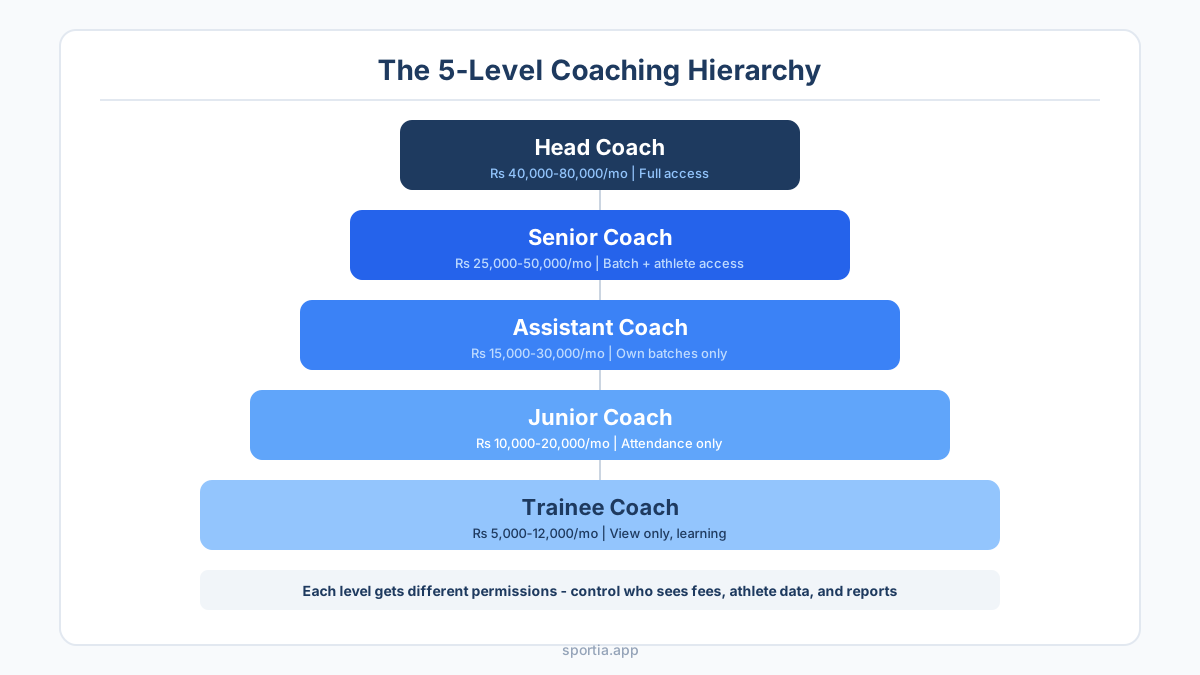
The 5-Level Coaching Hierarchy
This setup works for academies with 3 to 20+ coaches. You do not need all five levels on day one. Start with what you need and add more as you grow.
Level 1: Head Coach
The top coaching role. Reports to the academy owner. There is usually one head coach per sport or per location.
- Sets the training plan and coaching standards for the academy
- Assigns coaches to batches and approves schedule changes
- Reviews attendance data and athlete progress across all batches
- Handles parent meetings for serious concerns
- Mentors senior and assistant coaches
Access level: Full access to all data at their location - athletes, attendance, fees, reports, and settings.
Level 2: Senior Coach
A skilled coach who leads many batches and helps the head coach. Steps up when the head coach is away.
- Runs 2-3 batches on their own
- Assists in training plan design
- Reviews attendance and progress for their batches
- Gives feedback to assistant and junior coaches
Access level: Can view and edit all batch and athlete data. Can see fee status but cannot change billing settings.
Level 3: Assistant Coach
A solid coach who runs one or two batches with some help from a senior. The core of most mid-size academies.
- Runs 1-2 batches as primary coach
- Marks attendance and logs session notes
- Tracks athlete progress for their assigned athletes
- Reports issues to the senior coach
Access level: Can see and edit data only for their own batches. Cannot see fee records or data from other batches.
Level 4: Junior Coach
A newer coach who assists in sessions but does not run batches alone yet. Learning the academy's methods and standards.
- Assists in batch sessions under a senior or assistant coach
- Marks attendance when assigned
- Helps with warm-ups, drills, and group management
- Observes and learns from more experienced coaches
Access level: Can mark attendance only. Can view athlete profiles for their batch but cannot edit records or see fees.
Level 5: Trainee Coach
A fresh hire or coaching student. Shadows sessions to learn before taking on any duties.
- Watches sessions and takes notes
- Helps with setup and basic tasks
- Completes any training or certification the academy requires
- Moves to junior level after proving themselves (usually 1-3 months)
Access level: View-only access to their assigned batch schedules. No access to athlete data, fees, or reports.
Pay Ranges for Each Coaching Level in India
Pay varies by city, sport, and academy size. Here are typical monthly ranges for 2026:
| Level | Metro Cities (Rs/month) | Tier 2-3 Cities (Rs/month) |
|---|---|---|
| Head Coach | 40,000 - 80,000 | 25,000 - 50,000 |
| Senior Coach | 25,000 - 50,000 | 15,000 - 30,000 |
| Assistant Coach | 15,000 - 30,000 | 10,000 - 20,000 |
| Junior Coach | 10,000 - 20,000 | 7,000 - 15,000 |
| Trainee Coach | 5,000 - 12,000 | 3,000 - 8,000 |
Some academies pay per session instead of a fixed salary. This works well for part-time coaches. Per-session rates in metros range from Rs 500-2,000 based on the sport and coach level.
What Each Level Should and Should Not Access
This is where most academies go wrong. When every coach can see everything, you get privacy issues and confusion. Here is a clear breakdown:
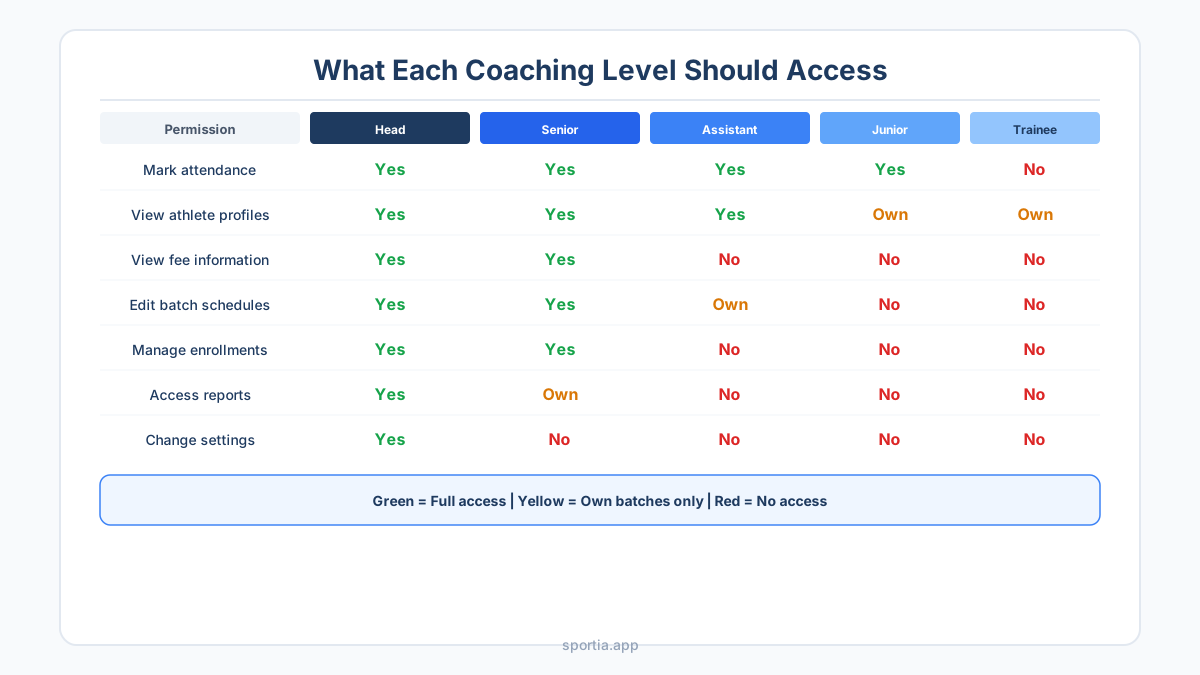
The rule is simple: each coach should see only what they need to do their job. A junior coach marking attendance does not need to see fee records. An assistant coach running one batch does not need access to another batch's data.
Most WhatsApp-based academies cannot control this at all. Every coach in the group sees everything. Tools like Sportia let you set access at each level so data stays where it should.
How to Onboard a New Coach Without Disruption
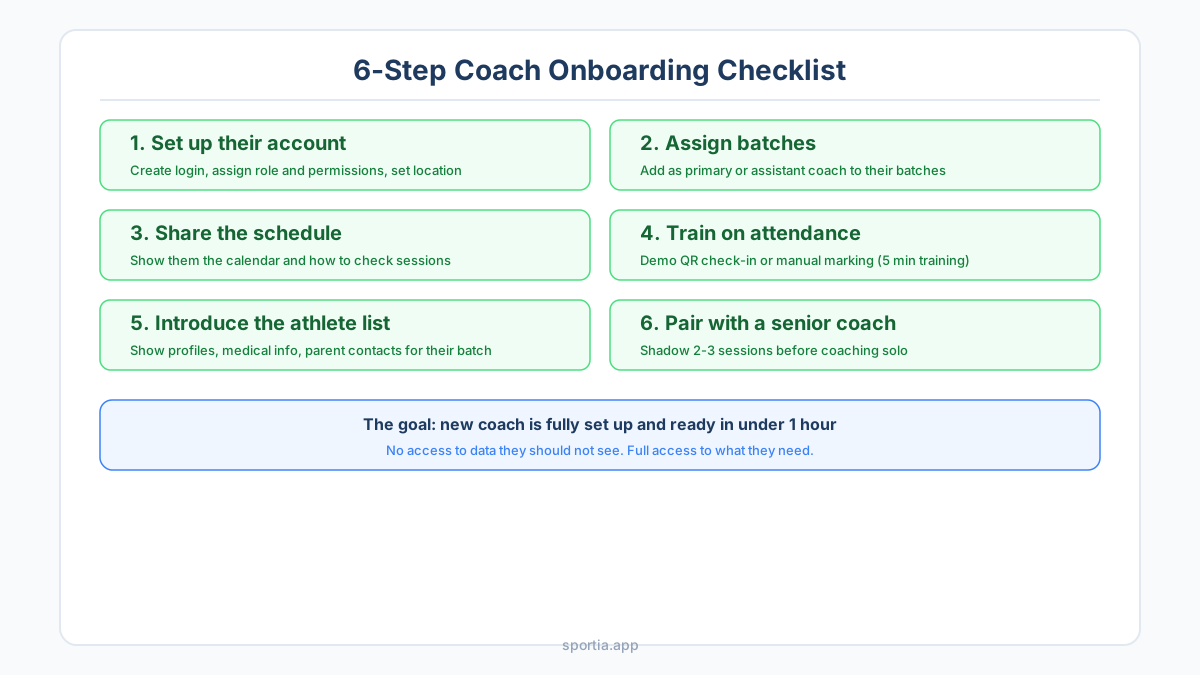
Adding a new coach is stressful if you do not have a clear process. Athletes get confused. Parents worry about the change. Here is a 6-step plan that works:
- Set up their account first. Create their login, assign their role level, and set their location and sport. Do this before their first day so everything is ready when they arrive.
- Assign them to batches. Add them as assistant or junior coach to specific batches. Do not give them primary coach status on day one.
- Share the schedule. Walk them through the weekly calendar so they know which sessions they are part of and when.
- Train them on attendance. Show them how to mark attendance - whether it is QR-based or manual. This takes 5 minutes and is the most common task they will do.
- Introduce the athlete list. Show them the profiles, medical notes, and parent contacts for athletes in their batch. They need to know who has allergies, injuries, or special needs.
- Pair them with a senior coach. Have them shadow 2-3 sessions before they coach on their own. This builds their confidence and helps athletes get used to seeing them.
The whole process should take under one hour for setup and one week of shadowing before they are ready to run a batch. For more on keeping coaches engaged once they join, read our guide on coaching mistakes that drive athletes away.
When to Add Each Level
You do not need all five levels from the start. Here is a rough guide based on academy size:
| Academy Size | Coaches Needed | Levels to Use |
|---|---|---|
| Under 30 athletes | 1-2 | Owner + 1 assistant |
| 30-60 athletes | 3-4 | Head + assistant + junior |
| 60-100 athletes | 5-8 | Head + senior + assistant + junior |
| 100+ athletes | 8+ | All 5 levels |
Add levels as you grow, not before. A 30-athlete academy with five coaching tiers is over-structured. A 100-athlete academy with no hierarchy is chaos.
Frequently Asked Questions
How many coaches does a sports academy need?
A good ratio is 1 coach for every 12-15 athletes in a batch. For group sessions, you can go up to 1:20 with an assistant. So a 60-athlete academy needs 4-5 coaches across all batches.
Should I hire full-time or part-time coaches?
Start with part-time coaches paid per session. Move to full-time hires once a coach fills 4-5 batches per week. Full-time coaches are more loyal and consistent, but the cost only makes sense at higher batch loads.
How do I prevent a coach from taking my students if they leave?
Two things help. First, keep all student data in a central system, not on the coach's phone. Second, build the academy brand so parents stay because of the academy, not just one coach. A non-compete clause in the contract also helps.
What certifications should I look for when hiring coaches in India?
It depends on the sport. For cricket, look for BCCI or NCA coaching certificates. For football, AIFF D or C license. For swimming, SFI or FINA-approved certification. For general fitness, ACE, NSCA, or K11 certification is common in India.
How do I handle it when a coach is not performing well?
Use data, not feelings. Check their batch attendance rates, athlete progress, and parent feedback. Have a clear talk with specific points. Give them 30 days to improve with support from a senior coach. If there is no change, move them to a lower role or let them go.
Can software really help manage coaching staff better?
Yes. With the right tool, you can set permissions per role, assign coaches to batches, track their attendance and session count, and make sure each coach sees only the data they need. This removes the guesswork and keeps operations clean as you grow.