

How to Start a Kabaddi Academy in India: The Complete 2026 Guide
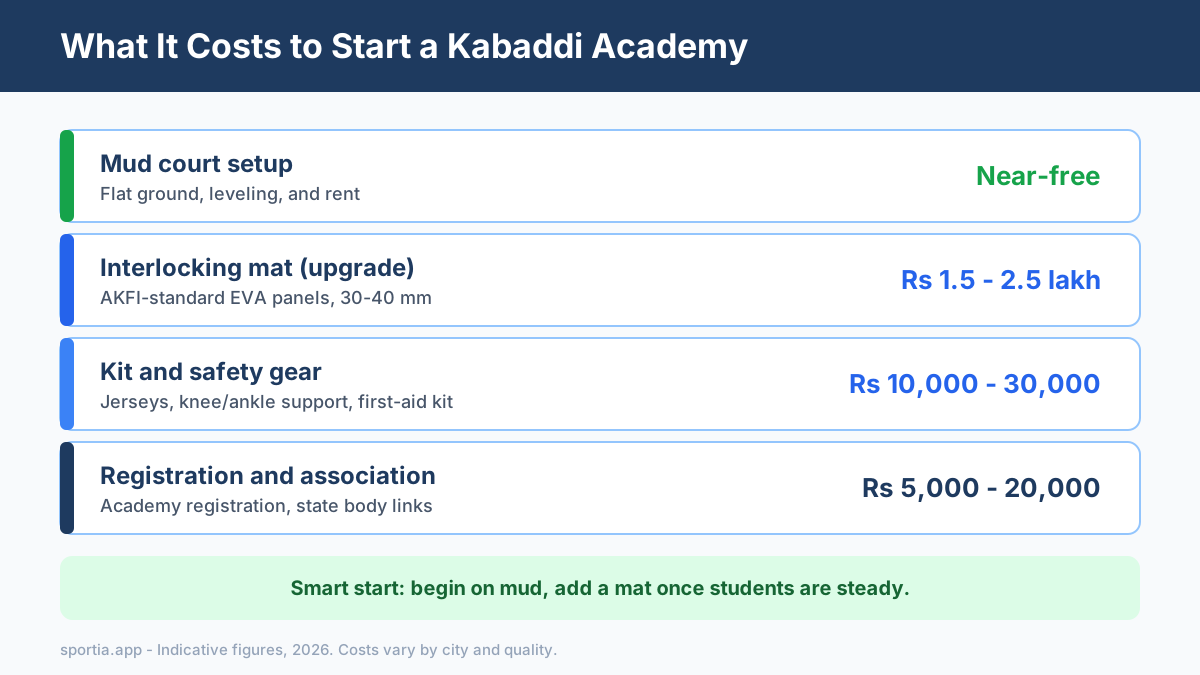
To start a kabaddi academy in India, you need a flat space, basic safety mats, and a certified coach. You can begin on a simple mud court for very little money. A full interlocking mat costs more, around 1.5 to 2.5 lakh rupees. Add AKFI links, a fee plan, and a path to competitions, and you have a real academy.
Kabaddi is one of the cheapest sports academies you can start in India. It needs no costly courts, rackets, or pools. Yet it now has a booming professional scene. This guide shows you how to start a kabaddi academy step by step, with real costs and clear actions.
Why kabaddi is booming in India
Kabaddi was once seen as only a village game. That has changed completely. The Pro Kabaddi League launched in 2014 and changed everything. It put kabaddi on prime-time TV. It made stars out of raiders and defenders. Millions of children now want to play like their heroes.
This creates a rare opening for you. Demand is rising fast, but good academies are still few. Kabaddi also suits India well. It needs little equipment. It works in villages, towns, and cities alike. A talented child from any background can rise to the top. For an academy owner, that is a wide and hungry market.
Space and surface: mud court vs mat
Your first big choice is the playing surface. You have two main options, and they cost very different amounts.
A mud court is the traditional surface. It costs almost nothing to prepare. You need flat ground, loose soil, and regular leveling. This is the smart way to start small and test demand. Many champions learned on mud.
An interlocking mat is the modern, professional surface. It is made of EVA foam panels, each one metre square. Pro mats are 30 to 40 mm thick for safety. A single panel costs about 625 to 825 rupees. A full court needs many panels, so the total often runs 1.5 to 2.5 lakh rupees. Mats must meet AKFI standards for official play.
A standard men's court is 13 metres by 10 metres. The women's and junior court is a bit smaller. Start on mud if money is tight. Move to a mat once you have steady students and enter formal events.
Coaching and AKFI certification
A good coach is the heart of any academy. Parents trust skill and safety above all. So your coaching must be solid and certified.
The Amateur Kabaddi Federation of India, or AKFI, is the governing body. It sets the rules and runs national events. If you want your athletes in official tournaments, you must work within the AKFI system. Link up with your state kabaddi association early.
For coaching skill, look at a diploma from the National Institute of Sports (NIS). A certified coach adds trust and weight to your academy. If you are a former player, get certified too. It turns your playing past into a professional offer.
Age groups, batches, and the two formats
Plan your batches around clear age groups. This keeps training safe and fair. Indian kabaddi uses three main levels.
- Sub-junior: under 16 years.
- Junior: under 20 years.
- Senior: 20 years and above.
You should also understand the two styles of kabaddi. They are quite different, and you must pick a focus.
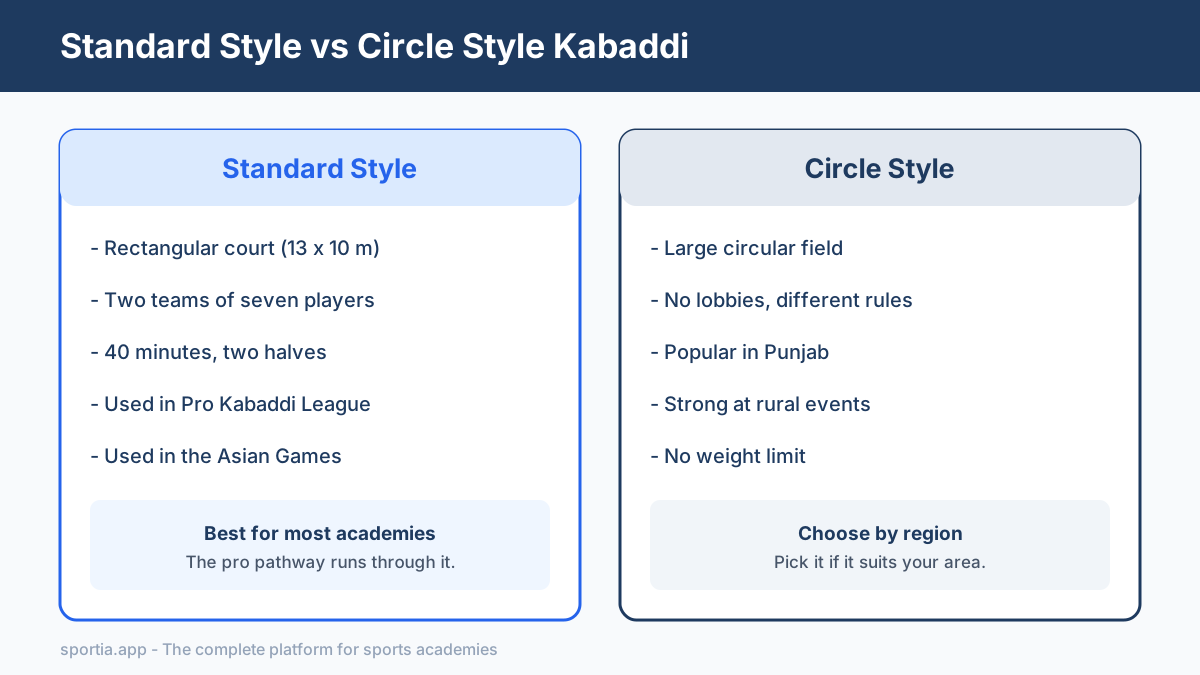
Standard style is the format you see on TV. The Pro Kabaddi League and Asian Games use it. Two teams of seven play on a rectangular court. A match runs 40 minutes in two halves. Most academies focus here, because the pro pathway runs through it.
Circle style is played on a large circular field. It is popular in Punjab and rural events. It has no lobbies and different rules. Choose it only if it suits your region and audience.
What a kabaddi training programme should cover
Good kabaddi coaching balances three areas. Skill, fitness, and strategy all matter together. Build your weekly plan around all three.
- Raiding skills: hand touches, toe touches, escapes, and quick turns.
- Defending skills: ankle holds, blocks, chains, and coordinated tackles.
- Fitness: agility, explosive power, breath control, and core strength.
- Strategy: reading the raider, earning bonus points, and using the game clock.
Young players love the raiding drills the most. But matches are often won in defence. A strong programme gives equal time to both, alongside steady fitness conditioning.
Fee structures for a kabaddi academy
Kabaddi fees are lower than cricket or tennis. That is part of its appeal. But you still need a healthy, fair price.
Most Indian kabaddi academies charge 1,000 to 5,000 rupees per month. The exact figure depends on your city and your coaching level. A small-town academy on a mud court may charge 800 to 1,500 rupees. A city academy with mats and physios may charge 3,000 to 5,000 rupees.
Consider offering free or reduced fees for a few gifted players. Kabaddi has a strong tradition of lifting talent from poor homes. One state-level star from your academy builds huge local trust. For more on pricing, see our sports academy business plan template.
Equipment and safety needs
Kabaddi gear is simple and cheap. This keeps your startup cost low. But safety still matters a great deal.
- Surface: a level mud court or AKFI-standard mats.
- Kit: team jerseys, shorts, and basic markers.
- Safety: knee and ankle support for raiders and defenders.
- First aid: a stocked kit for sprains, cuts, and cramps.
Kabaddi is a contact sport, so injuries happen. Sprains and minor pulls are common. Train your coaches in basic first aid. A safe academy keeps parents calm and students coming back.
Building a competition pathway
Parents enroll children to help them rise. So you must show a clear path to the top. This pathway is your strongest selling point.
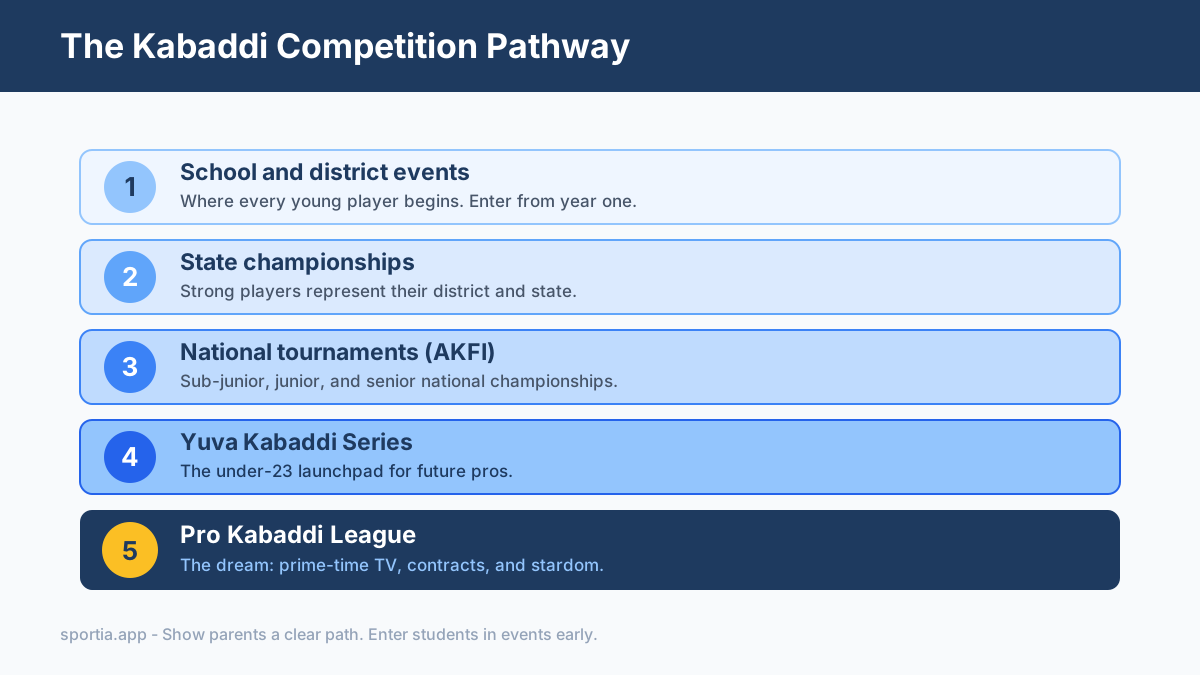
The journey usually climbs step by step. It starts at school and district events. Strong players move to state championships. From there, the best reach national tournaments. Top talent can then aim for the Yuva Kabaddi Series or the Pro Kabaddi League.
Enter your students in events from the first year. Even a district medal builds momentum and pride. Track each athlete's results and growth so you can guide them well. A clear record also helps with state and national selections.
A real example: starting small in Haryana
Consider a former state player who starts an academy in a small Haryana town. He has no money for mats, so he prepares a simple mud court on rented ground. He charges 1,000 rupees a month and signs up 20 sub-junior boys in the first season.
That brings in about 20,000 rupees a month, which covers his rent and basic costs. He enters his strongest players in district tournaments within the first year. Two of them reach the state championship, and word spreads quickly across the town. By the second year, enrollment doubles, and he reinvests the profit into a proper interlocking mat. This slow, steady path is how most successful kabaddi academies are actually built.
How to find your first students
Your academy needs a steady flow of new players to survive. The good news is that kabaddi attracts crowds naturally. Use that to your advantage from the very beginning.
- School demos: offer free trial sessions at nearby schools.
- Village tournaments: sponsor or host a small local event.
- Social media: post raid clips and student wins on Instagram.
- Word of mouth: a happy parent is your best advertisement.
Government programmes can help too. Schemes like Khelo India promote grassroots sports, including kabaddi. Connect with local sports officers to learn about support and selection camps in your district.
Going digital from day one
Many kabaddi academies still run on registers and WhatsApp. You can do better from the start. A simple digital system saves hours every week.
You can track attendance with a quick QR scan. You can collect fees online and send auto reminders. You can store each athlete's progress and competition results in one place. This is exactly what Sportia does for sports academies. It lets you run a professional setup, even as a solo coach. The same approach helps in any sport, as our guide to starting a cricket academy shows.
Before you take in students, settle your legal basics too. Register your academy and sort out your paperwork early. Our guide to registering a sports academy walks you through it.
Frequently Asked Questions
How much does it cost to start a kabaddi academy in India?
You can start on a mud court for very little money, mostly coaching and basic kit. A full interlocking mat adds around 1.5 to 2.5 lakh rupees. Many owners begin on mud and add a mat once they have steady students.
What is the cost of a kabaddi mat in India?
Interlocking EVA mat panels cost about 625 to 825 rupees each for a one-metre square. A full court needs many panels, so the total often runs 1.5 to 2.5 lakh rupees. Choose 30 to 40 mm thickness for safety and AKFI-standard play.
Do I need AKFI approval to run a kabaddi academy?
You can coach without it, but you need the AKFI system for official tournaments. Link with your state kabaddi association early. This connects your athletes to district, state, and national events.
What is the difference between standard and circle style kabaddi?
Standard style is played on a rectangular court by teams of seven and is used in the Pro Kabaddi League and Asian Games. Circle style is played on a large circular field, mainly in Punjab. Most academies focus on standard style.
How much can a kabaddi academy charge per month?
Most Indian kabaddi academies charge 1,000 to 5,000 rupees per month. Small-town academies on mud courts charge less, while city academies with mats and physios charge more. Many also offer free spots for gifted players.
Start your kabaddi academy the smart way
Kabaddi gives you a rare mix: low startup cost and a booming pro pathway. Begin on a mud court, certify your coaching, and enter events early. Then grow into mats and bigger batches as you build a name. Manage your kabaddi academy from day one with Sportia. Start your free 14-day trial of Sportia and run your academy like a pro from the first whistle.