
How to Register a Sports Academy in India: Legal Guide 2026
Running a sports academy without proper paperwork puts you at real risk. Tax notices, parent disputes, facility audits, and bank rejections all become harder to handle when you operate in a grey zone. This guide walks through every legal step you need to register a sports academy in India in 2026.
You will learn which legal setup fits your size and which licenses you must apply for. You will see when GST kicks in and which insurance covers protect your work. The advice here applies to both solo coaches and large multi-site academies.
Do You Even Need to Register Your Sports Academy?
Yes, you need to register if you take fees from parents and run regular sessions. The only honest gap is a free, one-off session for friends or family.
These signs show that informal status is now risky for your academy:
- You collect monthly fees from more than five families
- Parents ask for proper invoices or fee receipts
- You rent or own a coaching facility
- You hire even one part-time coach or assistant
- You want to open a current bank account
- You plan to apply for grants, school tie-ups, or sponsorships
Once any of these apply, the cost of staying informal grows fast. A single tax notice or parent complaint can shut you down for weeks at a time. Proper registration is the small upfront step that protects every bit of work you have built.
The Four Main Legal Setups for a Sports Academy
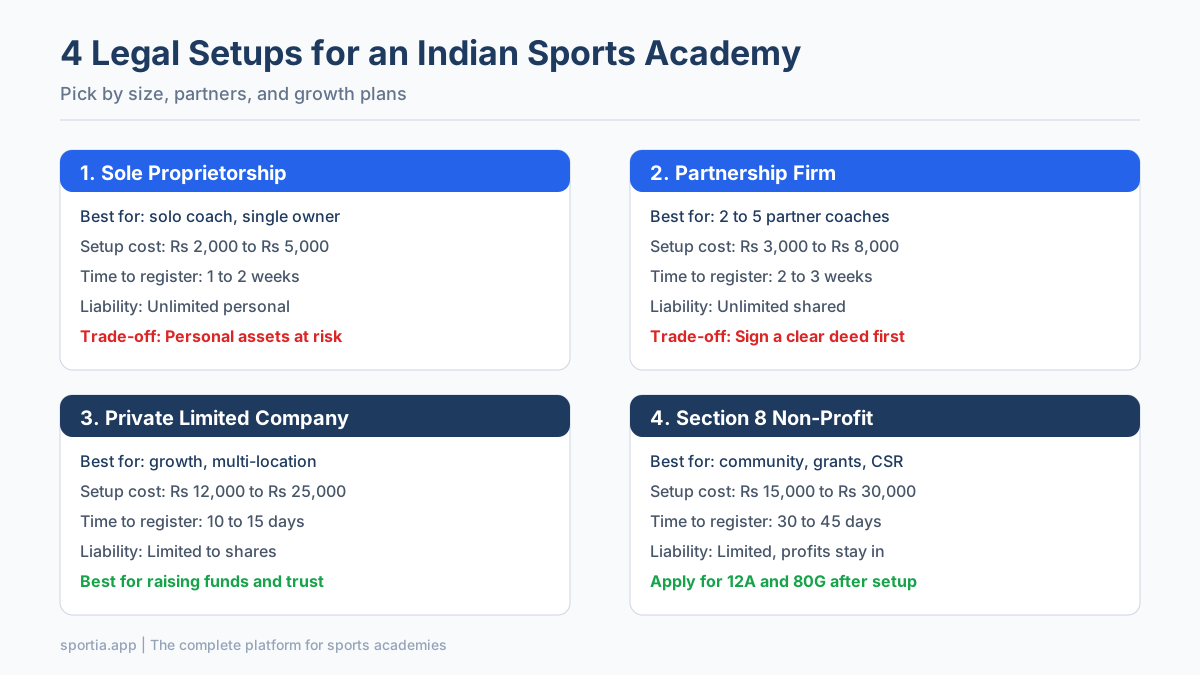
You have four main ways to register a sports academy in India. Pick based on your size, your partners, and how you plan to grow.
Option 1: Sole Proprietorship
This is the simplest option for a solo coach or single-owner academy. There is no separate legal entity, so you and the business are treated as one person for tax and legal purposes.
When this fits:
- You coach alone or with one or two assistants
- Annual fees collected stay under 20 lakh
- You do not plan to raise outside money
How to set it up:
- Get a Shop and Establishment Act license from your state
- Apply for a current account in your trade name
- Get GST registration if turnover crosses the threshold
- File income under your personal PAN as business income
The catch: You have unlimited personal liability. If a parent sues for an injury, your personal assets are exposed, and the same risk applies if you cannot pay a vendor. This is the main reason most academies shift to a private limited setup once they cross 25 athletes.
Option 2: Partnership Firm
A partnership firm works well when two or three coaches join hands to run an academy together. You sign a partnership deed that lists each partner share, role, and exit terms.
When this fits:
- Two to five partners share ownership and profits
- You want a simpler structure than a company
- You do not need to raise outside investment soon
How to set it up:
- Draft a partnership deed on stamp paper
- Register with the Registrar of Firms (optional but strongly advised)
- Apply for a PAN in the firm name
- Open a current account in the firm name
An unregistered partnership cannot sue third parties to recover dues. So registration with the Registrar of Firms is technically optional, but skip it only if you fully trust everyone involved.
Option 3: Private Limited Company
A private limited company is the gold standard for growth-focused academies. Your business gets its own legal identity. The owners and the business stay separate for tax, debt, and law.
When this fits:
- You plan to scale to multiple locations
- You want to raise funds from family, friends, or angel investors
- You hire 5 or more coaches and staff
- You want full liability protection for owners
How to set it up:
- You need at least 2 directors and 2 shareholders
- Apply for a Digital Signature Certificate for each director
- Get a Director Identification Number (DIN) for each director
- Reserve a unique company name through the SPICe+ form
- File incorporation documents with the Registrar of Companies
- Apply for PAN, TAN, and a current bank account
The full process takes 10 to 15 working days and costs roughly Rs 12,000 to Rs 25,000 in fees. After that, you must file annual returns and audited accounts each year. The compliance load is real, but so is the trust a private limited company brings.
Option 4: Section 8 Non-Profit Company
A Section 8 company is for academies that work as non-profits. Your goal must be to push the cause of sport, not to earn money. Any income earned must go back into the academy. It cannot go to owners.
When this fits:
- You serve underprivileged kids or rural athletes
- You want to raise grants and CSR funds
- You want to apply for tax exemption under Sections 12A and 80G
- You partner with NGOs, schools, or government bodies
How to set it up:
- Apply for a license from the Central Government under Section 8
- Need at least 2 directors and 2 shareholders
- Submit a clear non-profit objects clause in your MOA
- Pay no minimum capital, but you must follow Companies Act rules
The license can take 30 to 45 days. After approval, you can apply for 12A and 80G so that donors get tax breaks on the gifts they make to your academy. This is a strong fit for community-focused sports work.
Two other non-profit forms also exist for sports. A society under the Societies Act 1860 needs 7 or more members, and a public trust under the Indian Trusts Act 1882 needs at least 2 trustees. Both work, but Section 8 companies are the modern pick with cleaner rules and stronger trust.
GST Registration for Sports Academies
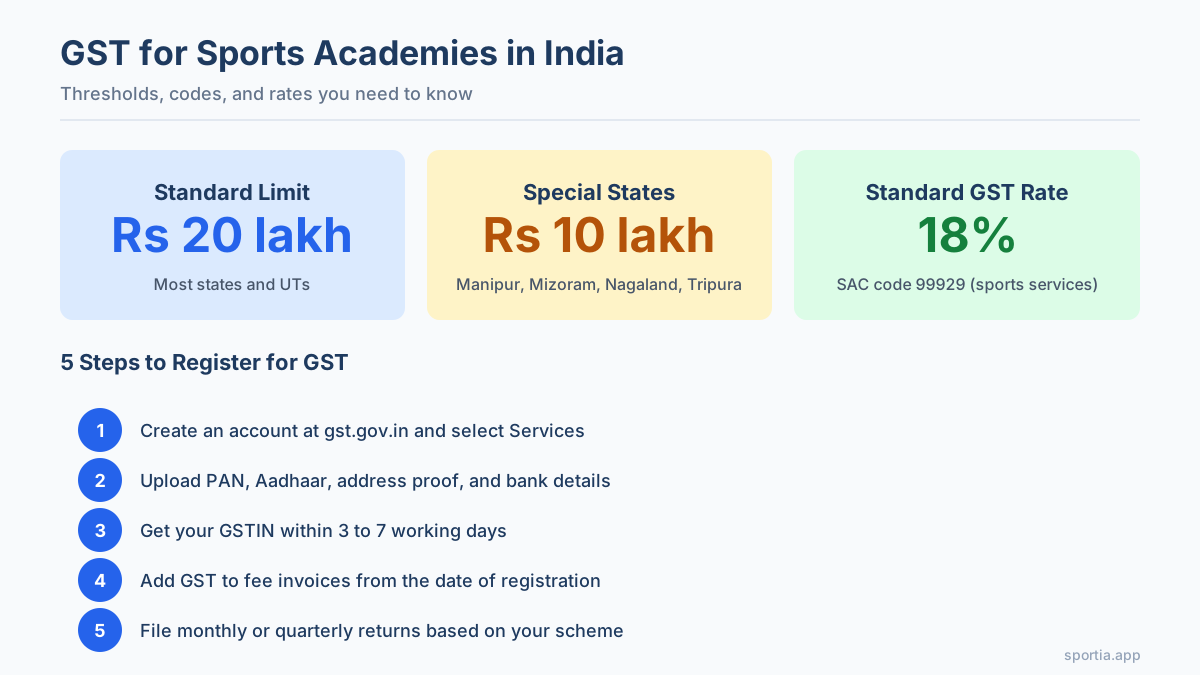
Sports coaching is a taxable service in India. You must sign up for GST once yearly turnover crosses 20 lakh. The limit drops to 10 lakh in some states. These are Manipur, Mizoram, Nagaland, and Tripura.
Total turnover means all fees, plus gear sales, plus any other income. The total is across all states under one PAN. So if you run a Bangalore academy and also weekend camps in Mysore, the totals add up.
SAC code 99929 covers other sports and free time services. Most coaching, training, and academy services fall here. The GST rate on coaching is 18 percent.
Some sports work can fall under exempt services. Examples are vocational training and services to a sports body. But the default for private academies is 18 percent GST.
How to register:
- Apply on the GST portal at gst.gov.in
- Upload PAN, Aadhaar, address proof, bank details, and a photo
- Get a GSTIN number, usually within 3 to 7 working days
- Start charging GST on invoices from the date of registration
- File monthly or quarterly GST returns based on your scheme
Small academies can opt for the Composition Scheme if turnover is below 1.5 crore. You pay a flat 6 percent on turnover. Returns are simpler. The trade-off is you cannot claim input tax credit. That means no claim on rent, gear, or ads. For most academies under 50 lakh turnover, this is the easier path.
Other Licenses You May Need
Sign-up is one part of the puzzle. Most academies need a few more local nods to run cleanly. The exact list depends on your state and your venue.
Shop and Establishment Act License
Almost every state needs this license. It applies if you run a coaching center, office, or any work space. You must apply within 30 days of starting up. The fee runs from Rs 125 to Rs 12,500. The fee depends on staff count.
You will need to submit your business details. You also need address proof, owner ID, staff count, bank info, and rent papers. In many states, the form is now fully online.
Fire Safety NOC
Indoor academies often need a Fire Safety No Objection Certificate. This is true for badminton halls, gyms, and swim pools. The fire team checks for fire exits, fire kits, and alarms. Without this NOC, your Shop and Establishment license can be denied.
Local Trade License
Some cities have a trade license from the city office. Mumbai, Delhi, Bangalore, and Pune all have these. Check your local site or visit the city office. Confirm what is needed for sports coaching in your zone.
FSSAI License (If You Sell Snacks)
If your academy has a snack bar or canteen that sells food, you need an FSSAI license. The basic sign-up costs Rs 100 per year. It works for small sellers with turnover under 12 lakh. Skip this only if you sell no food.
Music License (If You Play Music in Classes)
Aerobics, dance, gym, and martial arts classes play music. Such classes need a music license. The license comes from PPL India or NOVEX. Yearly fees start around Rs 5,000. Many small academies skip this. But large fitness chains have got notices for unlicensed music.
Insurance Covers Every Sports Academy Should Carry
Insurance is not a sign-up step. But it is part of running a legal academy in 2026. Sports carry injury risk. One bad accident without cover can wipe out years of savings. It can force you to shut down.
Three insurance policies matter most for a sports academy.
Public Liability Insurance
This covers third-party injuries on your site. A child trips. A parent slips on a wet floor. A guest is hit by gear. Public liability pays for medical costs and any legal claims. Yearly premiums for a small academy start at Rs 5,000 to Rs 15,000. That gets you a 25 lakh cover.
Professional Indemnity Insurance
This covers claims of poor coaching or coach errors. A parent could say a coach pushed a child too hard and caused harm. Professional indemnity pays for legal costs and any payout. Premiums for a small academy start at Rs 8,000 to Rs 20,000 a year.
Personal Accident Cover for Athletes
You can buy a group accident cover for all your athletes. Sports injury policies start at Rs 494 a year. That gets a Rs 2 lakh cover per athlete. Many academies build this into the fees. The add-on is small, around Rs 50 to Rs 100 per month per child.
If you hire coaches or other staff, ESI may also apply. ESI kicks in when you have 10 or more staff. Each must earn under Rs 21,000 a month. Check with a CA in your state for current rules.
Common Sign-Up Mistakes to Avoid
Most academy founders learn these the hard way. Use this list to avoid the same traps.
- Mixing personal and business money: Always open a current account in the academy name. Run all fees through it
- Ignoring the GST limit: Track turnover each month. The day you cross 20 lakh, sign up within 30 days. Late sign-up brings fines
- Skipping the partnership deed: Even with a sibling or close friend, sign a written deed before you start
- Forgetting Shop and Establishment sign-up: Many states fine you for each month of delay
- Running on a home lease: Your local zone may not allow coaching. Get a lease that says commercial or mixed use
- No insurance for the first year: One bad day in your first month can end the business before it starts
- Skipping the audit step: Private limited companies must file audited books, even at low turnover
Documents Checklist for Sign-Up
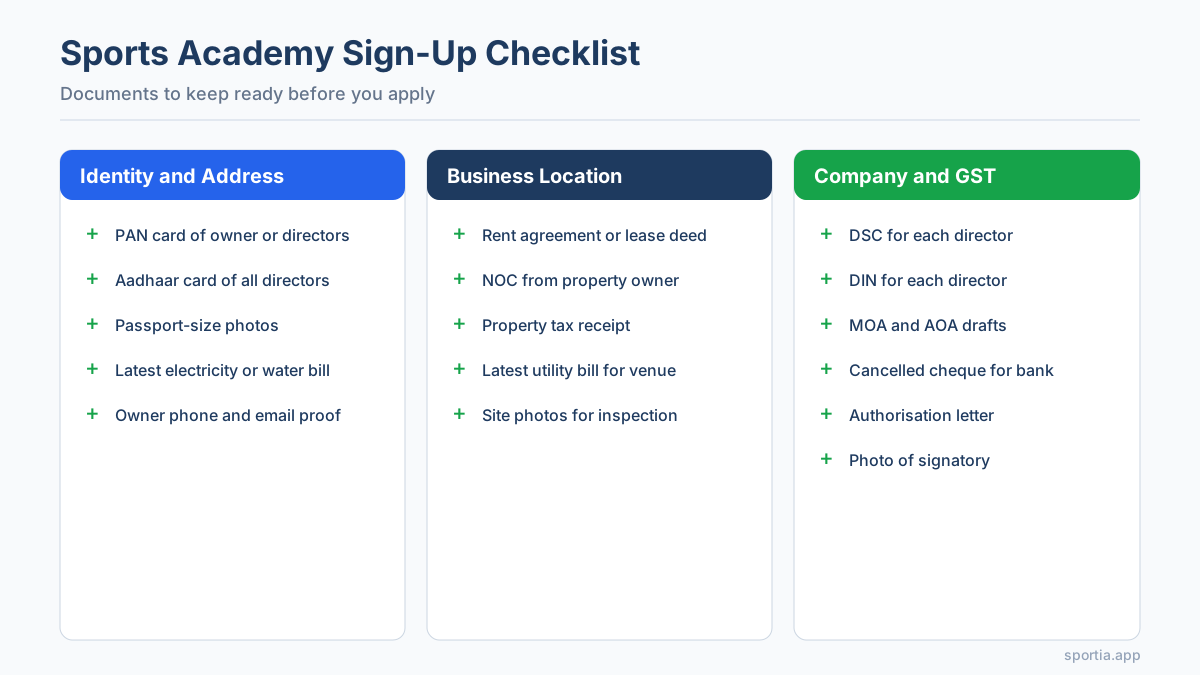
Keep this list ready before you start. It will save weeks of running between offices and CAs.
Identity and address documents:
- PAN card of owner or all directors
- Aadhaar card of owner or all directors
- Passport-size photos
- Latest utility bill (electricity, water, or gas) for residential address proof
Business location documents:
- Rent agreement or lease deed for the academy location
- NOC from the property owner if you are a tenant
- Latest property tax receipt or utility bill for the location
For a private limited or Section 8 company:
- Digital Signature Certificate for each director
- Director Identification Number for each director
- Memorandum of Association and Articles of Association
- Declaration forms signed by directors and subscribers
For GST registration:
- PAN of business or owner
- Bank account details with a cancelled cheque
- Authorisation letter for primary signatory
- Photo of authorised signatory
What to Do After You Register
Sign-up is the start, not the end. Once you have a legal identity, you need clean systems to run daily work. That is where most new academies stumble.
Start with the basics. You need a clear fee plan. You need a way to track who shows up. You need a way to send bills and reminders. A solid business plan helps you map sign-up targets and costs. If cricket is your sport, the cricket academy guide covers fees, courses, and growth steps. For pricing, the fee structure guide shows how Indian academies set monthly and term fees.
You can run all of this on paper for a few months. But once you cross 25 athletes or two batches, manual systems start to break. Sportia is built for this stage. You get attendance, GST-ready bills, parent chat, and fee nudges in one place. The 14-day free trial is enough time to set up your batches and athletes. You can do this even before your sign-up papers are done.
Frequently Asked Questions
Do I need GST sign-up for a sports academy in India?
You need GST once your yearly turnover crosses Rs 20 lakh. The limit is Rs 10 lakh in some states. These are Manipur, Mizoram, Nagaland, and Tripura. Sports coaching falls under SAC code 99929. The tax rate is 18 percent. Small academies can opt for the Composition Scheme at a flat 6 percent rate.
What licenses are needed to start a sports academy in India?
You need a Shop and Establishment Act license. Indoor venues also need a Fire Safety NOC. You may need a local trade license too. If you sell food or drinks, you need an FSSAI license. GST is a must once turnover crosses Rs 20 lakh.
How do I register a sports academy under Section 8?
You apply for a Section 8 license from the Central Government. The law is the Companies Act 2013. You need at least 2 directors and 2 shareholders. You also need a clear non-profit goal in your MOA. The process takes 30 to 45 days. After that, apply for 12A and 80G to give donors tax breaks.
What is the cheapest way to register a sports academy?
A sole proprietorship with a Shop and Establishment Act license is the cheapest setup. Total cost is about Rs 2,000 to Rs 5,000. The trade-off is full personal liability. For solo coaches with under 25 students, this is the fastest legal start.
What insurance do sports academies need in India?
The three core covers are public liability, professional indemnity, and personal accident insurance. Public liability covers site injuries. Professional indemnity covers coach errors. Personal accident covers athlete injury costs. Total yearly premiums for a small academy start at Rs 15,000 to Rs 30,000.
Can I register a sports academy from my home?
Yes, you can register a sole proprietorship or a private limited company at a home address. But your zone may not allow live coaching at home. Most cities want a commercial or mixed-use lease for the actual venue. Always check the zone with your city office before you sign a lease.