
School Tie-Ups for Sports Academies: How to Partner with Schools in India
A sports academy school partnership gives you a steady stream of students and income. To set one up, pick a partnership model, pitch the school on safety and results, agree on a fair fee or revenue share, and meet child-safety rules. June, when schools reopen, is the best time to start. This guide shows you exactly how.
Most academies chase students one parent at a time. It is slow and costly work. A single school holds hundreds of children in one building. One good tie-up can fill more batches than months of Instagram ads. Yet most coaches pitch schools the wrong way and get a polite no.
Why June is the best time for a school partnership
Schools across India reopen in June after the summer break. This is when principals plan the year ahead. They finalize their schedule, their activities, and their vendors. If you pitch in August, the year is already set. If you pitch in June, you can still get a slot.
There is a bigger trend in your favor too. The National Education Policy 2020 pushed sports and physical education up the priority list. CBSE now treats Health and Physical Education as a core area. Schools need quality sports delivery, but most lack expert coaches. That gap is your opening.
The three school partnership models
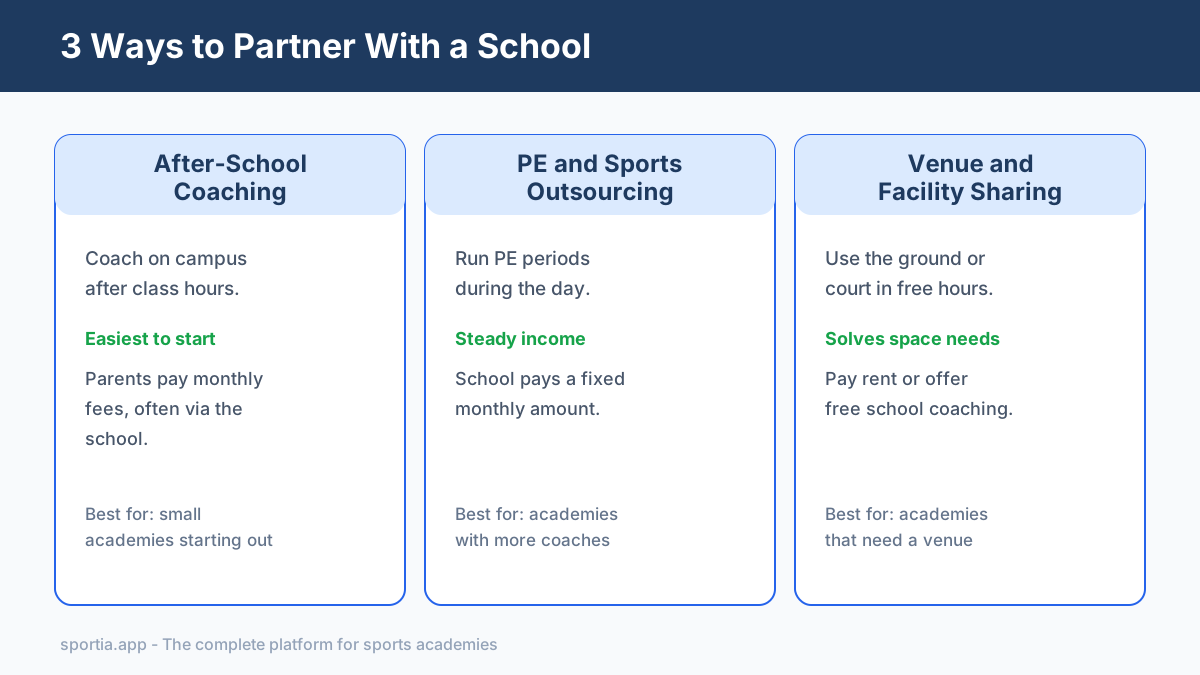
A "school tie-up" is not one single thing. There are three main models. Pick the one that fits your sport, your staff, and the school's needs.
1. After-school coaching
You run coaching sessions on the school campus after class hours. Students stay back for cricket, football, or skating. Parents pay a monthly fee, often through the school. This is the easiest model to start. You use the school's ground and reach its students without renting your own space.
2. PE and sports outsourcing
Here you run the school's physical education periods during the day. Your coaches replace or support the school's PE staff. Big firms like Sportz Village and KOOH Sports built whole businesses on this model. The school pays you a fixed monthly amount. It is steady income, but it needs more coaches and structure.
3. Venue and facility sharing
The school lets you use its ground, court, or pool during free hours. You run your own academy batches there. In return, you pay rent or offer free coaching to school students. This works well if you need space and the school has idle facilities on weekends.
How to find and shortlist the right schools
Do not pitch every school in the city. Aim for schools that fit your sport and your reach. A smart shortlist saves weeks of wasted effort.
Use these filters to pick your targets:
- Distance: stay within 5 to 7 km so your coaches can travel easily.
- Size: larger schools mean more potential students per visit.
- Facilities: a school with a ground or hall is far easier to work with.
- Fit: a school that already values sports will say yes faster.
Start with 10 to 15 schools, not 50. Find the name of the principal or the sports head. A pitch sent to "The Principal" gets ignored. A pitch sent to a named person gets read.
The pitch: what schools actually want
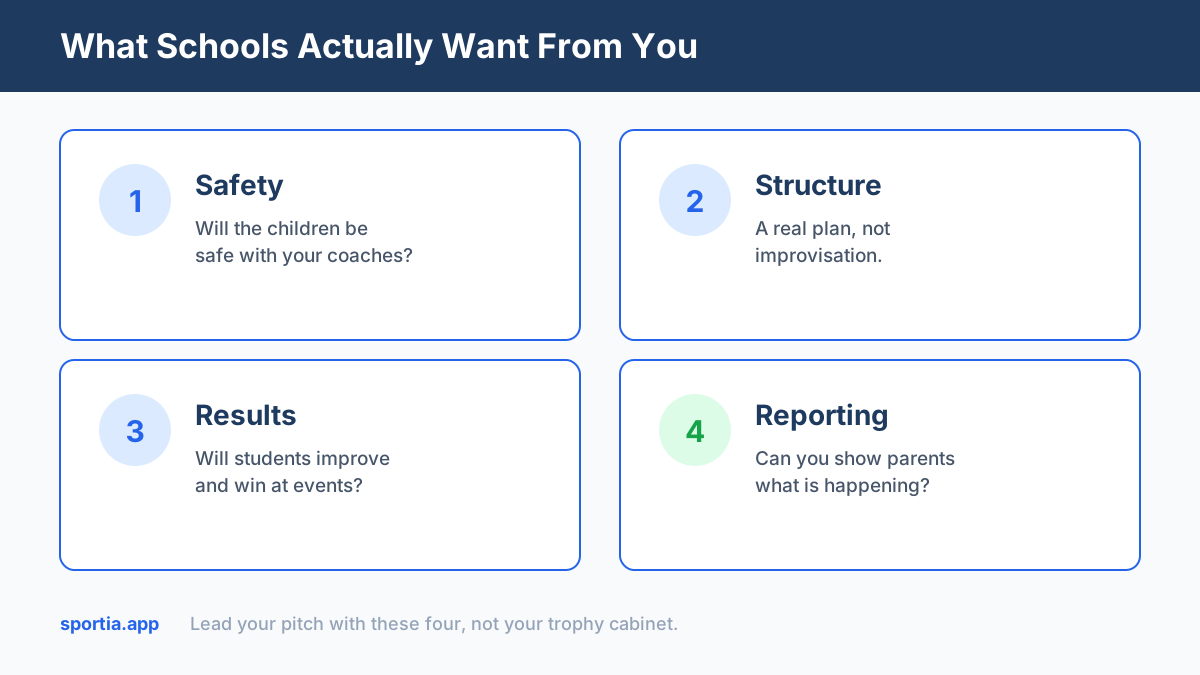
This is where most academies fail. They walk in and talk about their sport, their trophies, and their coaches. The school does not care about that first. The school cares about four things.
- Safety: will the children be safe with your coaches?
- Structure: do you have a real plan, or will you improvise?
- Results: will students improve and win at school events?
- Reporting: can you show parents and the school what is happening?
Lead your pitch with these four points. Show a clear curriculum for each term. Explain your safety checks up front. Promise simple monthly reports for parents. When you solve the school's worries, the tie-up becomes easy to say yes to.
Pricing and revenue-share models that work in India
Money is where many tie-ups break down. Be clear about the model before you start. There are three common ways to price a school partnership in India.
| Model | How it works | Best for |
|---|---|---|
| Per student, per month | You charge a set fee per child, often Rs 300 to Rs 800 | After-school coaching |
| Fixed monthly retainer | The school pays a flat amount for your service | PE outsourcing |
| Revenue share | You and the school split the fees, often 70:30 or 80:20 | Mixed or premium programs |
For context, large outsourcing firms have offered trained coaches from as low as Rs 50 per student per month at scale. A small academy cannot match that, and should not try. You compete on quality, local presence, and personal care, not on being the cheapest. Price for a healthy margin after you pay your coaches and travel.
One common mistake is agreeing to a revenue share with no minimum. If only six students sign up, you still spent a full session's time and travel. Always set a floor. For example, ask for a fixed minimum or a guaranteed batch size.
A real example of a school tie-up
Consider a football academy in Coimbatore with two coaches. They approach a nearby CBSE school that has a decent ground but no real football program. They propose after-school coaching three days a week, priced at Rs 600 per student each month, with the school keeping 20 percent for using its facility.
In the first term, 35 students sign up. That generates about Rs 21,000 a month, of which the academy keeps roughly Rs 16,800 before coaching costs. More importantly, eight of those students later join the academy's weekend competitive batch at full fees. The school tie-up did not just earn money on its own. It became a discovery channel that fed the main academy for years.
Common mistakes to avoid
Plenty of tie-ups fail, and they usually fail for the same reasons. Knowing these mistakes ahead of time protects your reputation and your income.
- Overpromising: never guarantee medals or selections you cannot control.
- No minimum: a revenue share with no floor can leave you working for almost nothing.
- Weak communication: silence makes schools and parents nervous and unhappy.
- One coach dependency: if your only coach falls sick, the whole program stops.
The paperwork: MoU, compliance, and child safety
A handshake deal will hurt you later. Put the partnership in writing with a simple MoU. A memorandum of understanding spells out who does what. Cover these points clearly:
- The exact days, times, and venue for sessions.
- The fee model and the payment date each month.
- Who provides equipment and who handles injuries.
- The notice period if either side wants to exit.
Child safety is not optional. The POCSO Act 2012 protects children from abuse, and schools take it extremely seriously. CBSE expects schools to ensure that all staff, including outside vendors and their coaches, follow proper child-safety rules. Many schools will now refuse to even consider a vendor whose coaches lack documented police verification and basic child-protection awareness. Get police verification for every coach who enters a school, and keep these documents ready before you pitch. A coach who arrives with a verified background builds instant trust with administrators.
Delivering value so the tie-up renews each year
Winning the tie-up is only half the job. The real goal is renewal every year. A renewed school is your cheapest source of growth. To keep it, you must prove your worth often.
Do these things from day one:
- Show up on time, every single session, without fail.
- Send a short monthly report to the school and parents.
- Track attendance so no child slips through unnoticed.
- Prepare students for school and district level events.
Strong records make renewal talks simple. When you can show steady attendance and clear progress, the school has every reason to continue. This is the same systematic approach that helps you scale a sports academy from 10 to 100 athletes.
Turning school students into full academy members
The school program is your front door, not your whole house. Many keen students will want more than two sessions a week. These children are your best leads for your main academy. They already know your coaches and trust your style.
Invite your strongest school students to join your full batches. Offer a simple path from the school program to your academy. A sibling discount or a trial week works well here. This is where a school tie-up quietly becomes a powerful growth engine. It also pairs well with other low-budget ways to market your academy.
To manage all these school leads, you need a system. Sportia's embeddable inquiry form lets a school or parent register interest in one click. Every lead lands in your CRM, ready for follow-up. You can then track each child from school session to full enrollment in one place.
Frequently Asked Questions
How do I approach a school for a sports academy partnership?
Shortlist schools within 5 to 7 km that value sports. Find the principal or sports head by name. Pitch around safety, structure, results, and reporting, not just your achievements. June, when schools reopen, is the best time to approach them.
How much should I charge a school for sports coaching?
Common models are per student per month (often Rs 300 to Rs 800), a fixed monthly retainer, or a revenue share like 70:30. Choose based on the model. Always set a minimum so a low turnout does not leave you out of pocket.
What documents do I need for a school tie-up in India?
Put the deal in a written MoU covering schedule, fees, equipment, and exit terms. For child safety, get police verification for every coach and follow POCSO Act rules. Schools, especially CBSE ones, expect vendor staff to be properly vetted.
Which school partnership model is best for a small academy?
After-school coaching is usually the easiest start. You use the school ground, reach its students, and charge a monthly fee. PE outsourcing earns steady income but needs more coaches and structure, so it suits larger academies.
How do school tie-ups help my academy grow?
A school gives you access to hundreds of children in one place. Keen students then join your full academy batches for more training. This turns one partnership into a steady pipeline of enrollments and referrals.
Make this enrollment season your best one yet
A school tie-up is one of the highest-value moves a sports academy can make. It brings scale, steady income, and a pipeline of future members. Pick your model, lead your pitch with the school's needs, and put it all in writing. Capture every school and parent inquiry with Sportia's embeddable inquiry form, then track each lead to enrollment. Start your free 14-day trial of Sportia and turn this June into your strongest enrollment season yet.