
Common Sports Injuries in Children: Prevention, First Aid & When to See a Doctor
A twisted ankle during football practice. A sore shoulder after a long bowling spell. A child feeling dizzy under the hot sun in May. Common sports injuries in children happen more often than most coaches think. About half of all youth sports injuries come from overuse rather than a single accident. The good news is that most of these are easy to prevent with the right habits.
This guide is for coaches and academy owners who want to keep their young athletes safe. It covers the most common injuries by sport, a warm-up that actually works, first aid basics every academy must know, heat safety for Indian summers, and when to stop training and call a doctor.
Why Injury Prevention Is Every Coach's Job
Many small academies in India do not have a physio on staff. The coach is the first and only adult on the ground. That means injury prevention falls on you. It is not an extra task. It is part of coaching.
Young athletes are still growing. Their bones, joints, and muscles are not fully formed. This makes them more prone to growth plate injuries and overuse damage compared to adults. A 12-year-old fast bowler's shoulder is not built to handle 100 balls a day. A 10-year-old footballer's knees cannot take the same impact as an adult's.
The first step is knowing what to watch for. The second step is having a plan when something goes wrong.
Most Common Sports Injuries in Children by Sport
Different sports carry different risks. Knowing the pattern for your sport helps you focus your prevention efforts where they matter most.
Cricket
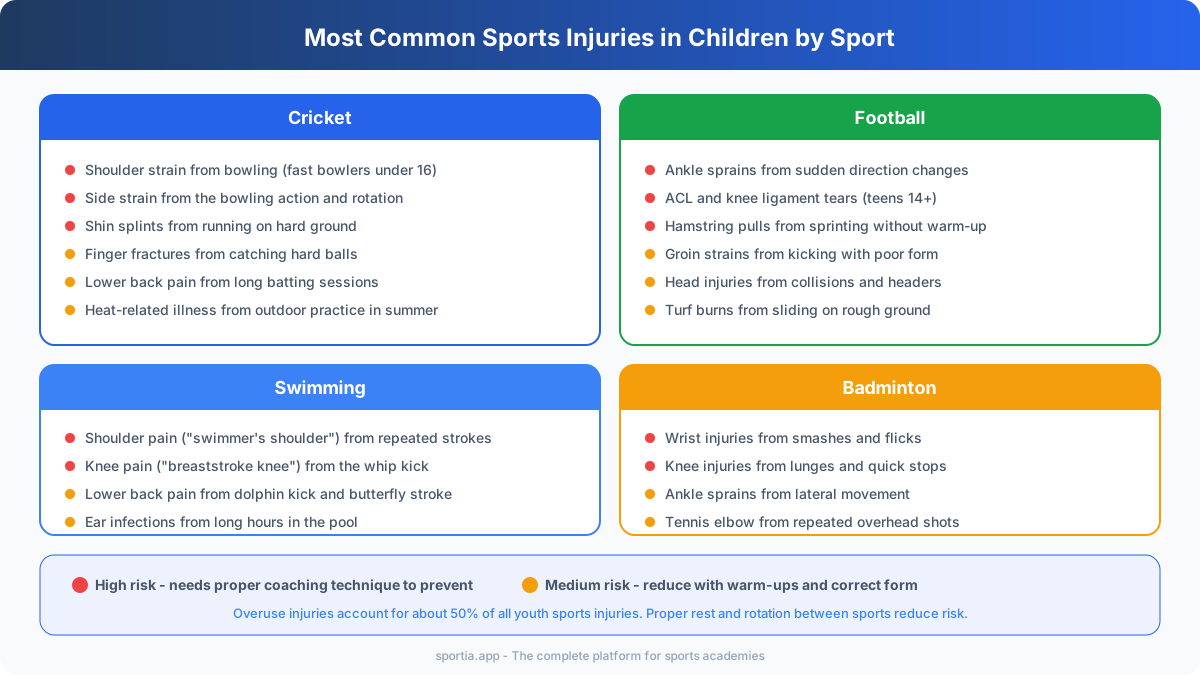
Fast bowlers under 16 face the highest risk. Shoulder strains come from bowling too many overs without rest. Side strains happen when the body rotates hard during the bowling action. Shin splints are common from running on hard, dry ground, especially during Indian summers. Finger fractures from catching hard leather balls are also frequent among younger players.
Prevention tip: Follow age-based bowling limits. The ICC sets clear guidelines on how many overs a young bowler should bowl per day and per week. Good batting and bowling technique from an early age also reduces strain on growing bodies.
Football
Ankle sprains lead the list. Quick direction changes and uneven ground are the main causes. Hamstring pulls happen when players sprint without a proper warm-up. Knee injuries, including ACL tears, become more common in teens above 14. Groin strains result from kicking with poor form.
Prevention tip: Warm up for at least 10 minutes before every session. Include lateral movement drills, not just forward running. Ankle-strengthening exercises twice a week cut sprain risk by up to 50 percent.
Swimming
Shoulder pain is the top issue. Coaches call it "swimmer's shoulder." It comes from doing the same stroke motion thousands of times. The breaststroke whip kick causes knee pain in many young swimmers. Lower back pain is common in butterfly swimmers.
Prevention tip: Mix up strokes during training. Do not let young swimmers do only one stroke for an entire session. Include dryland shoulder exercises and stretching as part of every warm-up.
Badminton
Wrist injuries from smashes and flick shots are the most common. Knee injuries follow, caused by deep lunges and sudden stops. Ankle sprains happen during fast lateral movement. Tennis elbow can develop from repeated overhead shots.
Prevention tip: Teach proper racket grip and wrist form early. Lunging drills with correct knee alignment prevent most knee injuries. Good shoes with ankle support are essential.
The 10-Minute Warm-Up That Prevents Injuries
A proper warm-up is the single best way to cut injury risk. Static stretching (touching your toes and holding) is outdated. Dynamic stretching is what works. It raises body temperature, loosens muscles, and prepares joints for movement.
Here is a 10-minute routine that works for any sport:
- Light jog (2 minutes): Easy pace around the ground. Gets blood flowing to muscles.
- High knees (1 minute): Lift knees to waist height while walking forward. Warms up hip flexors.
- Butt kicks (1 minute): Kick heels toward your backside while walking. Warms up hamstrings.
- Leg swings (1 minute): Hold a wall or partner. Swing each leg forward and back 10 times. Opens up hips.
- Arm circles (1 minute): Small circles growing to large ones. Forward then backward. Warms up shoulders.
- Lateral shuffles (1 minute): Side-to-side movement in a squat position. Prepares ankles and knees.
- Lunges with twist (1 minute): Step forward into a lunge and twist your upper body toward the front knee. Warms up core and legs.
- Sport-specific moves (2 minutes): For cricket, shadow batting and gentle bowling. For football, light passing and dribbling. For swimming, arm rotations and torso twists.
Make this warm-up non-negotiable at the start of every session. Print it on a poster and stick it in the changing room. Athletes who skip warm-ups get hurt more often. It is that simple.
First Aid Essentials Every Academy Must Have
Every sports academy needs a first aid kit on-site at all times. Not in the car. Not at the office. On the ground, within 30 seconds of reach. Here is what it must contain and the RICE method every coach should know.
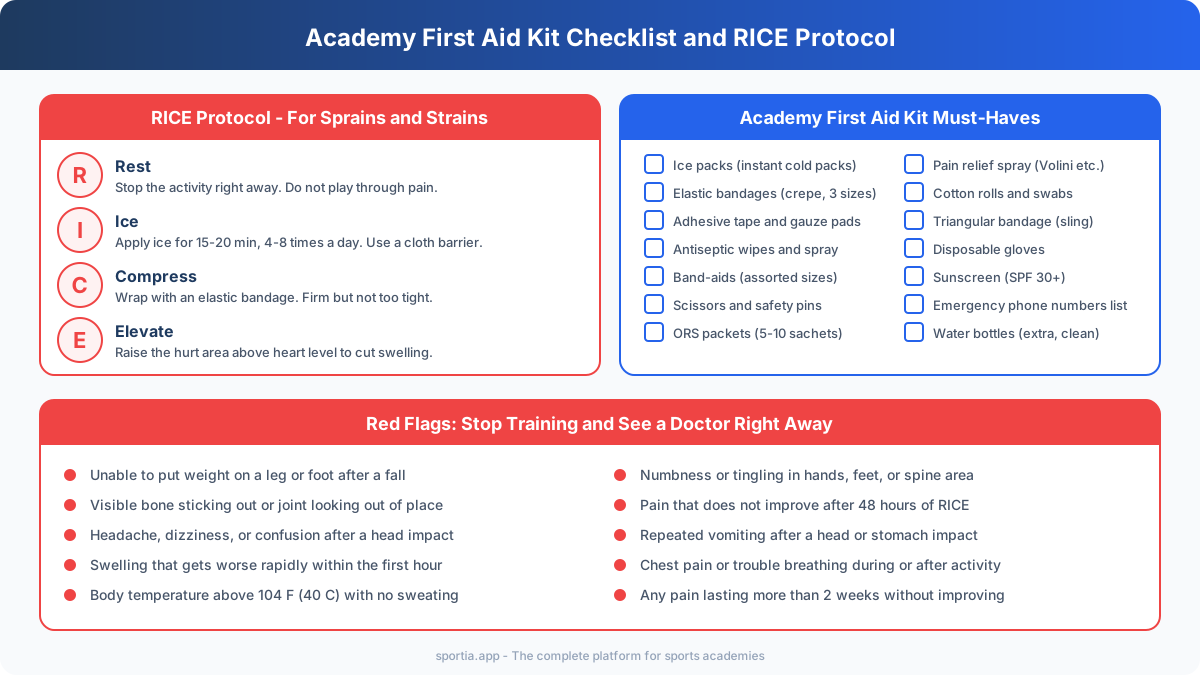
The RICE method works for most sprains, strains, and minor joint injuries:
- Rest: Stop the activity right away. Playing through pain makes injuries worse.
- Ice: Apply an ice pack for 15 to 20 minutes at a time. Use a cloth between the ice and skin. Repeat 4 to 8 times in the first 24 hours.
- Compress: Wrap the injured area with an elastic bandage. Keep it firm but not so tight that it blocks blood flow.
- Elevate: Raise the hurt limb above the level of the heart. This reduces swelling and speeds healing.
Check your first aid kit at the start of every month. Replace used items. Check expiry dates on creams and sprays. Assign one staff member to own this task.
Heat Stroke and Dehydration: India-Specific Risks
From March to May, outdoor training in most of India means dealing with 35 to 45 degree heat. Heat stroke is a real danger for young athletes. Children overheat faster than adults because their bodies are less efficient at cooling down through sweat.
Heat stroke happens when the body temperature rises above 104 F (40 C). At this point, the child may faint, have seizures, or stop sweating entirely. This is a medical emergency. Call for help right away.
Prevention Rules for Hot Weather Training
- Schedule sessions before 9 AM or after 5 PM during March to May
- Take water breaks every 15 to 20 minutes. Do not wait for athletes to ask.
- Keep ORS packets in the first aid kit. Mix with water if a child looks pale or dizzy.
- Athletes should wear light, loose clothing. No dark or heavy jerseys in summer.
- Watch for early signs: headache, nausea, cramps, or unusual tiredness.
- If a child shows heat stroke signs, move them to shade, pour water on them, and call a doctor.
The first 10 to 14 days of summer training are the riskiest. Athletes need time to adjust to the heat. Start with shorter sessions and lighter effort. Build up over two weeks.
Red Flags: When to Stop Training and See a Doctor
Most minor bumps and scrapes heal on their own. But some signs mean the child needs a doctor, not just an ice pack. Here is what to watch for:
- The child cannot put weight on a leg or foot after a fall
- A joint looks out of place or a bone is clearly not straight
- Headache, dizziness, or confusion after a blow to the head
- Swelling that grows rapidly within the first hour
- Numbness or tingling in hands, feet, or along the spine
- Pain that does not improve after 48 hours of rest and ice
- Body temperature above 104 F with hot, dry skin (no sweating)
- Chest pain or trouble breathing during or after exercise
When in doubt, sit the child out. Call the parent. Suggest a doctor visit. It is always better to be cautious than to let a child play through a serious injury.
Return-to-Play Guidelines After Common Injuries
Rushing back from an injury is one of the biggest mistakes in youth sports. Here is a rough guide for how long to rest after common injuries:
| Injury | Rest Period | Return Condition |
|---|---|---|
| Mild sprain (ankle, wrist) | 1-2 weeks | No pain during normal movement |
| Muscle strain (hamstring, calf) | 2-4 weeks | Full range of motion, no pain on stretch |
| Finger fracture | 3-6 weeks | Doctor clearance after X-ray |
| Shin splints | 2-4 weeks | No pain when running at full pace |
| Concussion (head impact) | 2-4 weeks minimum | Step-by-step protocol with doctor clearance |
| Growth plate injury | 4-8 weeks | Doctor clearance only |
| Stress fracture | 6-8 weeks | Doctor clearance after imaging |
The key rule: the child should be pain-free during normal activity before returning to sport. Start with light training first. Build back to full effort over 3 to 5 sessions. If the pain returns, stop and rest longer.
Creating an Injury Log: Why Tracking Matters
Keep a record of every injury at your academy. Even minor ones. This does three things:
- Spots patterns: If three kids get ankle sprains in the same month, something is wrong with the warm-up or the playing surface.
- Protects you legally: If a parent ever questions how an injury was handled, your log is your proof that you took the right steps.
- Helps the athlete: When a child sees a doctor, knowing their injury history speeds up diagnosis and treatment. Past injuries affect future risk.
For each injury, note the date, the athlete's name, what happened, what first aid was given, and whether a doctor visit was advised. Keeping this on paper works, but digital records are safer and easier to search. Platforms like Sportia let you track wellness notes and medical info on each athlete's profile, making injury records part of the athlete's full history rather than a separate notebook that might get lost.
Frequently Asked Questions
What are the most common sports injuries in children?
Sprains (especially ankle), muscle strains, and overuse injuries like shin splints and tendonitis are the most common. About half of all youth sports injuries are from overuse rather than a single event. The risk varies by sport, with lower body injuries being the most frequent overall.
How can coaches prevent sports injuries in young athletes?
Start every session with a 10-minute dynamic warm-up. Follow age-based workload limits for bowling and throwing sports. Make sure athletes drink water every 15 to 20 minutes. Teach proper technique from the start, as poor form is a leading cause of overuse injuries.
What should a sports academy first aid kit contain?
At minimum: instant ice packs, elastic bandages in three sizes, gauze pads, adhesive tape, antiseptic spray, band-aids, scissors, ORS packets, pain relief spray, disposable gloves, sunscreen, and a list of emergency phone numbers. Check and restock the kit every month.
How do you treat a sprained ankle during sports practice?
Use the RICE method: Rest the injured foot, apply Ice for 15 to 20 minutes, Compress with an elastic bandage, and Elevate above heart level. If the child cannot walk on it or swelling gets worse rapidly, see a doctor for an X-ray to rule out a fracture.
When should a child see a doctor after a sports injury?
See a doctor if the child cannot bear weight, if a joint looks out of place, if there is numbness or tingling, if pain does not improve after 48 hours of rest and ice, or if there are signs of concussion like dizziness and confusion after a head impact.
How long should a young athlete rest after a muscle strain?
Most muscle strains in children need 2 to 4 weeks of rest. The athlete should be pain-free during normal daily activity before returning to sport. Start with light training and build back to full effort over several sessions. If pain returns, extend the rest period and consult a doctor.