
10 Football Drills Every Young Player Should Practice Weekly
Ask any experienced football coach what distinguishes young players who succeed, and they will say the same thing: the answer is consistent - the ones who practice the right drills every week. Building skilled footballers does not require 50 different drills. What matters is having 10 solid fundamentals that cover the basics, practiced consistently every week.
This guide covers 10 essential football drills for kids that every young player should practice regularly. Each drill develops a specific core skill including dribbling, passing, shooting, defending, and overall match awareness. Whether you coach absolute U-8 beginners or competitive U-14 players, these fundamental drills will deliver results.
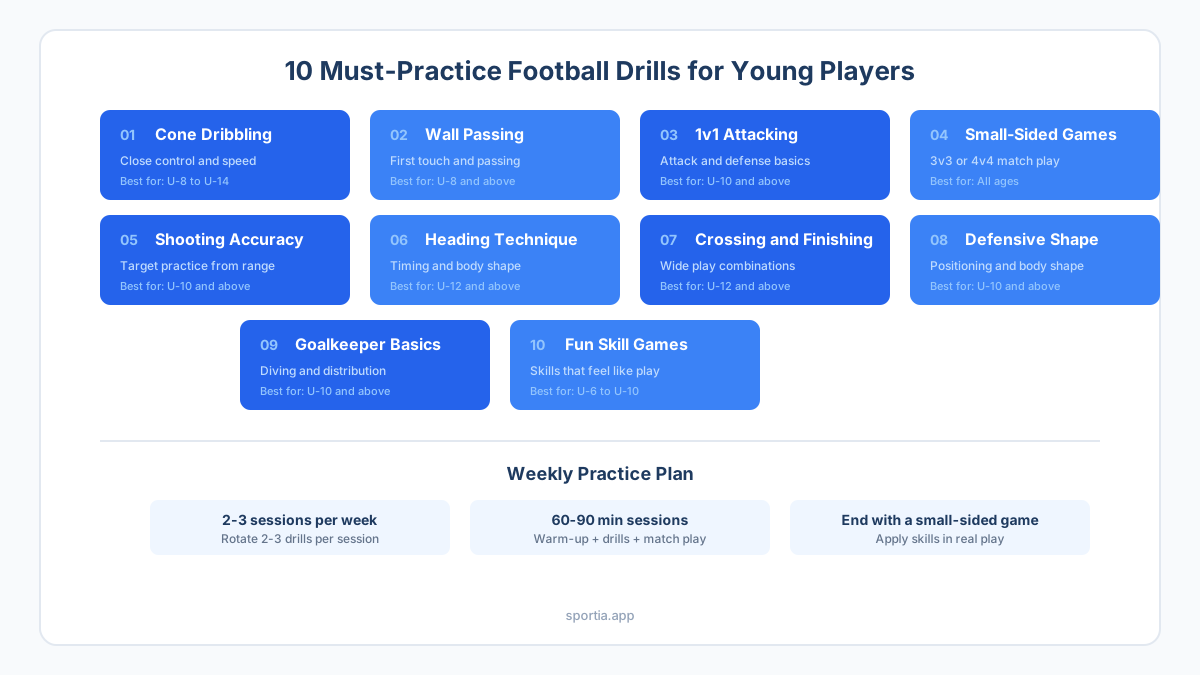
1. Cone Dribbling (Close Control and Speed)
Set up 6 to 8 cones arranged in a straight line, approximately 1 meter apart. Each player dribbles through the cone course using both feet equally. Start slowly to build technique. Then gradually increase the speed. Finally, challenge them to use only their weaker foot throughout.
Why it works: Close ball control forms the foundation of every essential football skill. Without it, a player cannot effectively dribble, change direction quickly, or maintain possession under pressure. This repetitive drill develops crucial muscle memory in both feet.
Variations: Zigzag cones, figure-8 pattern, or stop-and-go with a coach signal.
Best for: U-8 to U-14. Spend 5-7 minutes per session.
2. Wall Passing and First Touch
Pair up players or use a wall. Each player passes the ball against the wall, controls the return, and passes again. Aim for 20 passes without losing control. Then switch feet.
Why it works: First touch is arguably the hardest fundamental skill to teach young players. A skilled player can control any incoming ball, from any direction, with just one touch. This simple drill gradually develops that essential instinct through repetition.
Coaching tip: Tell players to cushion the ball with the inside of the foot. The goal is to stop the ball dead, not let it bounce away.
Best for: U-8 and above. Run for 5-10 minutes.
3. 1v1 Attacking and Defending
Set up two cones as goals, 10 meters apart. One player attacks with the ball. One defends. The attacker tries to dribble past and score. The defender tries to block or win the ball.
Why it works: Football matches are filled with critical 1v1 moments. A skilled dribbler can completely change the course of a match. A committed defender can shut down even the best attackers. This practical drill teaches both attacking and defensive roles simultaneously.
Coaching tip: Rotate roles every 30 seconds. Everyone attacks. Everyone defends. No one sits out.
Best for: U-10 and above. Run 3-4 rounds per player.
4. Small-Sided Games (3v3 or 4v4)
Mark a small area with cones. Split the group into teams of 3 or 4. Play with mini goals or just use cone gates. No goalkeepers. Keep the games short - 5 to 7 minutes each.
Why it works: Small-sided games provide each player with significantly more touches than 11v11 matches. Kids make crucial decisions faster. They experience attacking and defending situations more frequently. This is where real football development actually happens.
Coaching tip: Do not stop play to correct mistakes. Let them play. Give feedback at the end of each round.
Best for: All ages. Use as the main activity for 15-20 minutes.
5. Shooting Accuracy from Distance
Set up targets in the goal - cones in each corner, or cloth flags tied to the net. Players take turns shooting from 10-15 meters. Each player gets 5 shots. Count how many hit a target.
Why it works: Shooting power is essentially useless without proper accuracy. Most young players simply blast the ball straight at the keeper. This focused drill teaches them to pick a specific corner and aim accurately.
Coaching tip: Start with a still ball. Then add a touch before shooting. Then add a pass from a teammate before shooting.
Best for: U-10 and above. 10 minutes per session.
6. Heading Technique and Timing
Start with soft volleyballs instead of match balls. Coach throws the ball to the player. Player heads it back using the forehead, not the top of the head. Focus on body shape, eyes on the ball, and timing the jump.
Why it works: Heading can be dangerous for children if taught incorrectly. This progressive drill helps build proper technique in a safe way. Standard match balls are too heavy for young developing players - softer volleyballs remove the natural fear of impact.
Coaching tip: Keep heading drills short. Do not do more than 10-15 headers per player per session. Safety first.
Best for: U-12 and above. Skip for U-8 and U-10.
7. Crossing and Finishing Combinations
One player runs down the wing with the ball. Another player makes a run into the box. The winger crosses the ball. The runner tries to finish with one or two touches. Switch roles after 3 attempts.
Why it works: The majority of goals in football come from effective wide play. Teaching young players to cross and finish effectively early builds a vital skill they will rely on for years.
Coaching tip: Start with walking pace. Focus on technique, not speed. Build speed only once the motion is clean.
Best for: U-12 and above. 10 minutes per session.
8. Defensive Positioning and Body Shape
Two players face each other. One has the ball. The other defends. The defender must stay low, side-on, and guide the attacker to one side without lunging in. The drill ends when the defender forces a turnover or a bad pass.
Why it works: Inexperienced young defenders tend to dive in too early. This drill specifically teaches defensive patience. A disciplined defender delays the attacker until help arrives or until the attacker eventually makes a mistake.
Coaching tip: Repeat the phrase "stay on your feet" throughout the drill. That is the one rule that matters at this age.
Best for: U-10 and above. 8-10 minutes.
9. Goalkeeper Basics (Diving, Positioning, Distribution)
Pick 2-3 players to work on goalkeeping for 10 minutes. Coach rolls the ball slowly to the corners. Keeper dives to save. Then coach throws the ball in the air - keeper catches or punches. Finish with distribution: throwing and kicking the ball long.
Why it works: Every serious football academy needs dedicated goalkeepers. Unfortunately, most training sessions completely ignore them. Just ten minutes of focused goalkeeper work each week transforms average keepers into genuine shot-stoppers.
Coaching tip: Rotate all players through the goalkeeper role. Even outfield players benefit from knowing how a keeper thinks.
Best for: U-10 and above. 10 minutes per session.
10. Fun Games That Build Skills Without Feeling Like Drills
Games like "Sharks and Minnows" (one player tries to steal balls from a group), "World Cup" (1v1 or 2v2 knockout to a small goal), or "Traffic Light" (stop, go, and reverse with the ball on coach calls). These fun activities transform serious skill work into enjoyable play.
Why it works: Young children learn significantly faster when they are genuinely having fun. These games develop dribbling, ball control, and field awareness without feeling anything like a boring drill.
Coaching tip: Use fun games at the start or end of a session to keep energy high. Read our post on coaching mistakes that drive athletes away for more on keeping kids engaged.
Best for: U-6 to U-10. 10-15 minutes.
How to Structure a 60-Minute Football Training Session
A well-planned session follows a clear progressive flow. Players warm up properly, work on specific technique, apply skills in competitive games, and finish with a cool down. Here is a proven structure:
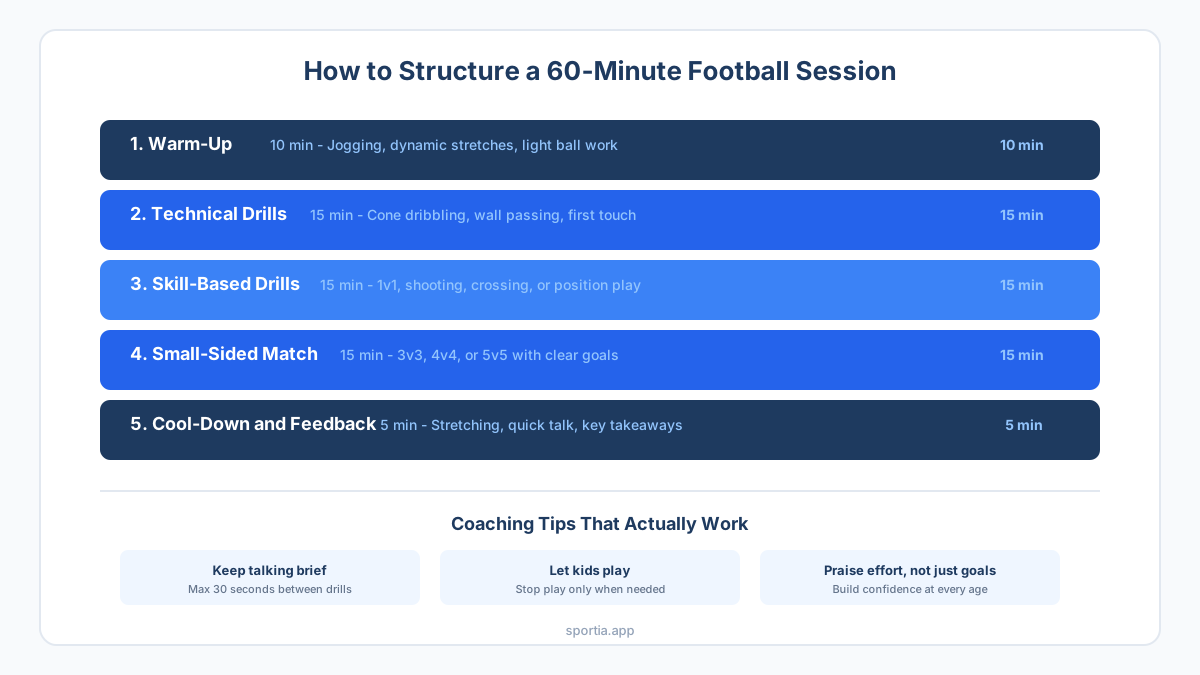
Do not attempt to run all 10 drills in a single session. Instead, pick 2 to 3 specific drills per week and rotate them systematically. Over the course of a month, you will cover every essential skill at least twice.
If you run a football academy, tracking which drills each player has done and how they are improving is important. Tools like Sportia let you log sessions, track skill progress, and share reports with parents. Read more in our guide on how to start a football academy in India.
Common Mistakes Coaches Make With Youth Drills
- Too much talking: Kids learn by doing, not by listening to long lectures. Keep instructions under 30 seconds.
- Same drill every session: Variety keeps kids engaged. Rotate drills so no one gets bored.
- No match play: Drills without a game at the end are just exercises. Always end with small-sided play.
- Ignoring weak-foot training: Most players only practice with their dominant foot. Force them to use both from day one.
- No feedback: Kids need to know what they did well and what to fix. Give short, clear feedback after each drill.
Frequently Asked Questions
How many football drills should a young player practice per week?
A young player should practice 2-3 drills per session, 2-3 times per week. This covers 4-6 different skill areas weekly without burning them out. Quality matters more than quantity at this age.
What is the best football drill for beginners?
Cone dribbling is the best starting drill. It builds close control, which is the foundation of every football skill. Any young player can start with it, and it scales in difficulty as they improve.
How long should a football training session be for kids?
For U-8 players, keep sessions to 45 minutes. For U-10 to U-14, use 60-75 minutes. Older teens can handle 90 minutes. Always include warm-up, drills, and match play in every session.
At what age can kids start heading a football?
Wait until U-12 to introduce heading. Start with soft volleyballs, not match balls. Keep the number of headers low (under 15 per session) to protect young necks and avoid injury.
What football drills improve a player's weak foot?
Wall passing with only the weak foot, cone dribbling using the weak foot only, and 1v1 drills with a weak-foot-only rule. Force players to use the weak foot for at least 30% of every session.
Are small-sided games better than 11v11 for young players?
Yes. Small-sided games give each player 5-10 times more touches than 11v11 matches. Kids make faster decisions and grow their skills faster. Most youth programs now play 5v5 or 7v7 until age 12.