
How to Start a Football Academy in India: The Complete 2026 Guide
Football is growing fast across India. The ISL has turned casual fans into active players. Schools and parents now see football as a real career, not just a weekend hobby. If you want to start a football academy in India, 2026 is a great time to do it.
But starting a football academy takes more than passion. You need a proper field, licensed coaches, and a clear fee plan. You also need AIFF status and a strategy to bring in students. This guide walks you through every step.
Why 2026 Is the Right Time to Start a Football Academy in India
Indian football is booming. Here is what works in your favor:
- ISL momentum: The Indian Super League has made football visible and exciting across the country. Kids watch matches and want to play the next morning. ISL clubs are building youth programs, which creates demand for grassroots coaching.
- More kids are playing: Football is now the second most popular sport in India after cricket. States like Kerala, West Bengal, Goa, and the northeast lead the way. But demand is rising in Bangalore, Pune, Hyderabad, and Chennai too.
- AIFF support: The All India Football Federation is pushing for more academies. In 2025-26, 142 academies applied for AIFF status. The entry rules are now simpler. Head coaches need a C license instead of an A license.
- World Cup afterglow: The 2026 FIFA World Cup finished in July, and the weeks after a World Cup are reliably the strongest enrollment window a football academy gets. Our guide to growing a football academy around the World Cup covers how to convert that interest.
- Parents are investing: More parents see sports as a career path. Football offers scholarships, professional contracts, and coaching jobs. The demand is real and growing.
- FIFA influence: India is working toward hosting future FIFA events. Asian football is getting more funding. This brings money and global attention to the sport.
Step 1: Register Your Academy as a Business
Our complete guide to registering a sports academy in India walks through the legal structures in detail, and academy insurance covers the cover you need before the first session.
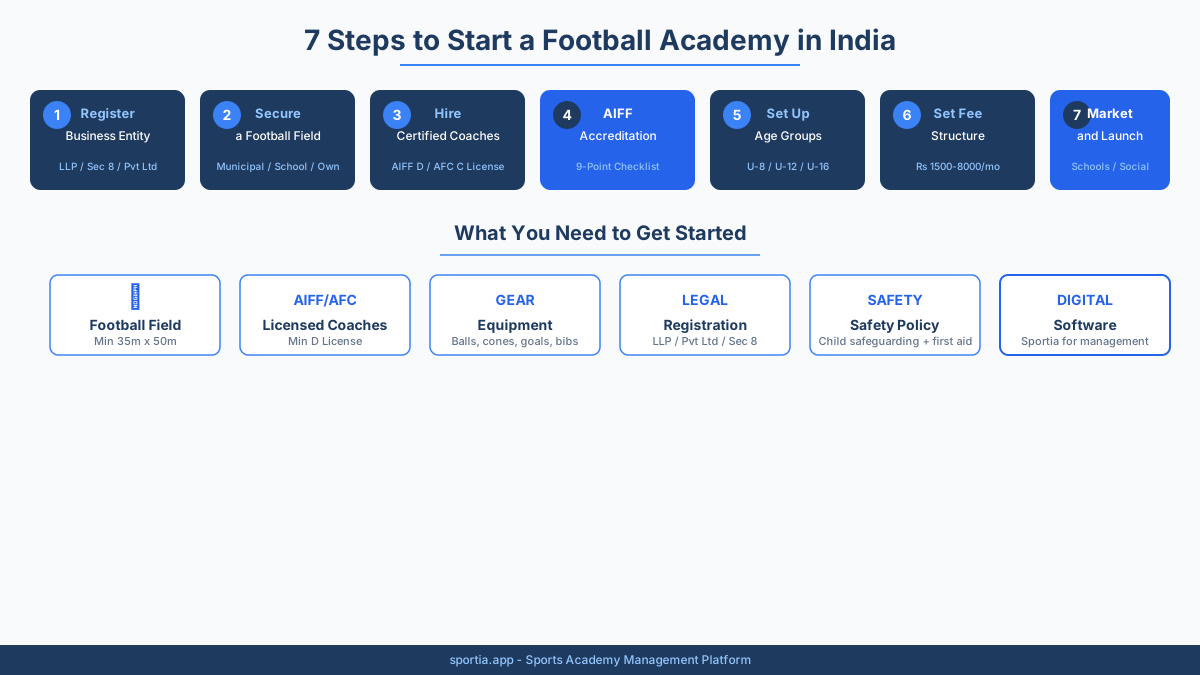
Before anything else, set up your academy as a legal entity. You have several options:
- Sole proprietorship: The simplest route. Works well for a solo coach starting small. Low paperwork. Get a GST number once your revenue crosses the threshold.
- LLP (Limited Liability Partnership): A good choice if you have a co-founder. It keeps personal and business finances separate. Setup costs about Rs 5,000-10,000.
- Section 8 company: Best if your goal is non-profit sports development. This lets you apply for grants and accept donations. Takes longer to register but opens more funding doors.
- Private limited company: Best if you plan to scale to many locations or bring in investors later.
You also need basic insurance. A sports liability policy costs Rs 15,000-30,000 per year. Do not skip this step.
Step 2: Find and Secure a Football Field
Your field is the backbone of your academy. Here are your options for getting one:
- Municipal grounds: Many cities lease public grounds to sports groups at low rates. Check with your local sports authority or municipal office.
- School tie-ups: Partner with a school to use their ground after hours or on weekends. This also gives you direct access to students.
- Rented turfs: Private turfs are available in most cities. Expect to pay Rs 1,000-5,000 per hour based on location and quality.
- Own facility: Lease a plot and set up your own ground. This gives you full control but needs a bigger budget.
For AIFF status, you need year-round access to at least one full-size pitch. The minimum size is 35m x 50m. You can start with a smaller setup and upgrade as your student base grows.
Step 3: Hire Coaches with Proper Licenses
Good coaching is what makes or breaks an academy. Parents check coach skills before signing up their kids. AIFF rules also require licensed coaches.
Coaching License Levels in India
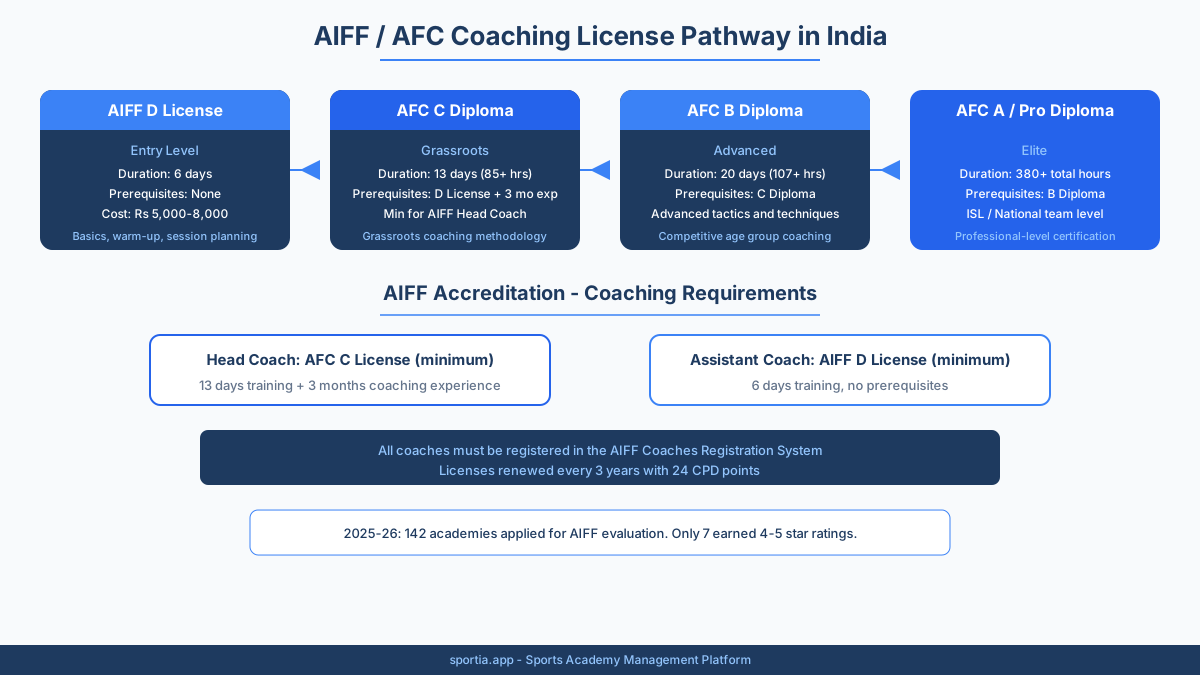
The coaching license system follows a step-by-step path:
- AIFF D License (Entry level): A 6-day course with no prior experience needed. It covers session planning, warm-up methods, age-based training, and basic injury care. The AIFF course fee is Rs 6,195, and the host state association charges its own organising cost on top, so budget above that figure.
- AFC C Diploma (Grassroots): A 12-day course with 85+ hours of study. You need a D License and at least 3 months of coaching to apply. This is the minimum for a head coach under AIFF rules.
- AFC B Diploma (Advanced): A 20-day course with 107+ hours. Good for senior coaches who lead the older, more competitive age groups.
- AFC A and Pro Diploma: Elite-level courses for coaches aiming at ISL or national team roles. Takes over 380 hours in total.
AIFF Coaching Requirements for Accreditation
- Head coach must hold at least an AFC C License
- Assistant coach must hold at least an AIFF D License
- All coaches must register in the AIFF Coaches Registration System
- Licenses must be renewed every 3 years with 24 CPD points
If you plan to coach as well, start with the D License right away. It takes only 6 days. Then work toward the C Diploma within your first year of running the academy.
Step 4: Get AIFF Accreditation
You do not need AIFF status to start coaching. But it gives your academy real trust. Parents prefer accredited academies. Your players can enter AIFF tournaments. And your name appears on the official AIFF website.
The 9-Point Checklist for AIFF Status
The 2025-26 rules set out a 9-point checklist for one-star rating:
- At least 1 team with 20 players (including 2 goalkeepers) in the U-12 category
- At least 1 team with 20 players (including 2 goalkeepers) in the U-14 category
- Year-round access to one full-size football pitch
- Head coach with minimum C License
- Assistant coach with minimum D License
- A written child safeguarding policy
- Meeting medical compliance standards
- All players registered in the AIFF Central Registration System
- All coaches registered in the AIFF Coaches Registration System
You do not need to meet every point on day one. Build your teams first. Apply once you have 40+ players across U-12 and U-14 groups. The application window opens once a year through the AIFF portal.
In 2025-26, 142 academies applied for AIFF evaluation. Only 7 earned the top four and five star ratings. Even basic status sets you apart from the many unregistered academies in your city.
Step 5: Set Up Age Groups and Training Plans
For ready session content once your batches are running, see our football drills for young players.
Structure your academy into clear age groups. Each group needs a different training approach:
| Age Group | Focus | Sessions/Week | Session Length |
|---|---|---|---|
| U-6 to U-8 (Grassroots) | Fun, movement, ball comfort | 2 | 45-60 min |
| U-10 to U-12 (Development) | Passing, dribbling, small-sided games | 3 | 60-75 min |
| U-14 (Competitive) | Tactics, positioning, match play | 4 | 75-90 min |
| U-16 to U-18 (Elite) | Advanced tactics, fitness, tournament prep | 5-6 | 90 min |
Start with 2-3 age groups in your first year. U-8 and U-12 are the easiest to fill because parents of younger kids are most actively looking for activities. Add older groups as your player base grows.
Keep batch sizes between 15-25 players. This gives each child enough personal attention while keeping sessions worth your time for you.
Step 6: Set Your Fee Structure
Pricing depends on your city, facility, and coaching level. Here are benchmarks for 2026:
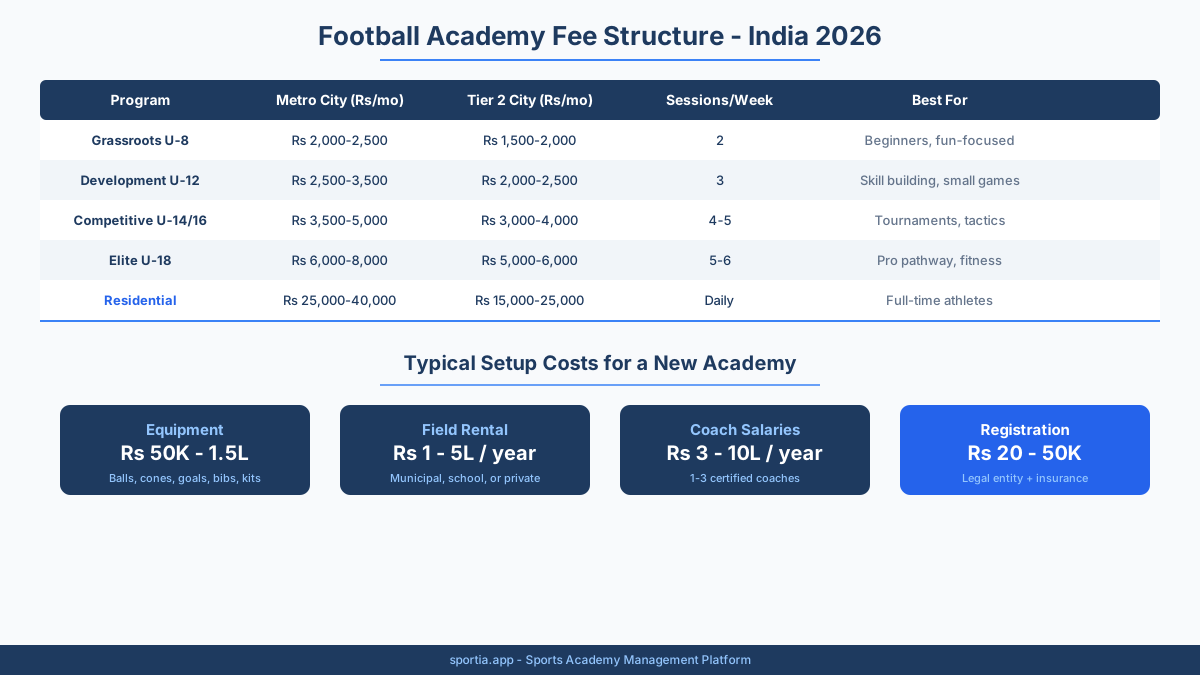
Most parents prefer monthly billing. But offer a 10-15% discount for quarterly or half-yearly plans. This helps your cash flow and reduces dropouts. Also charge a one-time registration fee of Rs 500-1,500 to cover admin costs and a player kit.
Once you cross 30 athletes, tracking fees on paper or WhatsApp gets messy fast. Tools like Sportia auto-generate invoices and send payment reminders. They handle pro-rata billing for mid-month joins and show you who has paid. Read more about setting up the right fee structure for your academy on our blog.
Step 7: Market Your Academy and Get Your First Students
The best academy in the city means nothing if no one knows about it. Here is how to get your first 30-50 students:
Local Marketing That Works
- School partnerships: Offer free football sessions at 3-5 schools near your ground. Give every kid a flyer. This is the single best way to fill your first batch.
- Free trial sessions: Run 2-3 open sessions per month. Let kids play while parents watch. If the session is good, parents will sign up without a hard sell.
- RWA and apartment tie-ups: Many housing complexes have open areas. Offer free weekend sessions there. This builds trust and creates a steady flow of new students.
- Local tournaments: Run a small inter-school or colony tournament. The cost is low but the visibility is huge.
Digital Marketing on a Budget
- Instagram and Facebook: Post training clips, match highlights, and student stories 3-4 times a week. Short reels of kids scoring goals or doing drills work best.
- WhatsApp broadcasts: Build a list from trial sessions and school visits. Send weekly updates about sessions, results, and open slots.
- Google Business Profile: Put your academy on Google Maps. Parents search "football academy near me" all the time. It is free and takes about 15 minutes to set up.
- Parent referrals: Offer one month free for every new student a parent refers. Word of mouth is the strongest channel for any sports academy.
For a deeper look at growth strategies, read our guide on scaling your academy from 10 to 100 athletes.
Go Digital from Day One
Many new academies start with WhatsApp groups and Excel sheets. This works for the first 10-15 students. But it breaks down fast once you hit 30+ athletes, multiple batches, and different fee cycles.
From day one, set up a system that handles:
- Attendance tracking: Know who came and who missed. Parents want this data. Coaches need it to review player progress.
- Fee collection and invoicing: Auto-generate invoices and send reminders. No more awkward WhatsApp messages about late payments.
- Batch and schedule management: Handle all age groups, coach schedules, and session timings from one place.
- Parent communication: Send attendance alerts, fee receipts, and updates without running 10 different WhatsApp groups.
Platforms like Sportia are built for this. They handle attendance, billing, batches, parent updates, and a CRM for tracking leads from trials. Starting at Rs 999/month, it costs less than the hours you waste on manual admin work.
Common Mistakes to Avoid
- Starting too big: Do not rent a massive ground and hire 5 coaches before you have students. Start with one field, one coach, and 2 age groups. Scale based on real demand.
- Skipping certifications: Parents will Google your coaches. If they find no AIFF license, you lose trust instantly. Get at least the D License before you open your doors.
- Ignoring safety: Write a child safeguarding policy. Keep a first aid kit at every session. Have emergency contact details for every player. One poorly handled injury can shut you down.
- No retention plan: Getting students is hard. Losing them is easy. Track attendance, follow up with parents of absent kids, and run monthly assessments to show progress. Read about coaching mistakes that drive athletes away.
- Copying cricket academy models: Football has different needs. Season structures, field sizes, coaching licenses, and tournament calendars are all different. Build your plan around football from the start.
Frequently Asked Questions
How much does it cost to start a football academy in India?
A basic academy costs Rs 2-5 lakhs to start. This covers gear, field rental, coach license fees, and early marketing. Residential setups need Rs 10-15 lakhs or more.
Do I need AIFF status to run a football academy?
No, you can start without it. But it adds trust, access to AIFF events, and a spot on the AIFF website. Apply once you have 40+ players.
What coaching license do I need to start a football academy?
The AIFF D License is the entry-level option. It takes 6 days and costs about Rs 5,000-8,000. For full AIFF status, your head coach needs at least an AFC C Diploma. Start with the D License and upgrade within your first year.
How many students do I need to make a football academy profitable?
With 30-40 students paying Rs 2,000-3,000 per month, you can cover a coach, field rent, and gear. At 60+ students, most academies are clearly in profit.
Which age groups should I start with for a new football academy?
Start with U-8 (grassroots) and U-12 (development). Parents of young kids look for sports the most. These two groups fill fastest. Add U-14 and U-16 groups once you have a solid base of players.
How do I find students for a new football academy?
School visits, free trials, and parent referrals work best. Partner with 3-5 schools near you. Run open days twice a month. Give one month free for each referral.