
Swimming Academy Guide: How to Start and Grow One in India
Every summer, the same pattern plays out across India. The heat rises. Schools close. And parents start looking for swimming classes for their kids. From April to June, swimming academies see a rush of new students that no other sport can match.
If you have been thinking about how to start a swimming academy in India, the demand is already there. But swimming is not like other sports. You need a pool, lifeguards, safety systems, and a plan for the off-season when demand drops. This guide covers every step from pool access to pricing to year-round growth.
Why Swimming Academies Boom in Indian Summers
Swimming has a natural edge over every other sport in India during April, May, and June. Here is what drives the demand:
- Heat drives parents to the pool: When it is 40-45C outside, parents want their kids doing something active but cool. Swimming is the only sport that feels good in extreme heat.
- School holidays mean free time: Kids are out of school for 6-8 weeks. Parents want them learning a skill, not sitting on screens. Swimming is a top pick.
- It is a life skill: Unlike cricket or football, swimming can save a life. Many parents enroll their kids not for sport but for safety. This is a bigger market than just coaching.
- Low barrier for beginners: A child can start learning to swim at age 4-5. No gear needed beyond a swimsuit and goggles. This makes it easy for parents to say yes.
The catch is that demand drops sharply in the colder months. A smart swimming academy plans for this from day one. More on that later in this guide.
Pool Options: You Do Not Need to Own One
The biggest barrier to starting a swimming academy is pool access. But you do not need to build or own a pool. Most new swim coaches in India start with one of these options:
Rented Pool Slots
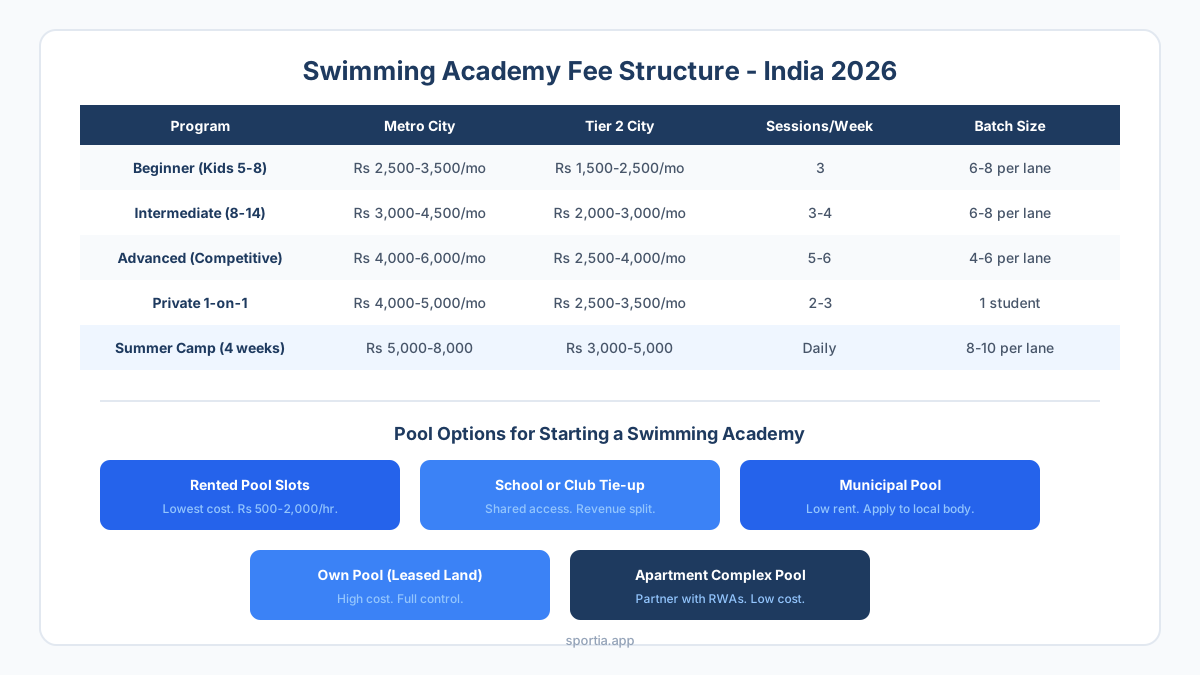
Many hotels, clubs, and private pools rent out lanes by the hour. Costs range from Rs 500 to Rs 2,000 per hour based on the city and pool quality. This is the lowest risk way to start. You pay only for the time you use.
School or Club Tie-ups
Schools with pools often look for coaches to run swim programs for their students. You get pool access. They get a program to offer parents. Some work on a revenue split. Others charge a fixed monthly rent. Either way, you also get direct access to a student pipeline.
Municipal Pools
Many cities have government pools that are open to the public. Some allow coaching by outside trainers. Apply to your local municipal office or sports authority. Rates are usually very low.
Apartment Complex Pools
Large housing societies have pools that sit idle most of the year. Partner with the RWA (Resident Welfare Association) to offer classes. You get a pool. The RWA gets a service for residents. This model works well in Bangalore, Pune, Hyderabad, and Gurgaon.
Own Pool (Leased Land)
This is the high-cost option. You lease or buy land and build a pool. A basic 25m pool costs Rs 20-40 lakhs to build plus ongoing water and maintenance. Only go this route once you have 100+ regular students and steady revenue.
Safety First: The Non-Negotiable Rules
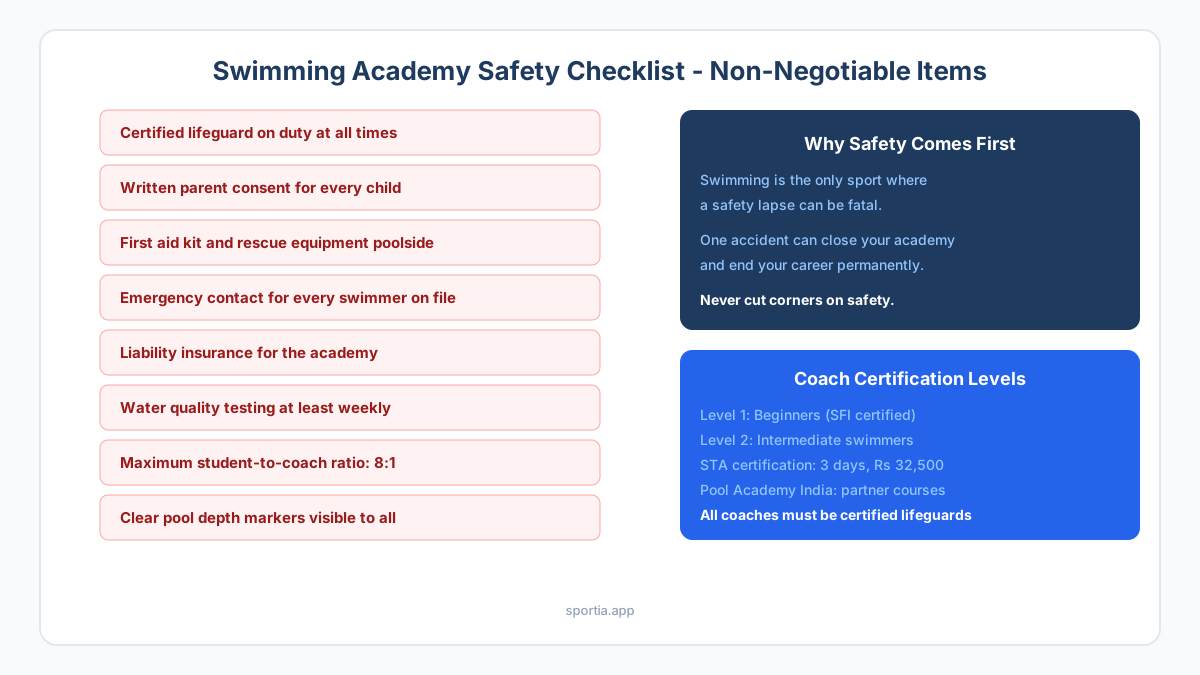
Swimming is the only sport where a safety mistake can be fatal. One accident can shut down your academy and end your career. Safety is not a nice-to-have. It is the foundation of your business.
What You Must Have in Place
- Certified lifeguard on duty at all times. This is not optional. Even if you are a certified coach, you need a separate person watching the pool while you teach.
- Written parent consent for every child. Get a signed form before the first class. Include medical info, allergies, and emergency contacts.
- First aid kit and rescue gear poolside. Ring buoys, reaching poles, and a first aid box must be within arm's reach at all times.
- Insurance. Get liability coverage for your academy. It costs Rs 15,000-30,000 per year and protects you if something goes wrong.
- Water quality testing. Check chlorine levels and pH at least weekly. Bad water causes skin rashes, eye problems, and infections. Parents will pull their kids out fast.
- Max student-to-coach ratio of 8:1. For beginners under 8, keep it at 4-5 per coach. Safety drops fast when the group is too large.
For more on sports safety, read our guide on common sports injuries in children and first aid.
Coaching: What You Need to Get Started
In India, swimming coaching follows a certification system run by the Swimming Federation of India (SFI) and partner bodies like the STA (Swimming Teachers Association).
Certification Levels
- SFI Level 1: Entry-level certification for teaching beginners. Covers basic strokes, water safety, and teaching methods. This is the minimum to start coaching.
- SFI Level 2: For coaching intermediate and advanced swimmers. Covers technique, training plans, and race prep.
- STA Certification: Run by Pool Academy India. A 3-day blended course costing Rs 32,500. Covers teaching babies, kids, and adults. Gives you a globally recognized qualification.
If you are starting out, get the SFI Level 1 first. It is the fastest path. You can upgrade while you coach. Also make sure you are a certified lifeguard. Parents ask about this, and many pool owners require it.
Batch Planning: Age Groups, Skill Levels, and Timing
Swimming batches need more thought than land sports because pool time is limited and costly. Here is how to plan your batches:
Split by Skill, Not Just Age
| Level | Who | Focus | Session Length |
|---|---|---|---|
| Water Comfort | First-timers, age 4-6 | Blowing bubbles, floating, kicking | 30 min |
| Beginner | Kids 6-10 who can float | Freestyle, backstroke basics | 45 min |
| Intermediate | Can swim 25m without stopping | All 4 strokes, turns, breathing | 45-60 min |
| Advanced | Competitive swimmers | Speed, endurance, race technique | 60-90 min |
Best Training Times
Swimming batches work best in two windows:
- Morning (6:00-10:00 AM): The most popular slot. Pool is cool. Kids are fresh. Run 3-4 batches back to back in 45-minute blocks.
- Evening (3:00-6:00 PM): Good for school-age kids and adults. Less demand than morning but still strong in summer.
Each batch should have 6-8 students per lane. A 4-lane pool lets you run 24-32 students per slot. With 3 morning batches and 2 evening batches, one pool can serve 120-160 students per day.
Pricing Your Swimming Academy
Fees depend on your city, pool quality, and the level of coaching. Here are 2026 benchmarks:
- Beginners (group): Rs 2,500-3,500/month in metros. Rs 1,500-2,500 in smaller cities.
- Intermediate: Rs 3,000-4,500/month in metros.
- Private 1-on-1: Rs 4,000-5,000/month for 2-3 sessions per week.
- Summer camp (4 weeks): Rs 5,000-8,000 per child. This is your biggest revenue window.
Offer early-bird pricing for summer camps. A 10-15% discount for bookings before April 15 fills spots fast and locks in revenue early. For more on pricing models, read our guide on setting up the right fee structure.
The Off-Season Problem and How to Beat It
The biggest challenge for swimming academies in India is seasonal demand. Summer brings a flood of students. Winter brings a drought. Here is how to keep revenue steady all year:
- Heated pool or indoor pool: If your pool is heated, promote it hard from October to February. "Year-round swimming" is a selling point that sets you apart from seasonal coaches.
- Retain competitive swimmers: Serious swimmers train year-round. Build a competitive batch that trains 5-6 days a week. These students stick through winter.
- Add dryland training: Offer fitness, yoga, or strength sessions during colder months. Use it to keep students engaged even if pool training drops to 2 days a week.
- Adult batches: Adults swim year-round for fitness. Morning adult batches (6-7 AM) can fill the gap that empty kids slots leave in winter.
- Offer learn-to-swim crash courses: Short 10-day or 15-day courses attract new students who do not want a monthly commitment. Run these every 2-3 months.
Go Digital from the Start
Swimming academies deal with more batch complexity than most sports. You have lanes, time slots, skill levels, and seasonal surges all at once. Tracking this on paper or WhatsApp breaks fast.
From day one, use a system that handles:
- Batch management by skill level and pool lane
- Attendance tracking with auto parent alerts
- Fee collection with online payment links
- Parent portal for schedule and progress updates
- Lead tracking for trial class inquiries
Platforms like Sportia handle all of this. You can set up batches by skill level, assign coaches to lanes, track attendance, and send auto fee reminders. Starting at Rs 999/month, it saves hours of admin work every week.
Frequently Asked Questions
How much does it cost to start a swimming academy in India?
If you rent pool slots, you can start with Rs 50,000-1 lakh. This covers coaching certification, insurance, basic equipment, and first month of pool rental. Building your own pool costs Rs 20-40 lakhs or more.
Do I need a certification to teach swimming in India?
Yes. Get at least an SFI Level 1 certification. You also need to be a certified lifeguard. Parents and pool owners check for these before letting you coach their kids.
What is the best age to start swimming lessons?
Kids can start water comfort classes at age 4-5. Formal stroke training works best from age 6 onward. For competitive training, most coaches start at age 8-10.
How many students can one swimming coach handle?
The safe ratio is 6-8 students per coach per lane. For beginners under age 8, keep it to 4-5 per coach. Going above these numbers puts safety at risk and drops the quality of teaching.
How do swimming academies handle the off-season?
Build a competitive batch that trains year-round. Add adult fitness swimming. Offer dryland training in winter months. If your pool is heated, market that heavily from October to February.
What pool size do I need for a swimming academy?
A 25m pool with 4 lanes is ideal for a new academy. It can serve 120-160 students per day across multiple batches. You can start with a smaller pool or even a 2-lane setup and grow from there.