
How to Start a Tennis Academy in India: The Complete Guide
To start tennis coaching in India, you do not need your own court. Rent hourly slots at a club or public facility. Earn an AITA coaching certification. Then run small batches using the red, orange, and green ball system. Most coaches turn a profit within six to nine months on rented courts. You can commit to court construction much later, once real demand is proven.
Why a Tennis Academy Is a Premium Opportunity in India
Tennis sits in a different price bracket than most junior sports in India. A beginner cricket or football batch often charges 1,000 to 2,500 rupees a month. A beginner tennis batch charges 3,000 to 8,000 rupees. Competitive training runs far higher.
The reasons are simple: tennis needs more court space per child, so one coach handles 6 to 8 students on a court, not 25. Parents who pick tennis expect a premium and will pay for it, and they also tend to stay longer because tennis skill builds slowly over years.
Demand is climbing too, with Indian junior players rising up the ITF rankings again. AITA now runs a structured junior circuit with Talent, Championship, and National series events, and high performance camps have opened in cities like Delhi and Gurugram. Every Grand Slam season, especially the French Open in May and June, brings a fresh wave of enquiries.
The catch is cost, because a full tennis court is expensive to build, and that single fact stops most people before they begin. This guide shows you how to start without that burden.
Step 1: Choose Your Court Setup (Rent Before You Build)
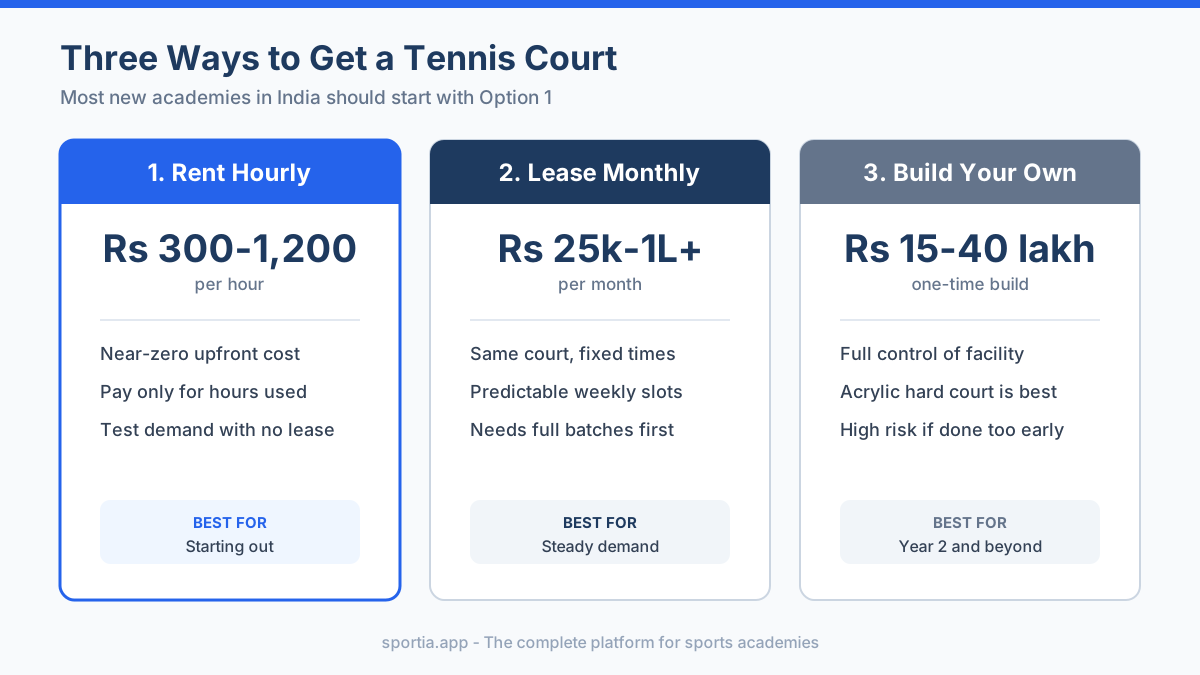
Your court is your biggest decision and your biggest cost. You have three options. Most new academies should pick the first one.
Option 1: Rent hourly court slots
Many clubs, gymkhanas, apartment complexes, and schools have tennis courts that sit empty for hours, and you can rent these by the hour. Rates range from 300 to 1,200 rupees per hour, depending on the city and whether the court has floodlights.
This is the smart way to start, because your upfront cost is almost zero and you pay only for the hours you actually coach. If a batch does not fill, you are not stuck with a lease, and you can also test demand in an area before you commit to it.
Option 2: Lease a court long term
Once you have steady batches, a fixed monthly lease makes sense. You get the same court at set times every week. Monthly lease costs run from 25,000 to over 1 lakh rupees, based on location and court quality. Lease a court only when your batches are full enough to cover that rent.
Option 3: Build your own court
Building a tennis court in India costs roughly 15 to 40 lakh rupees. That figure covers the surface, net, fencing, and lighting. An acrylic synthetic hard court is the most popular choice. It is weatherproof, low maintenance, and cheaper than premium indoor surfaces.
Build a court only after you have run an academy for a year or two. By then you know your real student numbers and which area works. Building first, then hunting for students, is the most common way new tennis academies fail.
Step 2: Get Certified as a Tennis Coach
Parents paying premium fees want a qualified coach. Certification also lets you enter students into official tournaments and build credibility fast.
The All India Tennis Association, or AITA, is the national governing body. It has been affiliated with the International Tennis Federation since its early years. AITA runs a seven level coaching pathway.
- Level I - Mini Coach (White Card): A short 7-day course built around the Play and Stay method for young beginners.
- Level II - Elementary Coach (Blue Card): The next step, graded A, B, or C.
- Level III - Foundation Coach (Green Card): A 7-day course covering beginners, intermediates, and fitness basics.
- Level IV - Intermediate Coach (Bronze Card): An 11-day advanced course.
- Level V - Advance Coach (Silver Card): A 14-day course for high performance coaching.
- Level VI - High Performance Coach (Gold Card): Aligned with the ITF Level III course.
- Level VII - Elite Coach (Platinum Card): The top tier, for elite player development.
For a new academy, an AITA Level I or Level III certification is enough to start. You can climb the ladder as your academy grows. The ITF coach education programme and the Spanish RPT certification are also respected in India. They suit coaches who want an international qualification.
Step 3: Plan Your Age Groups With the Red, Orange, and Green System
Tennis has a proven system for teaching children. It is called the ITF Play and Stay pathway, also known as Tennis 10s. It uses three ball types and three court sizes. Each stage matches a child's age and strength. This is the single best framework for planning your batches.
Red stage (ages 5 to 8)
Children play on a small 36-foot court with a low net, and the red ball is soft, travelling about 75 percent slower than a normal ball. Rallies start almost at once, which keeps young children hooked on the game.
Orange stage (ages 8 to 10)
The court grows to 60 feet, and the orange ball moves faster than the red ball but is still slower than a full ball. Children now learn proper footwork and shot shape.
Green stage (ages 9 to 11)
Players move to the full 78-foot court, where the green ball has about 25 percent less compression than a yellow ball and bridges the gap to the standard adult game.
Yellow ball and full court
Once a child handles the green stage well, they move to the standard yellow ball on a full court. From here, you can stream players into recreational batches or a competitive squad.
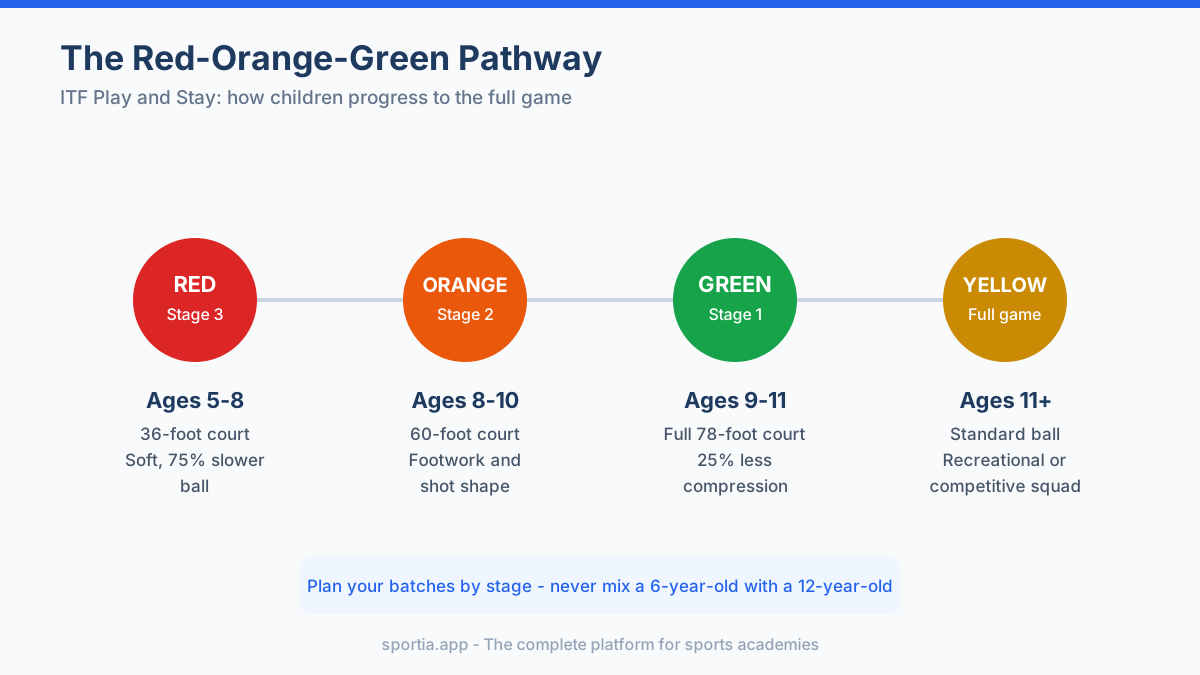
Plan your weekly timetable around these stages, because a common mistake is mixing a 6-year-old and a 12-year-old in one batch when they actually need different balls, court sizes, and drills.
Step 4: Set Your Tennis Coaching Fees
Tennis coaching fees in India vary widely. They depend on your city, your court cost, and your coaching level. Use the ranges below as a starting point.
| Program | Monthly fee range | Notes |
|---|---|---|
| Beginner group (red or orange) | 3,000 - 8,000 | 2 to 3 sessions a week, small batch |
| Intermediate group (green or yellow) | 6,000 - 12,000 | More court time, technical focus |
| Competitive squad | 15,000 - 40,000+ | Daily training, fitness, match play |
| Private one-on-one | 600 - 1,500 per hour | Premium, tends to sell out fast |
Price for profit, not just to look cheap, and add up your court rent, your time, ball costs, and travel. A batch must cover all of that and still leave a margin, yet many new coaches underprice, fill their batches, and still lose money each month.
Charge per term or per quarter, not only per month, because it steadies your cash flow and improves retention. A clear, written fee structure also reduces awkward parent conversations, and our guide to sports academy fee structures covers this in detail.
Step 5: Budget for Equipment and Facility Costs
Tennis is light on equipment compared to many sports. If you rent courts, your starting kit is small. Here is a realistic first list.
- Rackets: A set of junior rackets in several sizes, so children can borrow before they buy. Around 800 to 2,500 rupees each.
- Balls: Red, orange, and green stage balls in bulk. Budget 8,000 to 15,000 rupees to start.
- Training aids: Cones, throw-down lines, target markers, and a ball hopper. Around 5,000 to 10,000 rupees.
- Portable nets: For red and orange courts, if the venue does not already have them.
- Ball machine: Useful but optional. Buy one only once you have steady income.
A coach renting courts can open with 30,000 to 60,000 rupees of equipment, compared to 15 lakh rupees or more to build a court. This gap is exactly why renting first is the lower-risk path.
Step 6: Market Your Academy to Premium Parents
Tennis parents are a specific group. Many are educated, urban, and willing to invest in their child. They respond to professionalism and proof, not loud discounts.
- Run free trial sessions: A single free class lets a parent see your coaching. Tennis sells itself once a child has fun rallying.
- Show real progress: Share short video clips of students improving. Parents share these, and that brings referrals.
- Use a Google Business Profile: Many parents search "tennis classes near me". A complete profile with photos and reviews wins those searches.
- Partner with schools and apartment complexes: Offer a demo day. These venues already hold your future students.
- Time campaigns with Grand Slams: Enquiries spike during the Australian Open in January and the French Open in May. Plan a trial drive around these windows.
Referrals matter more in tennis than in almost any sport. One happy parent in a school WhatsApp group can fill a batch. Treat every family as a future source of three more.
Step 7: Scale From One Court to Multiple Locations
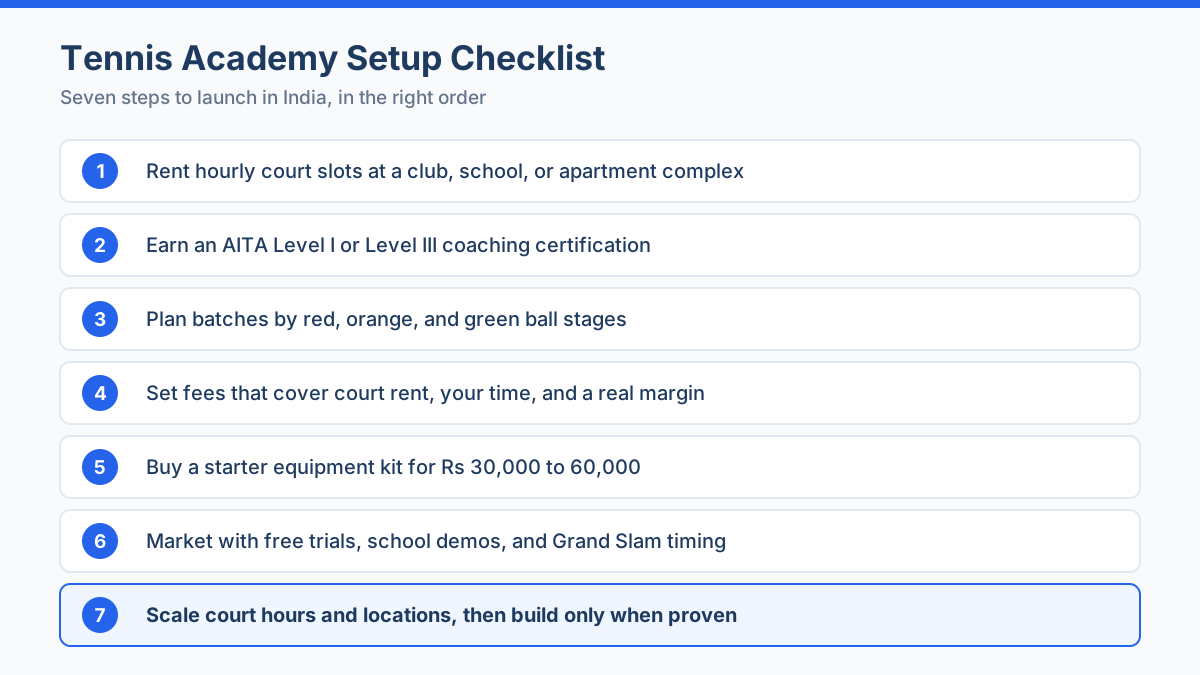
Growth in a tennis academy follows a clear ladder. Climb one rung at a time.
- Fill your first court. Run back-to-back batches across the week and weekend.
- Add court hours. Rent a second slot or a second venue nearby.
- Hire your first assistant coach. This frees you to coach the squad and run the business.
- Add a second location. Pick an area where you already get enquiries you cannot serve.
- Consider building a court. Now the numbers are real, and a build is an investment, not a gamble.
The hard part of scaling is not coaching. It is keeping track of attendance, fees, batches, and coaches across courts. Paper registers and WhatsApp groups break down fast once you cross two locations.
This is where academy management software helps. Sportia lets you manage every batch, athlete, and payment from one place. You can mark attendance with a QR code, send fee reminders, and see which batches are full. The same setup applies whether you coach cricket, football, or tennis. Our guides on starting a cricket academy , a football academy , and a badminton academy cover the same steps for other sports.
Common Mistakes New Tennis Academies Make
- Building a court first. It locks up 15 lakh rupees or more before you have a single student.
- Mixing ages in one batch. A 6-year-old and a 12-year-old need different balls and court sizes.
- Underpricing to win students. Full batches that lose money are not a real business.
- Skipping certification. It costs you parent trust and tournament access.
- Ignoring retention. Tennis skill is slow to build, so parents need regular updates to stay patient.
Frequently Asked Questions
How much does it cost to start tennis coaching in India?
If you rent court hours, you can start for 30,000 to 60,000 rupees in equipment, plus hourly court rent. Building your own court costs far more, around 15 to 40 lakh rupees. Renting first is the low-risk route for most new coaches.
Do I need a certification to start a tennis academy in India?
It is not legally required, but it is strongly recommended. An AITA Level I or Level III certification builds parent trust and lets you enter students into official tournaments. ITF and RPT certifications are also respected.
What are typical tennis coaching fees in India?
Beginner group batches usually charge 3,000 to 8,000 rupees a month. Intermediate batches charge more, and competitive squad training can cross 15,000 rupees a month. Private lessons run 600 to 1,500 rupees an hour.
What age should children start tennis?
Children can start as early as five years old using the red ball stage. The soft, slow ball and small court let young children rally quickly and enjoy the game from day one.
How many students can one tennis coach handle?
On one court, a coach can manage six to eight children in a group batch. Smaller batches give each child more hitting time, which parents value and will pay for.
Is a tennis academy profitable in India?
Yes, when priced correctly. Tennis charges higher fees than most junior sports and parents stay for years. Most academies that start on rented courts turn profitable within six to nine months.
Start Coaching, Then Grow
The path to a tennis academy in India is clearer than it looks. Rent a court, get certified, run small batches with the right ball stages, and price for profit. Build your own court only when the demand is real.
As you grow, keep your operations simple. Sportia helps you manage attendance, fees, batches, and parent communication for your tennis academy from one dashboard. Start a free 14-day trial and run your academy like a professional from day one.