
Monsoon Immunity: Best Indian Foods to Keep Young Athletes Healthy
The right immunity foods for athletes can keep young players training all through the monsoon. In the rainy season kids fall sick more often, and every cold or stomach bug means missed sessions that add up fast. Foods rich in vitamin C, zinc, and protein help the body fight infection. The best part is that everyday Indian foods do this job well, and they cost very little.
As a coach or parent, you cannot control the weather, but you can control what a young athlete eats. Good food is your cheapest and most powerful tool this season. This guide shows you which foods build immunity, which ones to avoid, and how to feed a young athlete safely in the rains.
Why young athletes fall sick more in the monsoon
The monsoon brings more than rain, because it also brings a sharp spike in coughs, colds, and stomach bugs. There are a few clear reasons for this, and food plays a role in each one of them.
High humidity lets bacteria and viruses spread easily, so water and food get contaminated more often. Sunlight also drops during the rains, which means the body makes less vitamin D. On top of this, young athletes train hard, and heavy training can lower immunity for a short time. Put all of these together, and a child is far more open to falling ill.
Food is your first line of defence here, because the right nutrients help the immune system work at full strength. They do not make a child immune to every bug, but they do tilt the odds in your favour. A well-fed athlete recovers faster and misses fewer sessions than one running on junk food.
The immunity nutrients that matter
You do not need fancy supplements or imported health foods. You just need four simple nutrients, and Indian kitchens are already full of them. Focus on these four, and you cover the basics of immunity well.
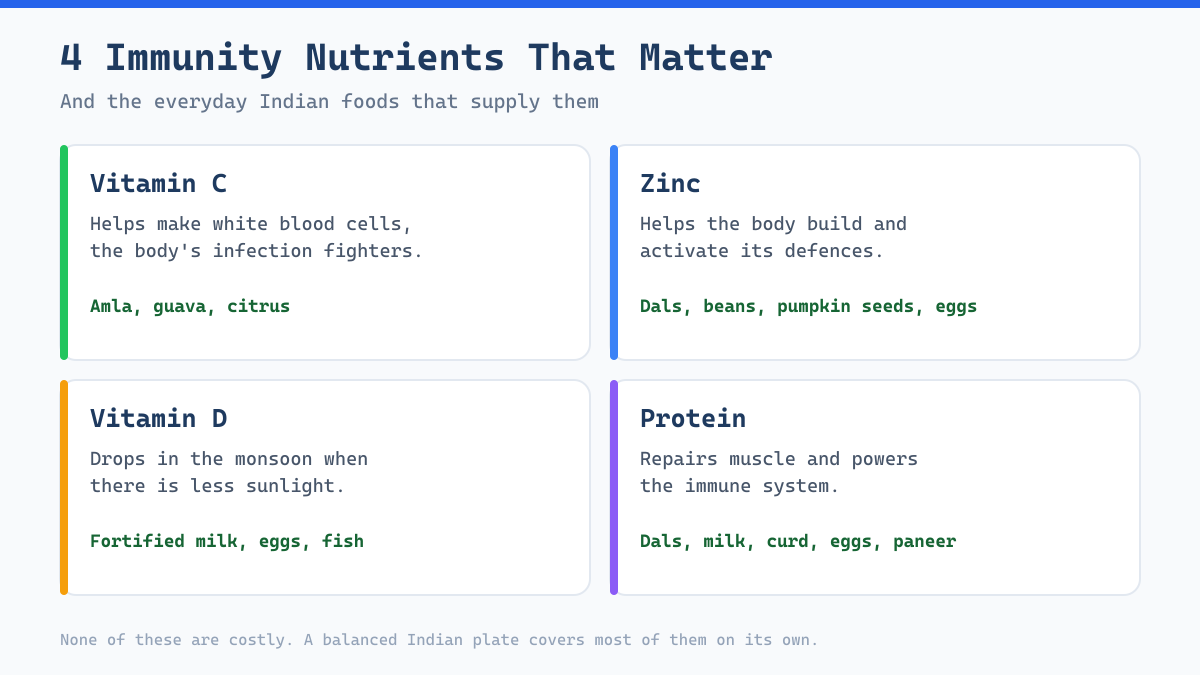
Here are the four nutrients to prioritise:
- Vitamin C: it helps the body make white blood cells, its infection fighters. Find it in amla, citrus fruits, and guava.
- Zinc: it helps the body build and activate its defences. Find it in dals, beans, pumpkin seeds, and eggs.
- Vitamin D: low sunlight in the monsoon can lower it. Find it in fortified milk, eggs, and fish.
- Protein: it repairs muscle and powers the immune system. Find it in dals, milk, curd, eggs, and paneer.
Notice that none of these nutrients are costly. Dals, eggs, and seasonal fruit are cheap and easy to find in any market. You do not need imported berries or fancy powders, because a balanced Indian plate covers most of this on its own.
Everyday Indian immunity foods
India has a rich set of monsoon immunity foods, and many are already sitting in your kitchen. Used every day, these simple foods give a young athlete real protection against seasonal illness.
Amla is a monsoon superstar, because it holds far more vitamin C than an orange does. A small amla each day, or even a spoon of amla juice, is a strong and cheap start. Ginger and turmeric both fight inflammation and infection in their own way. A cup of warm turmeric milk at night is a simple habit worth building, and ginger in tea or dal quietly soothes a scratchy throat.
Do not forget the humble dal. Moong dal is light, easy to digest, and full of protein and zinc. Seasonal fruits like jamun and cooked vegetables round out the plate. For a fuller diet plan, see our guide on a vegetarian diet plan for Indian athletes. It fits neatly with monsoon eating.
A simple monsoon plate for a training day
Theory is nice, but parents need a real plan they can cook. Here is a simple monsoon plate for a young athlete on a training day, and it is cheap, local, and easy to make at home.
- Breakfast: warm poha or upma, a boiled egg, and a small amla or guava.
- Lunch: rice or roti, moong dal, a cooked seasonal vegetable, and fresh curd.
- Pre-training snack: a banana or roasted chana for steady energy.
- Post-training: milk with a pinch of turmeric, or a glass of buttermilk.
- Dinner: khichdi with vegetables, light and easy to digest.
This plate is not strict. Swap foods to match your region and budget. The point is balance: protein, a vitamin C food, and warm, freshly cooked meals. What a child eats around training also matters for energy. Our guide on pre-match and post-match nutrition goes deeper on timing.
Safe eating in the rains: what to avoid
In the monsoon, how you eat matters as much as what you eat. Humidity helps germs grow fast on food and in water, and one bad meal can cost a young athlete a whole week of training. A few simple rules protect your athletes from most of this risk.
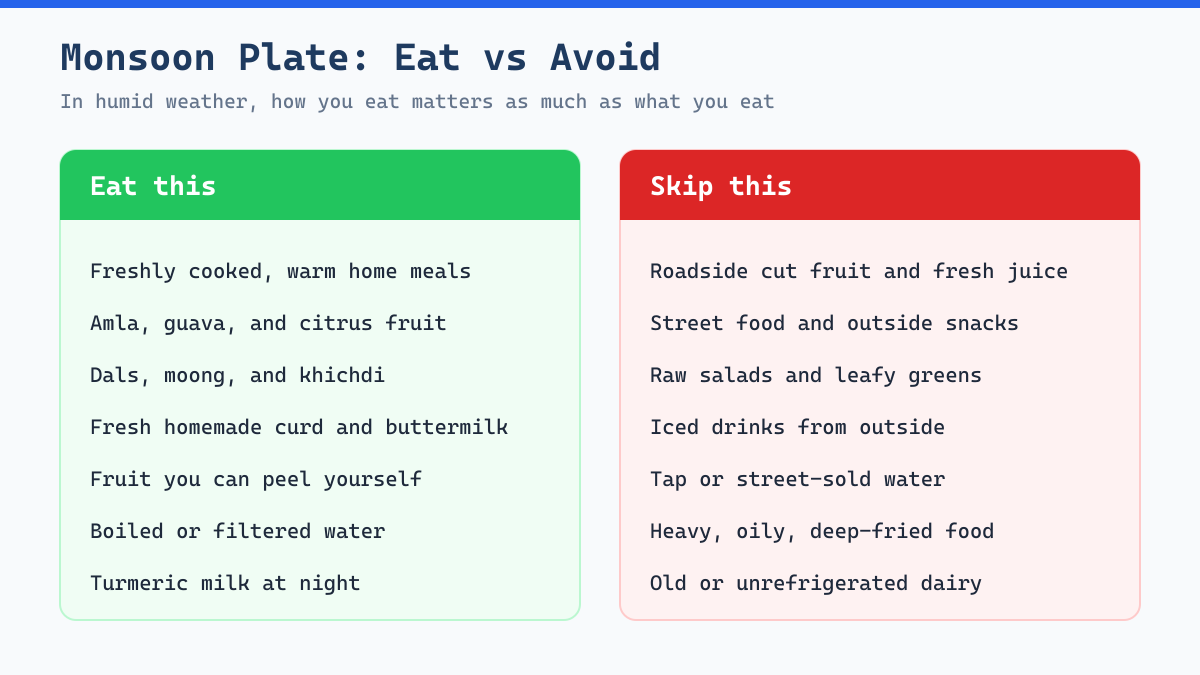
Steer young athletes away from these:
- Roadside cut fruit and juice: it sits open for hours and gets contaminated.
- Street food: it is often prepared early and stored in the damp.
- Raw salads and leafy greens: they are hard to clean fully in this season.
- Iced drinks from outside: the ice and water may not be clean.
The safe path is simple to follow. Eat freshly cooked, warm meals at home, and only eat fruit you can peel yourself, like bananas and guava. Wash all produce well in clean water before it is cooked or eaten. These small habits prevent most monsoon stomach bugs before they ever start.
Hydration in humid weather
Cool, wet weather hides a real risk that is easy to miss. Young athletes still sweat hard during training, but they do not feel as thirsty as they do in summer. So they drink less than they should, and quiet dehydration slowly sets in.
Make water a firm habit, not a choice left to the child. Remind athletes to sip before, during, and after every session. Use only boiled or filtered water, never tap or street water, since unsafe water is a top cause of monsoon illness. Warm fluids also work well now, and buttermilk, coconut water, and light soups all count toward the day's hydration.
Gut health: curd, buttermilk, and immunity
A strong gut means a strong immune system, because much of the body's defence actually lives in the gut. Good gut bacteria help fight off infection every day. This is exactly why gut-friendly foods matter so much during the monsoon.
Fresh, homemade curd is the real star here, as it is full of probiotics, the good bacteria your gut needs. Buttermilk does the same job and is even lighter on a young stomach. Both aid digestion and support immunity at the same time. Just make sure the curd is fresh and stored clean, since old dairy spoils fast in humid weather.
Keep meals simple and easy to digest through this season, because heavy, oily food slows the gut and saps energy. Khichdi, dal, and cooked vegetables are all gentle and nourishing choices. A calm, healthy gut helps a young athlete train hard and recover well.
A budget-friendly weekly immunity checklist
You do not need a big budget to feed immunity, you just need a simple routine. Here is a weekly checklist any parent can follow, so print it and stick it on the fridge as a reminder.
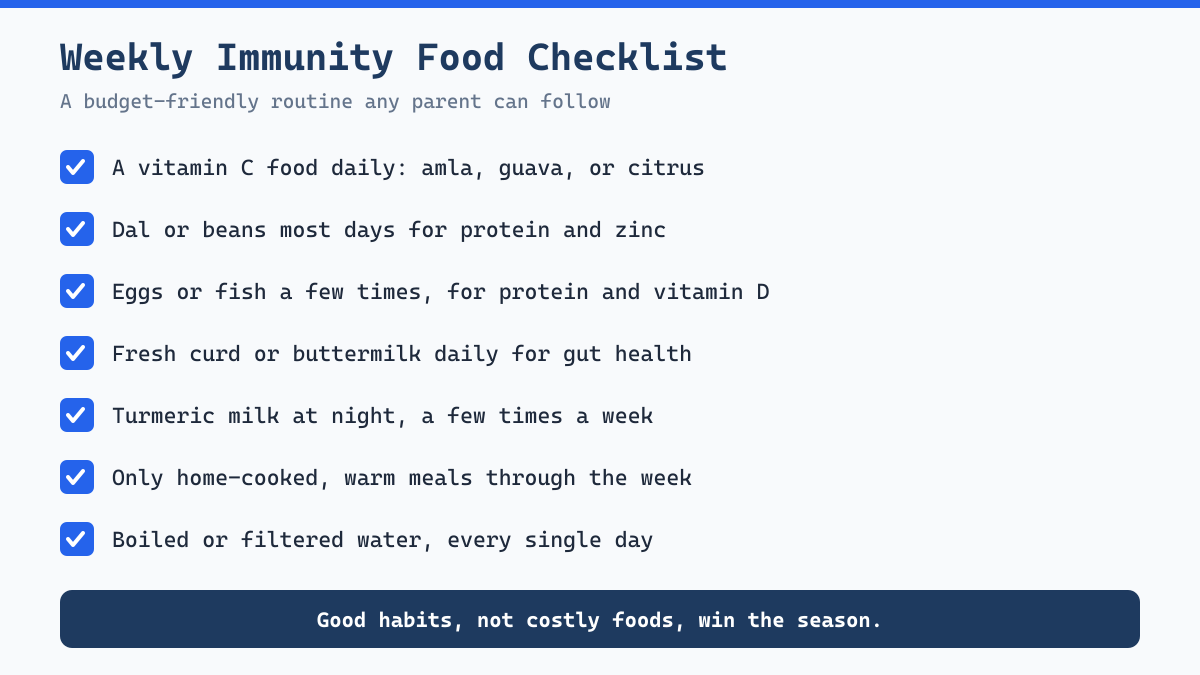
Aim to include these every week:
- A vitamin C food daily, like amla, guava, or citrus.
- Dal or beans most days for protein and zinc.
- Eggs or fish a few times, for protein and vitamin D.
- Fresh curd or buttermilk daily for gut health.
- Turmeric milk at night, a few times a week.
- Only home-cooked, warm meals through the week.
- Boiled or filtered water, every single day.
Follow this, and you build a strong shield for your athletes. Good habits, not costly foods, win the season. When a child does fall ill, rest and a doctor come first, not training. As a coach, you can track each athlete's wellness and health notes in Sportia. That helps you spot who is run down and needs a lighter week. Small, steady care keeps young athletes healthy right through the rains.
Frequently Asked Questions
What foods boost immunity for young athletes in the monsoon?
Focus on vitamin C, zinc, and protein from everyday Indian foods. Amla, citrus, and guava give vitamin C, while dals, eggs, and pumpkin seeds give zinc and protein. Ginger, turmeric, and fresh curd add extra support.
Why do children fall sick more during the rainy season?
High humidity helps bacteria and viruses spread, and food and water get contaminated more easily. Less sunlight also lowers vitamin D, and hard training can briefly lower immunity. Good food and safe eating habits help counter all of these.
Which foods should athletes avoid in the monsoon?
Avoid roadside cut fruit, street food, raw salads, and iced drinks from outside. These are easily contaminated in humid weather. Eat freshly cooked, warm meals at home and only fruit you can peel yourself.
Is curd good or bad during the monsoon?
Fresh, homemade curd is good, as its probiotics support gut health and immunity. The key is that it must be fresh and stored clean, since dairy spoils fast in humidity. Buttermilk is a lighter option that works just as well.
How much water should a young athlete drink in the monsoon?
Athletes still sweat and dehydrate in cool, humid weather, even when they do not feel thirsty. Remind them to sip before, during, and after training. Use only boiled or filtered water, and add buttermilk or coconut water too.
Can immunity foods replace medicine when a child is sick?
No. Immunity foods lower the risk of illness and support recovery, but they are not a cure. If a child has a fever, vomiting, or diarrhoea, rest and a doctor come first. Return to training only once they are fully well.