

Shooting and Archery for Young Athletes in India: Cost, Ranges, and the Medal Pathway
When India's archery squad for the Asian Games was announced, two teenagers made it and Deepika Kumari did not. Kirti Sharma and Kumkum Anil Mohod are in the recurve women's team. One of India's most decorated archers is watching from home.
That single fact tells you more about shooting coaching for beginners in India than any brochure. In precision sports the pathway is short, the ladder moves fast, and age is not the barrier parents assume it is.
This guide covers both sports honestly. What a beginner actually does first, the licensing question that worries every parent, real equipment costs at each level, how to find range access, and the temperament that decides who lasts.
Why Precision Sports Keep Producing Indian Medals
Shooting and archery deliver Indian medals at a rate that team sports do not. There are four practical reasons, and each one matters for a young athlete choosing a sport.
- Body type does not gate you. A small twelve year old is not excluded the way they might be in basketball or fast bowling.
- The scoring is objective. No selector's opinion sits between an athlete and a result. The target settles it.
- The field is smaller. Far fewer Indian children shoot than play cricket, so the climb is less crowded.
- Progress is measurable weekly. A score out of 600 tells an athlete exactly where they stand.
That last point is underrated. In most sports a young athlete cannot tell whether they are improving. In shooting and archery they can, and that visible progress keeps children in the sport.
Shooting: Where a Beginner Actually Starts
Sports shooting in India is governed by the National Rifle Association of India, usually called the NRAI. It runs the competitions and sets the pathway.
Nearly every beginner starts in one of two events.
- 10m Air Rifle. Shot standing, at a target ten metres away.
- 10m Air Pistol. Same distance, one hand, no support.
Both are Olympic events. Both are shot indoors, which means monsoon and heat do not stop training. That is a real advantage over outdoor sports in India.
A first session is far less dramatic than parents expect. A beginner spends most of it learning to stand still, hold the rifle steady, and breathe in a controlled rhythm. Many coaches do not let a new athlete fire at a scored target for several weeks.
Starting age is usually around 10 to 12. Younger children can begin, but the rifle weight and the concentration required make earlier starts difficult.
The Licensing Question, Explained Plainly
This is the question every parent asks first, and the answer is simpler than they fear.
Shooting in India falls under the Arms Act of 1959 and the Arms Rules of 2016. The important threshold for a young athlete is muzzle energy.
A .177 calibre air gun, which is 4.5mm, producing under 20 joules of muzzle energy does not require a firearm licence in India. Standard 10m competition air rifles and pistols sit in this category.
So a child starting in 10m air rifle needs no licence at all. That is why almost every Indian shooter begins there.
A few practical points matter alongside that.
- Ranges supervise minors. There is no stated national minimum age for licence free air guns, but ranges and sellers expect adult supervision for children.
- Location is regulated. Air guns may be used at authorised ranges or on private property with proper precautions. Never in a public place.
- Licences arrive later. Moving into 25m pistol or .22 rifle events does require a licence, which is a decision for the athlete's late teens.
- State rules vary. Confirm details with your state association before buying anything.
The honest summary for a parent: your child can train for years, compete at school and district level, and never touch a licensed firearm.
Archery: Recurve or Compound
Archery splits into two bow types, and the choice shapes everything that follows.
Recurve is the Olympic bow. It is the one shot at the Olympic Games, and the one with the longer pathway. It is harder to shoot well, because the archer holds the full draw weight and aims without magnification.
Compound uses a system of cams that reduces the weight the archer holds at full draw. It has a magnified sight and a mechanical release. Scores are higher and tighter. It features at the Asian Games and world events, but not at the Olympics.
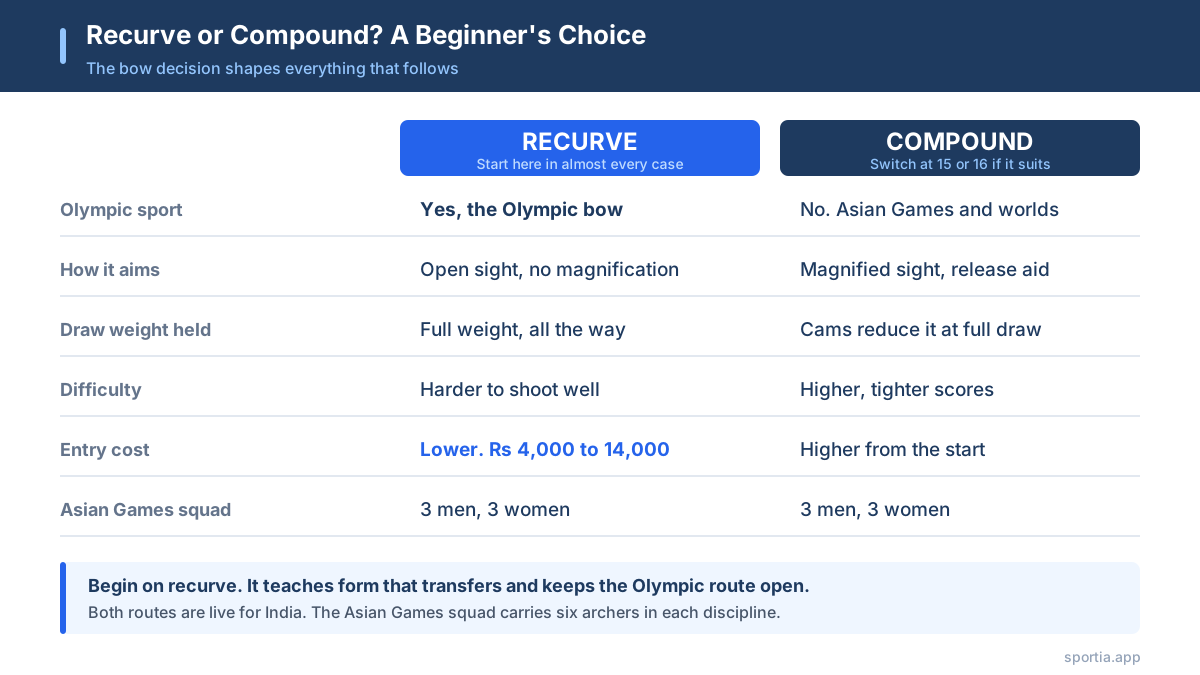
Practical guidance for a young starter. Begin on recurve, almost always. It teaches form that transfers, keeps the Olympic route open, and costs less at entry. An athlete can switch to compound at 15 or 16 if their strengths suit it.
India's Asian Games squad shows both routes are live. The team carries three archers each in recurve and compound, for men and women.
What It Actually Costs
Here is where most guides go vague. The real pattern in Indian precision sport is unusual, and worth understanding before you commit.
Entry is cheap. The top is brutally expensive. The squeeze arrives in years three to five.
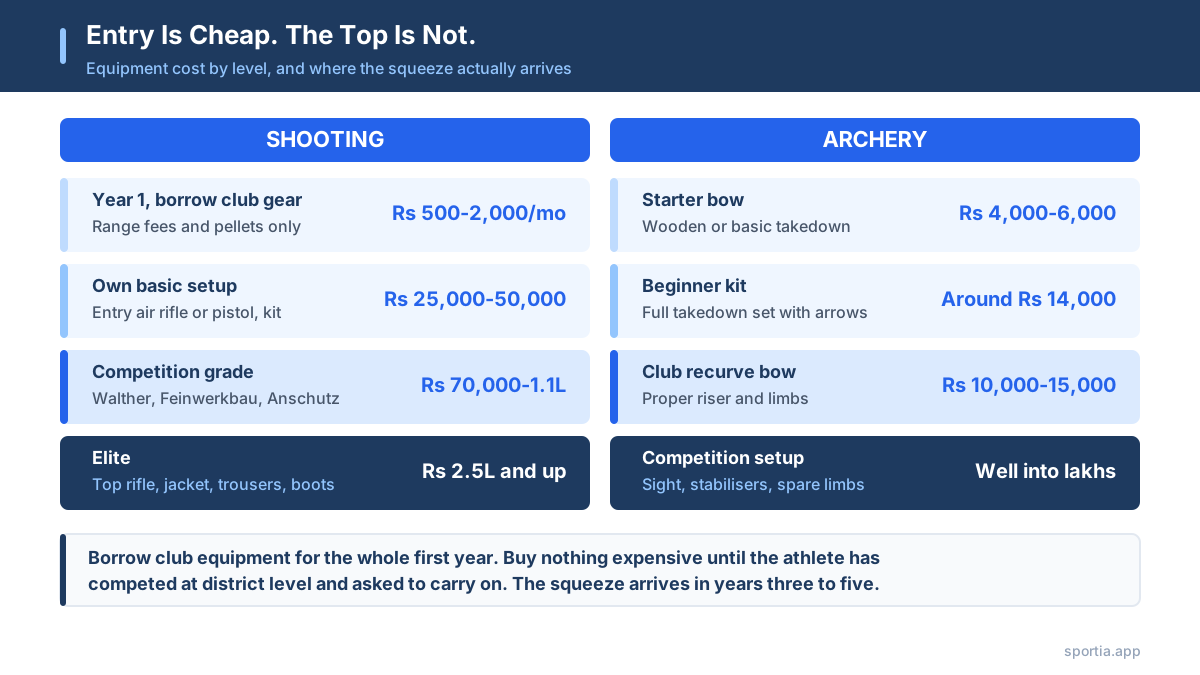
Shooting costs
| Level | Typical cost | What it covers |
|---|---|---|
| First year | Rs 500 to Rs 2,000 a month | Range fees, borrowed club rifle, pellets |
| Own basic setup | Rs 25,000 to Rs 50,000 | Entry air rifle or pistol, pellets, basic kit |
| Competition grade | Rs 70,000 to Rs 1.1 lakh | Match air pistol or rifle from a top brand |
| Elite equipment | Rs 2.5 lakh and above | Top match rifles, plus jacket, trousers and boots |
The three brands that dominate international finals are Feinwerkbau, Walther and Anschutz. A Walther match air pistol runs roughly Rs 70,000 to Rs 75,000, and their match air rifles from about Rs 74,500 upward. Top models reach Rs 2.5 lakh.
Archery costs
| Level | Typical cost | What it covers |
|---|---|---|
| Starter bow | Rs 4,000 to Rs 6,000 | Wooden or basic takedown bow with accessories |
| Beginner kit | Around Rs 14,000 | Complete takedown set, arrows, basic tab and guard |
| Club recurve | Rs 10,000 to Rs 15,000 for the bow | Proper riser and limbs, before accessories |
| Competition setup | Well into lakhs | Riser, limbs, sight, stabilisers, arrows, spares |
Two honest warnings for parents. Arrows break and are a recurring cost, not a one time purchase. And a competitive archer usually needs matched spare limbs and a second set of arrows, which most first budgets ignore.
The right approach in both sports is the same. Borrow club equipment for at least the first year. Buy nothing expensive until the athlete has competed at district level and asked to continue.
Finding Range Access
Access is the real barrier in India, more than money or talent. Very few towns have a shooting range, and archery fields are scarce too.
Work through these in order.
- Your state rifle or archery association. They hold the list of affiliated clubs and ranges, and they run the entry level competitions.
- SAI centres. Sports Authority of India facilities often have ranges and coaching, sometimes free or heavily subsidised.
- School and college ranges. More schools have 10m ranges than parents realise, because the footprint is small.
- Private academies. Growing in metros and larger tier 2 cities.
- District sports complexes. Often overlooked, frequently cheap.
One thing works in your favour. A 10m air range needs a strip about twelve metres long. Any covered hall, godown or wide corridor can host one, which is why school ranges exist in places with no sports infrastructure at all.
The Competition Ladder
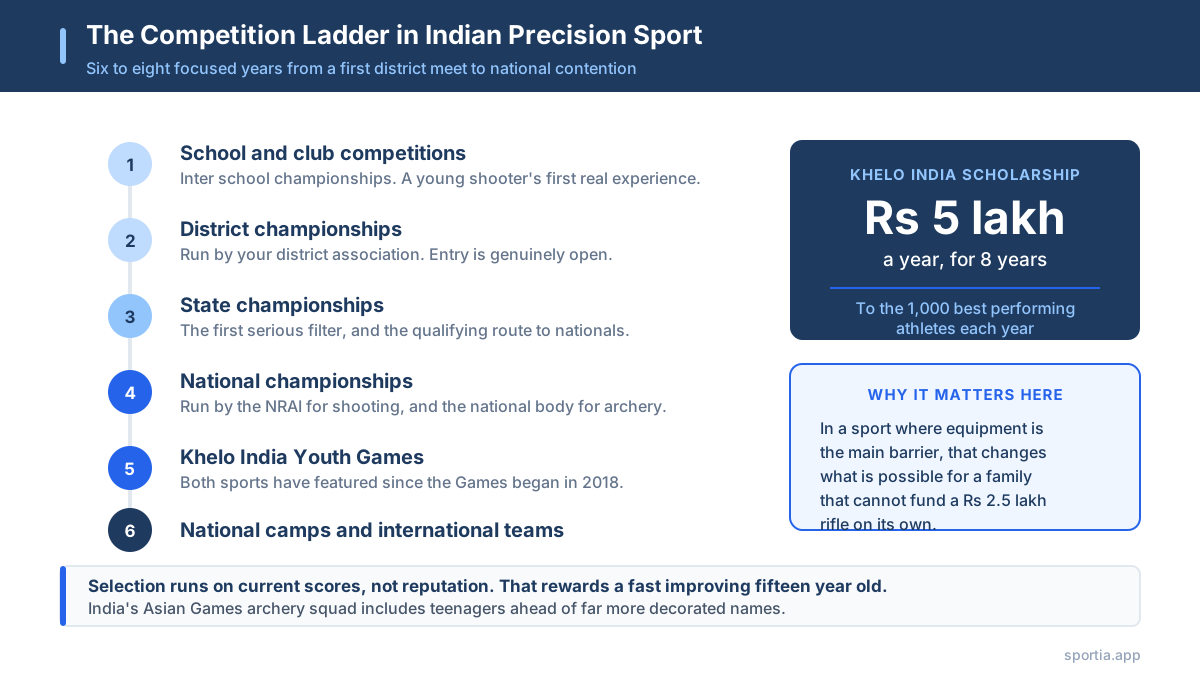
The route upward is unusually clear in these sports.
- School and club competitions. Inter school championships give young shooters their first real experience.
- District championships. Run by your district association. Entry is genuinely open.
- State championships. The first serious filter, and the qualifying route to nationals.
- National championships. Run by the NRAI for shooting and the national archery body for archery.
- Khelo India Youth Games. Both sports have featured since the Games began in 2018.
- National camps and international teams.
Khelo India deserves particular attention from parents worried about cost. Each year the thousand best performing athletes receive an annual scholarship of Rs 5 lakh for eight years. In a sport where equipment is the main barrier, that changes what is possible for a family.
More funding routes are set out in the guide on sports scholarships for young athletes in India .
What the Asian Games Squad Tells You About Timelines
The shooting events at Aichi-Nagoya run from 20 September to 1 October, with around 30 Indian shooters competing. Archery follows from 26 September to 3 October. Manu Bhaker is among India's strongest medal prospects.
Look closely at the archery selection and one pattern stands out. Teenagers Kirti Sharma and Kumkum Anil Mohod are in the recurve women's squad. Established names including Deepika Kumari and Atanu Das are not.
Two lessons follow for a young athlete.
First, the timeline from beginner to national contention is genuinely short. Six to eight focused years is realistic, which is faster than most Indian sports.
Second, selection turns on current scores rather than reputation. That cuts both ways. It rewards a fast improving fifteen year old, and it removes a former champion who has slipped. Parents should understand both halves before their child commits.
The Temperament Question
This decides who lasts, and coaches spot it quickly.
Children who thrive in precision sport tend to share certain traits.
- They tolerate repetition without needing constant variety.
- They stay calm when a score goes wrong mid series.
- They enjoy their own company during long training blocks.
- They are detail focused, and notice small changes in their own technique.
- They handle silence. There is no crowd noise to hide inside.
Children who struggle are not weaker athletes. They are often the most physically gifted ones, who need movement, contest and teammates to stay engaged. Putting that child on a shooting line for two hours is a poor match, and no amount of discipline fixes it.
An honest test for a parent. Give the sport three months of real trial before buying anything. If the child is bored by week six, that is information rather than failure.
Precision sport also opens doors beyond competing, from coaching to range management and equipment work. Those routes are covered in the guide on careers in sport beyond playing .
Frequently Asked Questions
Do you need a licence for 10m air rifle shooting in India?
No. A .177 calibre air gun producing under 20 joules of muzzle energy does not require a firearm licence under the Arms Rules, and standard 10m competition air rifles and pistols fall within that limit. Licences only become relevant later, if an athlete moves into events using .22 rifles or 25m pistols.
What age should a child start shooting or archery?
Around 10 to 12 works best for shooting, because a younger child struggles with rifle weight and sustained concentration. Archery can start slightly earlier with a light bow, often from 9 or 10. Both sports allow a later start than gymnastics or swimming without closing off the elite pathway.
How much does it cost to start shooting in India?
The first year can cost as little as Rs 500 to Rs 2,000 a month, using a borrowed club rifle and paying only range fees. A basic personal setup runs Rs 25,000 to Rs 50,000, while competition grade equipment starts near Rs 70,000. Borrow for the first year before buying anything.
Should a beginner choose recurve or compound archery?
Start with recurve in almost every case. It is the Olympic bow, it builds form that transfers, and it costs less at entry level. An athlete can move to compound at 15 or 16 if their strengths suit it, and India fields strong squads in both.
Where can my child train for shooting in India?
Begin with your state rifle association, which holds the list of affiliated ranges and clubs. SAI centres often offer subsidised coaching and facilities, and many schools have 10m ranges because the space needed is small. District sports complexes are frequently overlooked and cheap.
How long does it take to reach national level in shooting or archery?
Six to eight focused years from beginner to national contention is realistic, which is faster than most Indian sports. Selection is driven by current scores rather than reputation, so a rapidly improving teenager can displace an established name. India's Asian Games archery squad includes teenagers ahead of far more decorated archers.
Is shooting safe for children?
Sport shooting has a strong safety record when practised at supervised ranges with proper protocols. Ranges enforce strict handling rules, and beginners spend their early weeks on stance and breathing before firing at scored targets. Children should only train at authorised ranges with adult supervision.
Tracking What Actually Improves
Precision sport rewards patient record keeping more than almost any other discipline. A shooter's score out of 600, an archer's arrow count, a personal best at each distance: these numbers are the training plan.
Most academies keep them in a notebook that gets lost. Sportia lets you record scores, sessions and personal bests against each athlete's profile, with sport specific fields so a shooter's data does not sit in a notes box built for cricket. A coach reviewing a plateau can then see six months of scores rather than guessing.
The wider approach is set out in the guide on athlete progress tracking .
Start a free 14 day Sportia trial and keep every score where the coach and the parent can both see it.