
Athlete Progress Tracking: How to Measure Development in Your Academy
Athlete progress tracking means recording each player's skills, fitness, goals, and personal bests over time. It turns a vague claim like "he is improving" into clear proof. Good tracking keeps parents happy, helps athletes grow faster, and lifts retention. This guide shows you what to measure and how to track athlete progress in your academy.
Every parent asks the same question. "Is my child getting better?" Most coaches answer with a feeling, not a fact. That gap costs you trust and, in time, students. Athlete progress tracking software closes that gap. It gives you proof, and it gives parents peace of mind.
Why "they are improving" is not enough
You see your athletes every week. You can feel their growth. But parents do not see practice. They only see results, moods, and your words. When you say "he is improving," they have to take it on faith.
Faith runs out, especially when fees are due. Parents who cannot see progress start to doubt the value. Then they leave, often without telling you why. Research backs this up. Academies with clear progress tracking face fewer parent conflicts and keep students longer. Proof beats promises every single time.
What to actually measure
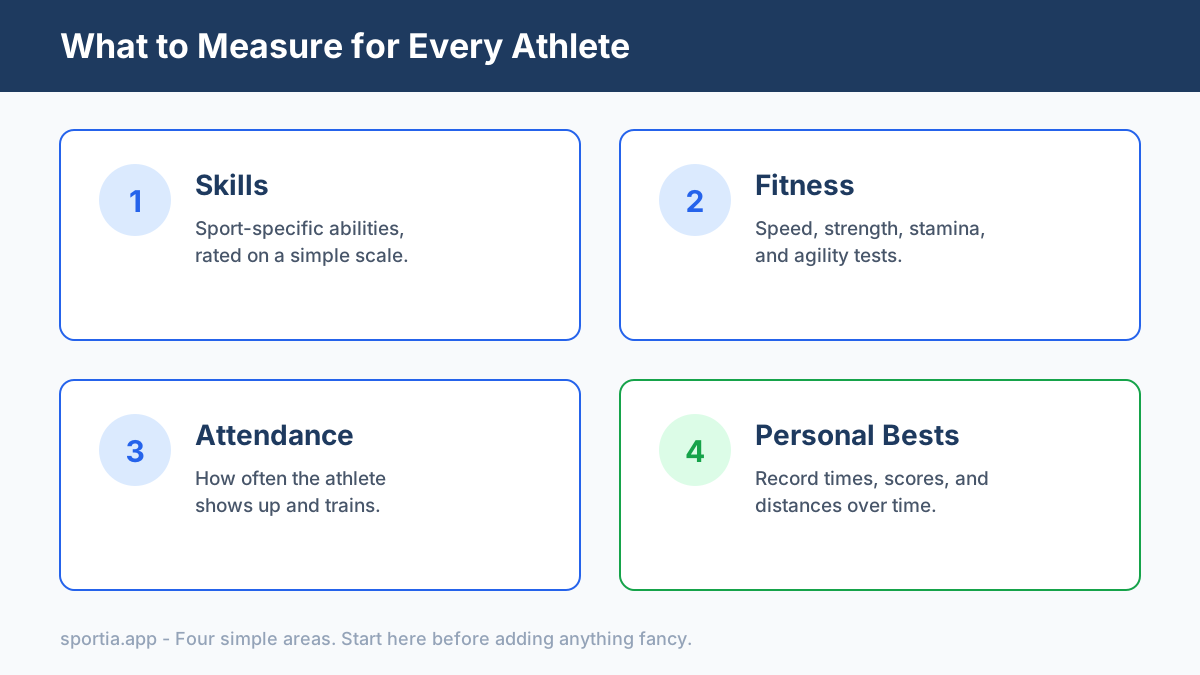
Tracking everything is a trap. You will burn out and quit. Focus on four simple areas instead. Together they paint a full picture of each athlete.
- Skills: sport-specific abilities, rated on a simple scale.
- Fitness: speed, strength, stamina, and agility tests.
- Attendance: how often the athlete shows up and trains.
- Personal bests: record times, scores, and distances over time.
These four are enough for most academies. They are easy to record and easy to explain. Start here before you add anything fancy.
Set clear, age-appropriate goals
Tracking works best with goals to aim at. A goal turns a number into a target. It gives the athlete something to chase each month.
Set goals the athlete can actually control. "Win the district title" depends on others. "Cut my 50-metre time by one second" depends on the athlete. Controllable goals build confidence, not pressure. Keep them small and clear for young players. A 10-year-old needs a different goal than a 17-year-old. Match the goal to the age and stage.
Use training logs to build a record
A single session means little on its own. A year of sessions tells a story. Training logs turn daily work into that story. They are the backbone of real progress tracking.
After each session, record what the athlete did. Note the drills, the effort, and any wins. Over weeks, these logs reveal clear patterns. You can see who is rising and who has stalled. You can also spot a dip early and find out why. Often a growth spurt or a heavy school term explains it. This pairs well with smart on-field work like speed and agility training for young athletes.
Show progress to parents and watch retention rise
This is where tracking pays you back. Data is not just for you. It is a powerful tool for keeping parents on board.
Share a simple progress update each month. Show the goals met and the personal bests beaten. The conversation changes at once. It moves from "Is my child improving?" to "What should we work on next?" That shift builds trust and partnership. Parents who see proof stay longer and refer their friends. In a business where referrals are gold, this matters a lot. It is the same retention logic behind helping families with balancing studies and sports.
A real example: saving a doubting parent
Consider a swimming academy in Hyderabad with 60 young athletes. One father is unhappy and threatens to pull his daughter out, convinced she has not improved in months. Without data, the coach would only be able to argue from memory, which rarely changes a frustrated parent's mind.
Instead, the coach opens her six-month record. Her 50-metre freestyle time has dropped from 45 seconds to 41 seconds. Her attendance sits at 90 percent, and she has set two personal bests in that period. Faced with clear, measurable evidence of development, the father changes his view completely. His daughter stays, and he later refers two of his friends to the academy. That single progress record protected revenue and won new students.
How often should you test and record?
Progress tracking needs a steady rhythm to work. Random notes here and there will not help. Build a simple routine and stick to it.
- Every session: a quick training log of drills and effort.
- Monthly: a short progress update shared with parents.
- Every quarter: a proper fitness and skills test for benchmarks.
This rhythm keeps the workload light but the data rich. Quarterly tests give you hard numbers to compare. Monthly updates keep parents engaged and reassured. The daily logs hold the whole picture together.
How Sportia tracks athlete development
Doing all this on paper is hard work. Spreadsheets get messy fast. This is where the right software helps. Sportia includes a full athlete development toolkit.
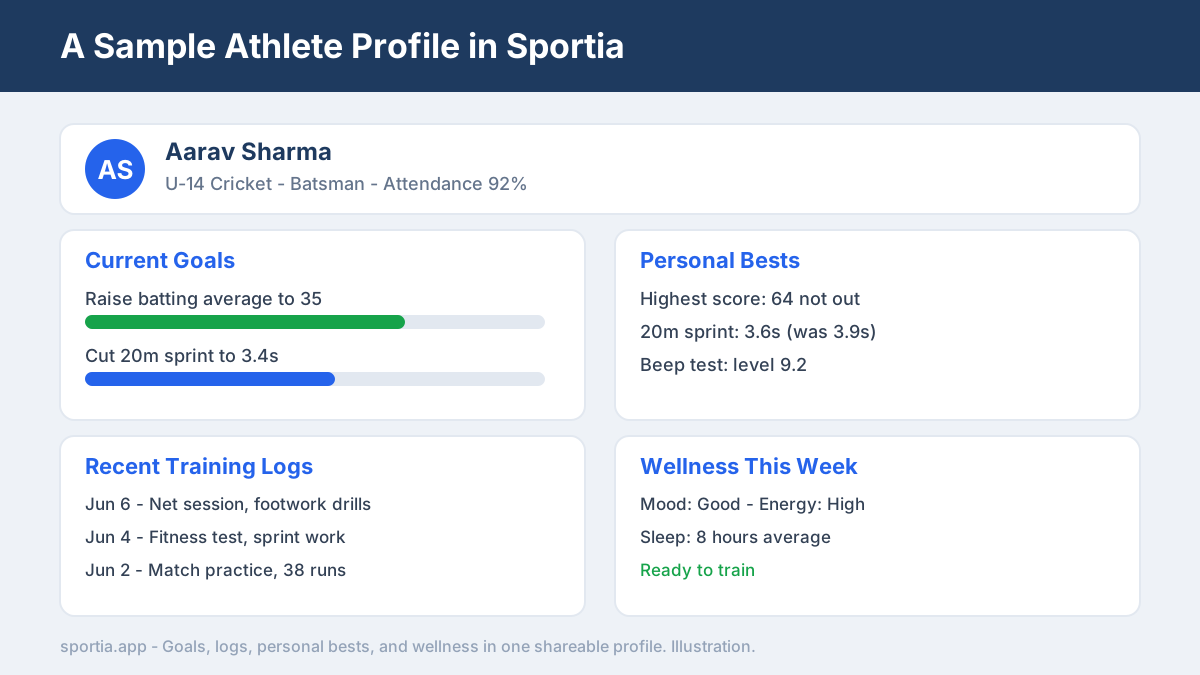
With Sportia, each athlete has a profile. You can set goals and track them over time. You can keep training logs for every session. You can record personal bests and watch them improve. You can even track wellness, like mood and energy. It all sits in one place, ready to share with parents. This pairs neatly with body data from wearables for athlete monitoring.
Better data leads to better coaching
Progress tracking does not only reassure parents; it fundamentally improves the quality of your coaching decisions. When you record measurable data consistently, patterns that stay invisible from week to week become obvious across an entire season. You can identify exactly when an athlete plateaus, and then investigate whether the underlying cause is fatigue, a technical flaw, or simply a growth spurt. This objective evidence allows you to individualise training, instead of applying the same generic plan to every athlete in the batch. Over time, the accumulated history of each athlete becomes a genuine competitive advantage, because decisions grounded in evidence consistently outperform decisions based only on intuition and memory.
Sport-specific metrics that matter
Each sport measures progress in its own way. A swimmer is not judged like a batsman. Your tracking should fit your sport. Here are some examples to guide you.
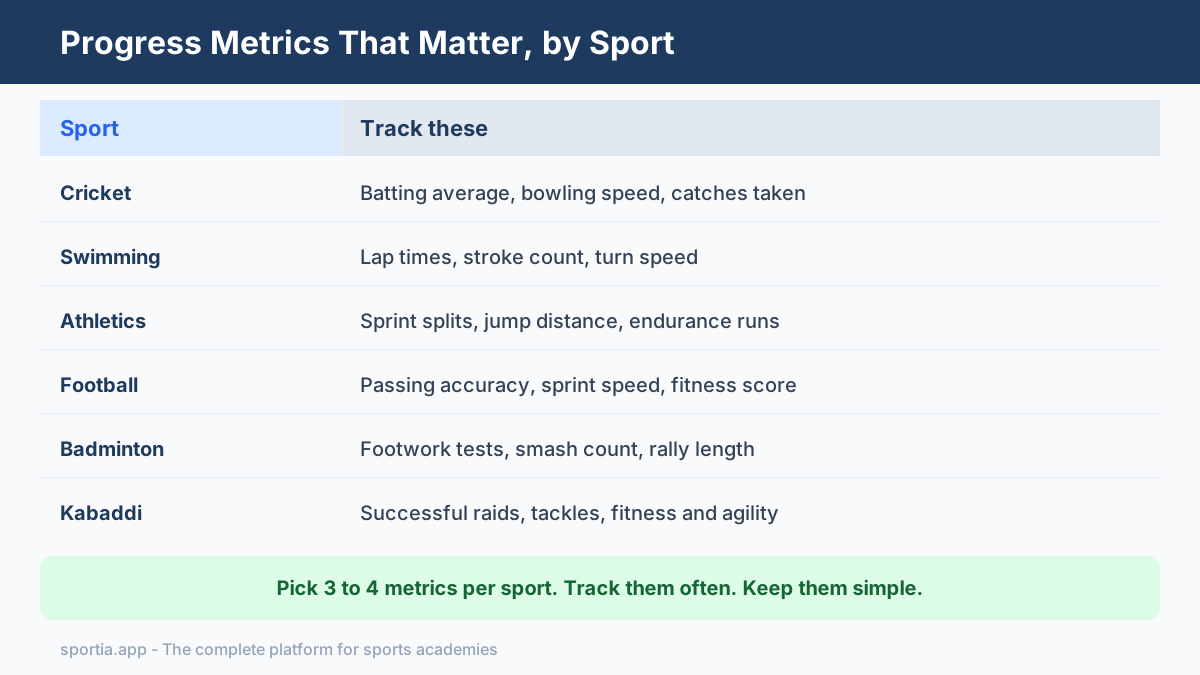
Pick three or four metrics that truly matter for your sport. Track them often and keep them simple. A cricket academy might track batting average and bowling speed. A swimming academy tracks lap times and stroke count. An athletics group tracks sprint splits and jump distance. The key is to measure what shows real growth.
How to start tracking this week
You do not need a big plan to begin. Start small and grow from there. Here is a simple way to start in your academy this week.
- Pick one batch and three metrics that matter for your sport.
- Record a baseline for every athlete in that batch.
- Log each session for one month, even if briefly.
- Share a short progress note with parents at month end.
That first month builds the habit. Once it feels natural, add more batches and metrics. Soon, progress tracking becomes a normal part of how you coach. The hardest part is simply starting.
Common mistakes to avoid
Progress tracking is simple, but it is easy to get wrong. Watch out for these traps.
- Tracking too much: too many metrics means you track none well.
- Only tracking winners: every athlete deserves a progress record.
- Recording but not sharing: data hidden from parents is wasted.
- Stopping after a month: progress only shows over the long run.
Avoid these and your tracking will stay useful. Consistency beats complexity here. A simple system you actually use beats a perfect one you abandon.
Frequently Asked Questions
How do sports academies track athlete progress?
They record skills, fitness, attendance, and personal bests over time, usually against set goals. Training logs build a long-term record. Many academies now use athlete progress tracking software to store this data and share simple updates with parents.
What should a sports academy measure to track progress?
Focus on four areas: sport-specific skills, fitness markers like speed and stamina, attendance, and personal bests. These are easy to record and easy to explain. Add sport-specific metrics, such as lap times or batting average, where useful.
Why is athlete progress tracking important?
It turns vague claims into clear proof of development. This builds parent trust, helps athletes stay motivated, and lifts retention. Academies with clear tracking face fewer parent conflicts and keep students longer.
How often should I share progress with parents?
A monthly update works well for most academies. Show goals met and personal bests beaten. This keeps parents informed without creating too much work, and it shifts the conversation to what the athlete should focus on next.
Can I track athlete progress without software?
Yes, you can start with a notebook or spreadsheet. But it gets messy as your academy grows. Software like Sportia keeps goals, logs, and personal bests in one place and makes sharing with parents simple.
Turn progress into your strongest selling point
Athlete progress tracking is not just admin. It is proof of the value you deliver every day. It keeps athletes motivated and parents loyal. Start with four simple measures, set clear goals, and share progress every month. Track goals, training logs, and personal bests with Sportia. Start your free 14-day trial of Sportia and turn your athletes' growth into your strongest selling point.