

Speed and Agility Training for Young Athletes: A Coach's Playbook
Speed and agility are fundamental athletic qualities that determine performance across every sport. A cricket fielder accelerating to intercept a boundary ball. A football winger executing a sharp direction change past a defender. A badminton player lunging explosively to retrieve a deceptive drop shot at the net. Regardless of which sport your athletes specialize in, the ability to generate maximum velocity and change direction efficiently provides a measurable competitive advantage.
This guide gives you 10 tested drills - 5 for agility, 5 for speed - that work for athletes aged 8 to 18. It also includes a ready-to-use 30-minute session plan and the most common mistakes coaches make with speed training.
Why Speed and Agility Training Matters for Young Athletes
Young athletes who incorporate structured speed and agility training early in their development build a comprehensive movement foundation that transfers across any sport they pursue. Here is what consistent training delivers:
- Faster reaction time: Athletes learn to read and respond to game situations quicker.
- Better balance and body control: Agility drills teach athletes to stop, start, and turn without falling or losing form.
- Injury prevention: Strong, controlled movements reduce the risk of ankle sprains, knee injuries, and pulled muscles.
- Sport-ready fitness: Speed and agility sessions build the type of fitness that sports demand - short bursts, quick recovery, repeat.
The key is to train speed as a skill, not as a punishment. Sprinting laps for being late to practice teaches kids to hate running fast. Proper speed training should feel exciting and competitive.
Age-Based Training Guide
Not all drills are appropriate for every developmental stage. Here is a comprehensive breakdown of what training intensity and complexity works at each age category:
| Age Group | Focus | Session Length | Drill Types |
|---|---|---|---|
| U-10 (8-10 years) | Fun, games, basic movement | 15-20 min | Ladder basics, tag games, relay races |
| U-12 (10-12 years) | Movement skills, coordination | 20-25 min | Cone drills, T-drill, short sprints |
| U-14 (12-14 years) | Speed, change of direction | 25-30 min | Pro shuttle, hill sprints, flying sprints |
| U-18 (14-18 years) | Power, reaction, sport-specific | 30 min | All drills, resistance runs, complex combos |
For U-10 athletes, keep it playful. Turn every drill into a race or a game. For U-14 and above, you can add timing, tracking, and more structured programs.
5 Agility Drills Every Coach Should Use
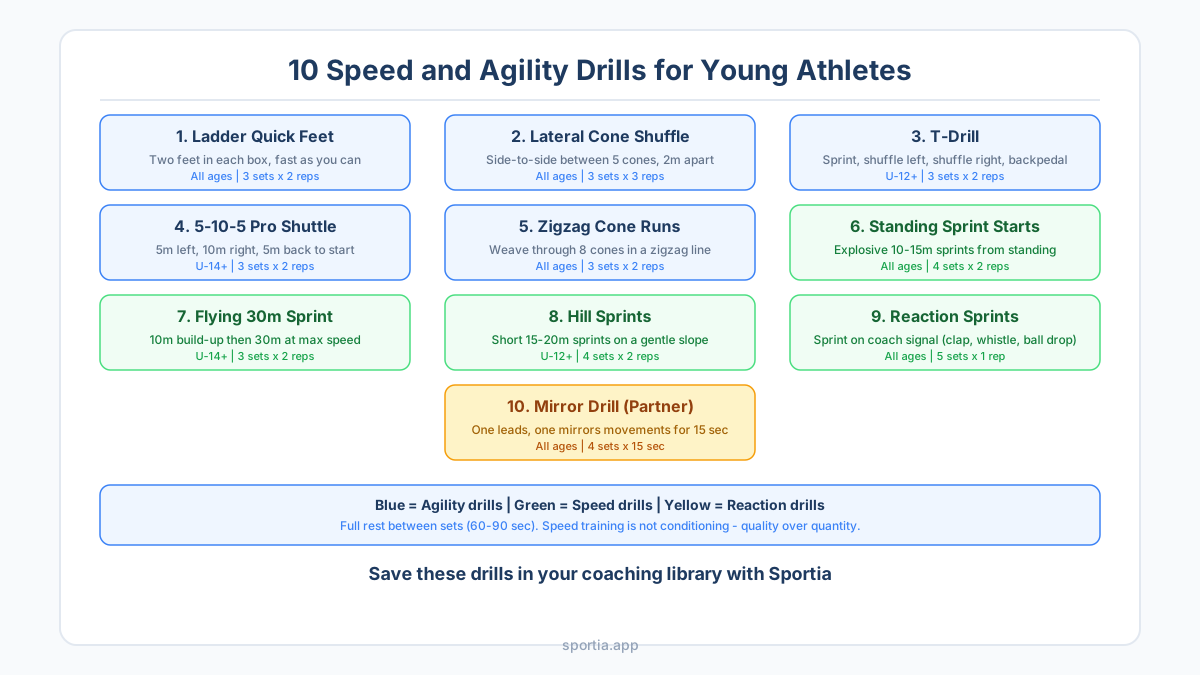
1. Ladder quick feet
Place an agility ladder flat on the ground. Athletes step both feet into each box as fast as they can, moving from one end to the other. Focus on light, quick steps - not on speed down the ladder. This builds foot speed and coordination that helps in every sport.
Sets/reps: 3 sets of 2 reps. Rest 45 seconds between sets.
2. Lateral cone shuffle
Set up 5 cones in a line, 2 meters apart. Athletes shuffle sideways from cone 1 to cone 5 and back without crossing their feet. Keep the hips low and weight on the balls of the feet. This drill builds the side-to-side movement used in cricket fielding, badminton, and football defense.
Sets/reps: 3 sets of 3 reps. Rest 45 seconds between sets.
3. T-drill
Set up 4 cones in a T shape. The athlete sprints forward 10 meters, shuffles left 5 meters, shuffles right 10 meters, shuffles back left 5 meters, then backpedals to the start. This covers all four directions of movement in one drill.
Sets/reps: 3 sets of 2 reps. Rest 60 seconds between sets. Best for U-12 and above.
4. 5-10-5 pro shuttle
Place 3 cones 5 meters apart in a line. The athlete starts at the middle cone, sprints 5 meters to the right, touches the cone, sprints 10 meters to the left cone, touches it, then sprints 5 meters back to the middle. This tests change of direction at full speed.
Sets/reps: 3 sets of 2 reps. Rest 60 seconds between sets. Best for U-14 and above.
5. Zigzag cone runs
Place 8 cones in a zigzag pattern, 3 meters apart. Athletes weave through them as fast as possible, planting the outside foot at each turn. This builds the cutting ability needed in football, kabaddi, and hockey.
Sets/reps: 3 sets of 2 reps. Rest 45 seconds between sets.
5 Speed Drills That Build Real Pace
6. Standing sprint starts
Athletes stand behind a line in a ready position. On the coach's signal, they explode forward and sprint 10-15 meters at full effort. Focus on the first 3 steps - short, powerful, driving forward. Walk back and repeat. This builds the explosive start that matters in every sport.
Sets/reps: 4 sets of 2 reps. Rest 60 seconds between sets.
7. Flying 30-meter sprint
Athletes build up speed over a 10-meter zone, then sprint at full speed through a 30-meter zone. Time the 30-meter section only. This trains top speed without the strain of accelerating from a dead stop every time. Best for U-14 and above.
Sets/reps: 3 sets of 2 reps. Rest 90 seconds between sets.
8. Hill sprints
Find a gentle slope (not steep). Athletes sprint up 15-20 meters, then walk back down. The incline forces them to drive their knees higher and push harder with each step. This builds leg power without needing a gym. Start with a mild slope for younger athletes.
Sets/reps: 4 sets of 2 reps. Rest 60-90 seconds between sets. Best for U-12 and above.
9. Reaction sprints
Athletes stand with their back to the coach. On a signal - clap, whistle, or ball drop - they turn and sprint 10 meters. Vary the signal type and timing so athletes cannot predict it. This trains the reaction speed that separates good athletes from great ones.
Sets/reps: 5 reps with full recovery between each. Works for all ages.
10. Mirror drill (partner)
Two athletes face each other 2 meters apart. One leads with random movements - side steps, forward, backward, jumps. The other mirrors every move for 15 seconds, then they switch. This builds reactive agility that no cone drill can match.
Sets/reps: 4 sets of 15 seconds each. Rest 30 seconds between sets.
Sample 30-Minute Speed and Agility Session
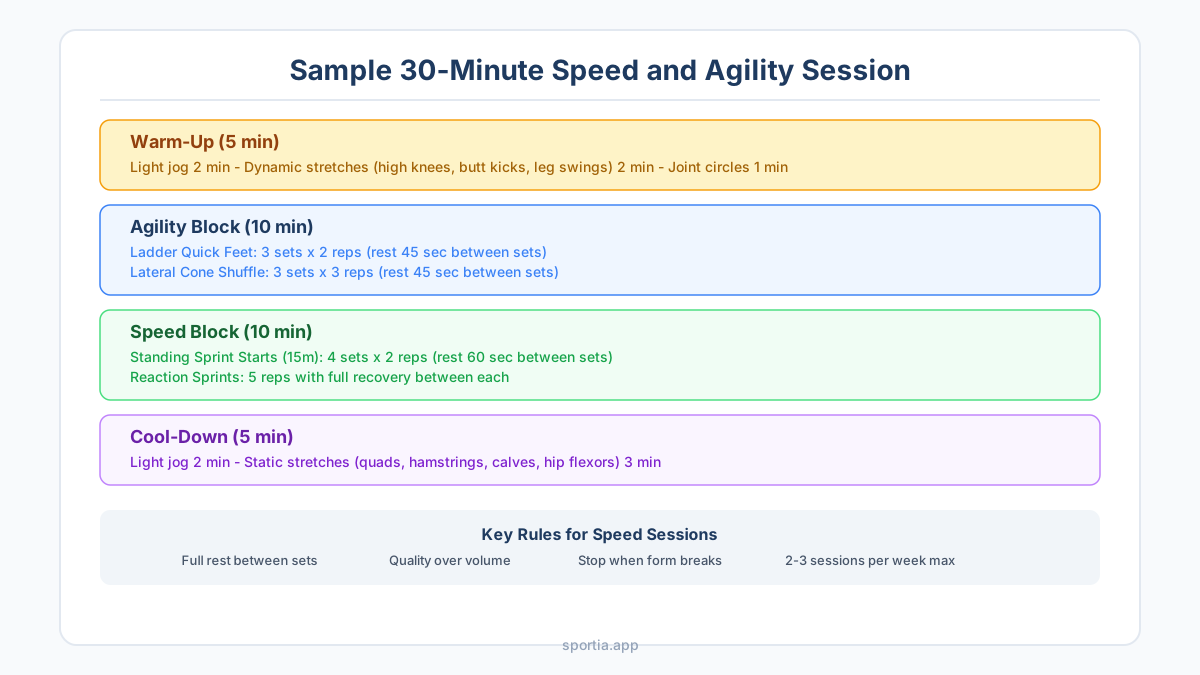
Here is a ready-to-use session plan you can run at your next training. It works for athletes aged 10 and above. Adjust the intensity for younger groups.
| Block | Time | What to Do |
|---|---|---|
| Warm-up | 5 min | Light jog (2 min), dynamic stretches - high knees, butt kicks, leg swings (2 min), joint circles (1 min) |
| Agility block | 10 min | Ladder quick feet: 3 x 2 reps. Lateral cone shuffle: 3 x 3 reps. Rest 45 sec between sets. |
| Speed block | 10 min | Standing sprint starts (15m): 4 x 2 reps. Reaction sprints: 5 reps. Rest 60 sec between sets. |
| Cool-down | 5 min | Light jog (2 min), static stretches - quads, hamstrings, calves, hip flexors (3 min) |
Run this session twice a week. That is enough for most youth athletes. Three times a week is the max - any more and you risk fatigue and injury.
Common Speed Training Mistakes to Avoid
Even experienced coaches make these errors. Watch out for them:
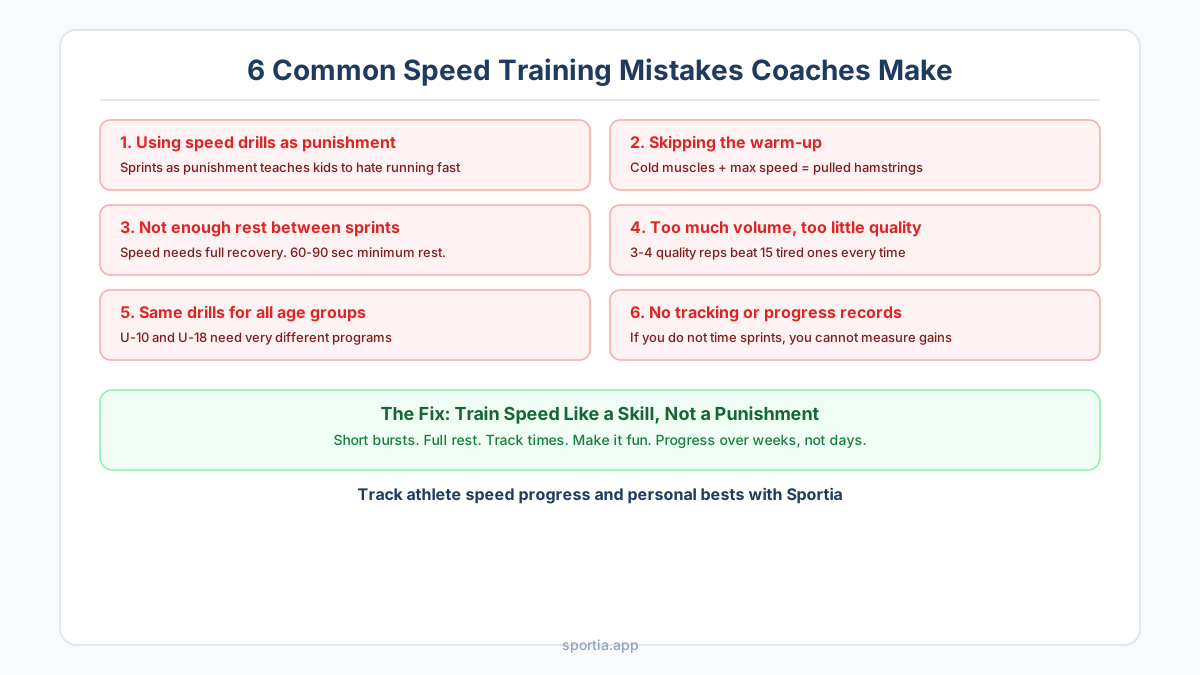
- Using sprints as punishment: "You were late, run 10 laps." This teaches athletes that running fast is a bad thing. Speed training should feel like a reward, not a penalty.
- Skipping the warm-up: Cold muscles plus max effort equals pulled hamstrings. Always spend at least 5 minutes on a proper warm-up before any speed work.
- Not enough rest between sprints: Speed training needs full recovery. If an athlete is still breathing hard from the last sprint, they are not ready for the next one. Give 60-90 seconds of rest between sets.
- Too much volume: Speed is about quality, not quantity. Three perfect 15-meter sprints do more for speed than fifteen tired ones. When form breaks down, the set is over.
- Same drills for all ages: A 9-year-old and a 16-year-old need very different programs. Use the age guide above to match drills to the right group.
- No tracking or timing: If you do not time sprints or record results, you cannot measure progress. Use a stopwatch and note times. Athletes love seeing their numbers drop over weeks. Tools like Sportia let you track personal bests and assign drills from a coaching library.
How to Track Speed and Agility Progress
Systematic performance measurement keeps athletes motivated and demonstrates quantifiable improvement to parents who are investing in their children's athletic development. Here are the key benchmarks to monitor regularly:
- 10m sprint time: Tests acceleration. Time every 4-6 weeks.
- 30m sprint time: Tests top speed. Time every 4-6 weeks.
- T-drill time: Tests agility and change of direction. Time monthly.
- 5-10-5 shuttle time: Tests reactive speed. Time monthly.
Record these as personal bests. When an athlete sees their T-drill time drop from 12.5 seconds to 11.8 seconds over two months, they know the training is working. Read more about tracking athlete development in our guide on coaching mistakes that drive athletes away.
Frequently Asked Questions
At what age can kids start speed and agility training?
Children as young as 6-7 can do basic agility games like tag, relay races, and simple ladder drills. Structured speed training with timing and sets works best from age 10 onward. Keep it fun and game-based for younger athletes.
How many times per week should young athletes do speed training?
Two sessions per week is enough for most youth athletes. Three is the upper limit. Speed training needs recovery days between sessions for the body to adapt and get faster.
Do speed drills help in cricket and badminton, not just football?
Yes. Speed and agility training helps in every sport. A cricket fielder needs quick reactions and short sprints. A badminton player needs fast lateral movement and explosive lunges. The drills in this guide apply across all sports.
What equipment do I need for speed and agility drills?
An agility ladder (Rs 300-500), 10-15 cones (Rs 200-400 for a set), and a stopwatch or phone timer. That is it. No gym or special facility needed. You can run all 10 drills on a flat ground or park.
How do I make speed training fun for kids?
Turn drills into races and competitions. Use partner mirror drills. Track times and celebrate personal bests. Add variety by changing drills every few weeks. Never use sprints as punishment - that kills the fun instantly.
Should I combine speed training with regular sport practice?
Yes, but do speed work first, before the main practice, when athletes are fresh. Speed training on tired legs does not build speed - it just builds fatigue. Keep the speed block to 15-20 minutes at the start of a session. For more ideas on structuring practice, check our guide on football drills for young players.