

Training Packages and Session Quotas: A Flexible Way to Price Coaching
A parent stops you after training. Her daughter has board exams in March. She wants to pay for 12 sessions instead of a full month. Can you do that?
Most academy owners say yes. Then they lose track of it. Three months later nobody knows how many sessions are left. The parent thinks 4. Your register says 1. You give in, because arguing costs you the family.
That is the real problem with sports academy training packages. The idea is sound. The tracking is what breaks. This guide covers how to design a package, how to price it, and the one rule that keeps packages from eating your cash flow.
Monthly Fees vs Session Packages: What Each Does to Your Money
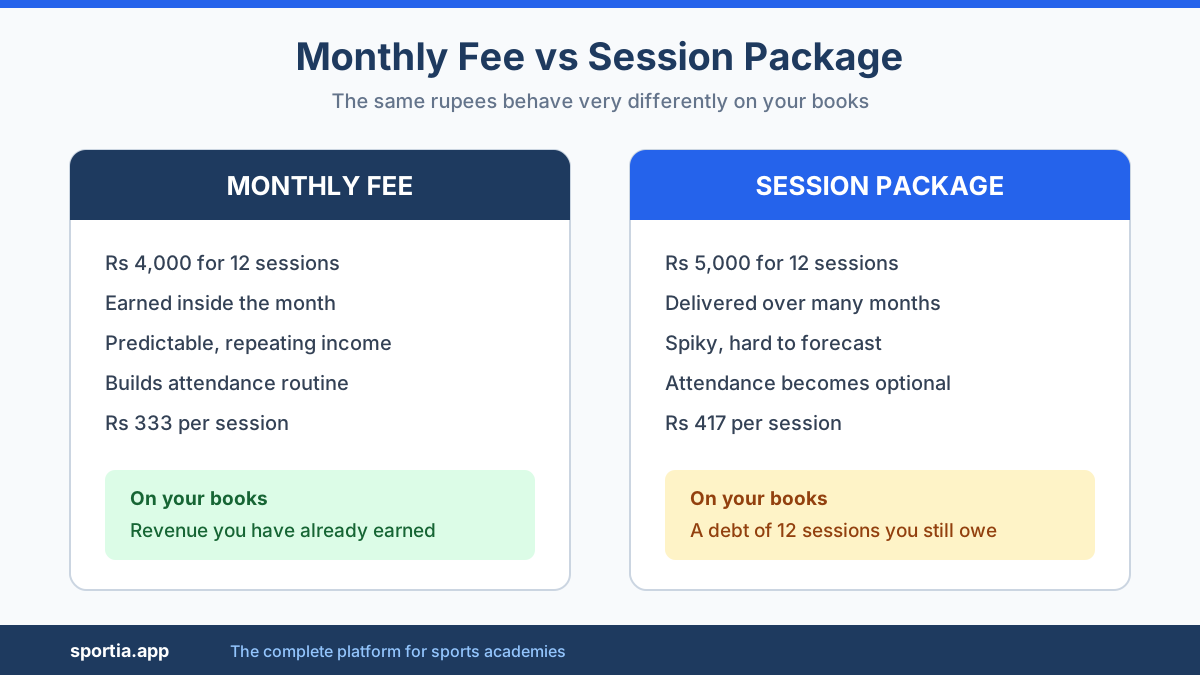
Start with a fact most owners miss. A monthly fee and a session package are not the same kind of money.
A monthly fee is earned in that month. The athlete trains, you deliver, the money is yours.
A package is different. When a parent pays Rs 6,000 for 24 sessions, that money is not yet yours. You owe 24 sessions. It sits on your books as a debt. Accountants call this deferred revenue. Academy owners call it "we had a great month" and then wonder why cash is tight in April.
This is the single biggest mistake with packages. You spend the money in month one. You deliver the coaching over the next four months. Your coaches still need paying in month three, but the cash is gone.
Treat package money as a promise, not a profit. Only count a session as revenue on the day the athlete actually attends.
There is a tax angle too, and it catches people out. Coaching services attract 18 percent GST if you cross the registration threshold. Under Section 13(2) of the CGST Act, GST is due when you receive the money or raise the invoice, whichever comes first. So if you collect Rs 1,00,000 in package fees in August, the GST on all of it is due in August. Not spread across the months you coach. Plan for that.
Who Packages Actually Suit
Packages are not for everyone. Offer them to the wrong group and you turn steady payers into casual ones.
They work well for:
- Exam-season students. Class 10 and 12 families in India go quiet from December to March. A 12-session pack keeps them attached instead of dropping out fully.
- Seasonal athletes. A cricketer who plays a summer league but wants winter fitness work.
- Busy or travelling families. Parents with unpredictable schedules who feel a monthly fee is wasted.
- Adults and hobby learners. Working adults in badminton and tennis batches rarely commit to fixed monthly slots.
- Trial-to-paid bridges. A 4-session starter pack converts better than asking for a full month upfront.
They work badly for:
- Your core junior batches. These families are already committed. A package just gives them a cheaper way to attend less.
- Competitive or squad groups. These athletes need to be there every session. Packages signal that attendance is optional.
- Anyone currently paying monthly and happy. Never offer a package to a parent who did not ask.
Designing a Package: Sessions, Validity, and Price
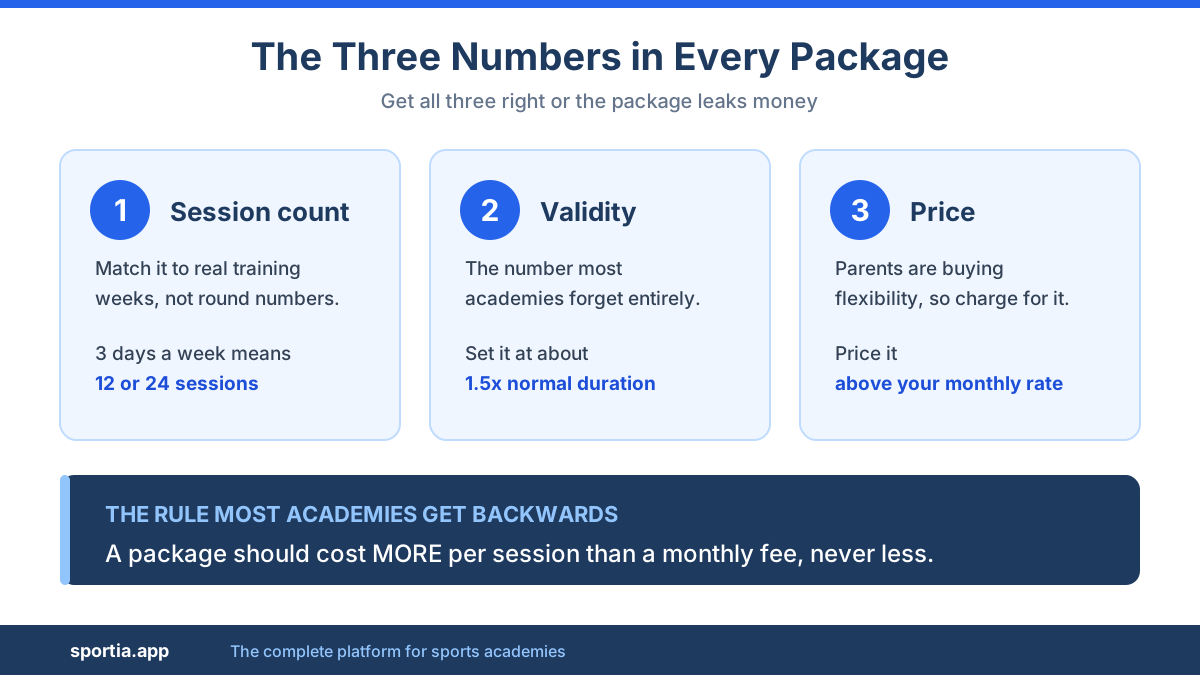
A package has exactly three numbers. Get all three right or the whole thing leaks.
1. Session count
Pick counts that map to real training weeks. If your batch runs three days a week, offer 12 sessions (one month) and 24 sessions (two months). Odd numbers like 10 or 15 confuse parents because they cannot picture the calendar.
2. Validity window
This is the number most academies forget. A 12-session pack with no expiry date is an open bar. Set the window at roughly 1.5 times the normal duration. So 12 sessions in a 3-day-a-week batch gets 6 weeks of validity, not 4.
That extra buffer covers a fever, a wedding, or a school trip. It is generous enough to feel fair and tight enough to protect you.
3. Price per session
Here is the rule almost everyone gets backwards. A package should cost more per session than a monthly fee, not less.
Parents are buying flexibility. Flexibility is the premium product. You are the one carrying the risk of an empty slot.
Work it out from your own monthly fee. Say a cricket batch is Rs 4,000 a month for 12 sessions. That is Rs 333 a session. Your package rate should sit around Rs 400 to Rs 450 a session.
| Plan | Sessions | Validity | Price | Per session |
|---|---|---|---|---|
| Monthly (default) | 12 / month | Calendar month | Rs 4,000 | Rs 333 |
| Flexi 12 | 12 | 6 weeks | Rs 5,000 | Rs 417 |
| Flexi 24 | 24 | 10 weeks | Rs 9,600 | Rs 400 |
| Starter pack | 4 | 3 weeks | Rs 1,800 | Rs 450 |
Notice the bigger pack is cheaper per session. That is deliberate. It nudges parents toward the larger commitment.
Fee ranges vary a lot across India. Budget cricket academies run Rs 1,500 to Rs 3,000 a month. Mid-range academies with better coach ratios charge Rs 5,000 to Rs 8,000. Premium programmes go past Rs 15,000. Set your package rate off your own monthly number, not someone else's.
If you have not set a base fee yet, start with our guide to building a sports academy fee structure and add packages on top later.
Why Quota Tracking Fails on Paper and in Spreadsheets
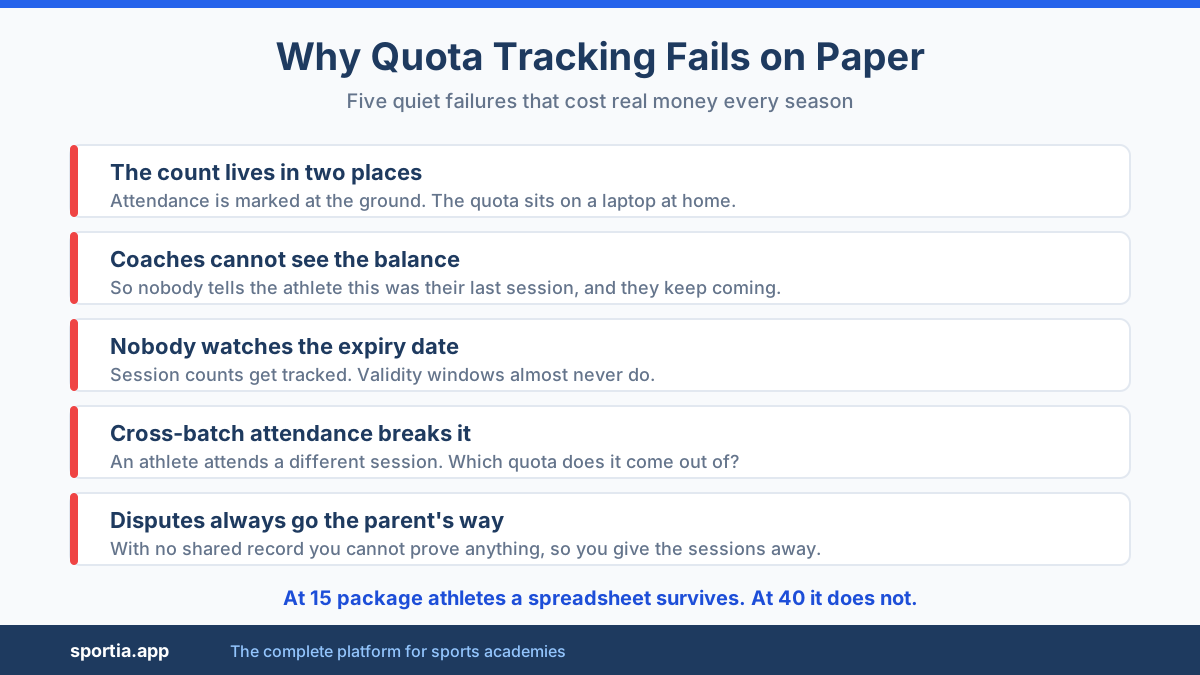
Every academy that offers packages starts with a register or an Excel sheet. Here is how it falls apart.
The count lives in two places. Attendance is marked in the register at the ground. The quota is deducted in a sheet on your laptop at home. Someone has to move numbers between them. Some evening, nobody does.
Coaches do not know the balance. Your coach cannot tell an athlete "this was your last session" because the coach cannot see the count. So the athlete keeps turning up.
Nobody watches the expiry date. Session counts get tracked. Validity windows never do. A parent returns in June with a pack bought in January and expects the balance to be live.
Cross-batch attendance breaks it. An athlete on a badminton pack attends a fitness session instead. Which quota does that come out of? On paper, usually neither.
Disputes always go the parent's way. With no shared record, you cannot prove anything. You give the sessions away. Do this ten times a year across 40 athletes and it is real money.
At 15 package athletes, a spreadsheet just about survives. At 40, it does not. The failure is quiet, which is what makes it expensive.
Expiry, Rollover, and Pause Rules
Write these down before you sell your first package. Put them in the enrollment form. A rule announced after a dispute sounds like an excuse.
- Expiry. Unused sessions lapse at the end of the validity window. State this in plain language on the receipt.
- Rollover. Allow a small carry-forward, but only if the parent buys again. Two sessions maximum, and only when the next pack is bought before expiry.
- Pause. Allow one pause per pack, up to 3 weeks, for illness or exams. Ask for a message on record. This one rule prevents most refund arguments.
- Refunds. Consumer guidance in India expects a fair pro-rata refund on the unused portion. A reasonable administrative deduction is accepted. Refund unused sessions at the package rate, deduct a small admin fee, and put the policy in writing. Do not promise "no refunds" and hope it holds.
- Transfers. Sessions transfer between siblings, never between unrelated families. Otherwise your packs become resale currency.
These rules are not about being strict. They are about never having the conversation twice.
Keep a Monthly Base Under Everything
Now the trade-off. Packages give parents flexibility and give you unpredictable income.
Studios that run on packages alone see spiky, hard-to-forecast revenue. Recurring plans hold members better because they build routine and habit. The same is true of a sports academy. A monthly athlete shows up out of rhythm. A package athlete shows up when convenient, and convenient shrinks over time.
So use a hybrid. Monthly enrollment stays the default and the headline offer. Packages sit underneath as the answer to a specific problem.
A practical ceiling: keep packages under about 25 percent of active athletes. Above that, your revenue stops being predictable and you cannot plan coach salaries or court rent with any confidence.
Track the two together. If package athletes are creeping up every month, your monthly plan is priced or positioned wrong.
How Sportia Handles Packages and Session Quotas
Sportia was built with training packages and session quotas as a core feature, because this is exactly where manual tracking breaks.
You define a package once with a session count, a validity period, and a price. Then enroll an athlete into it. From there:
- Marking attendance deducts from the quota automatically. There is no second place to update.
- The remaining balance and the expiry date sit on the athlete's profile, so any coach with access can see them.
- Attendance can be marked by QR code at the ground, so the count updates the moment the athlete checks in.
- Package purchases flow into the same invoicing system as monthly fees, so collection stays in one place.
- Parents can see the balance themselves through the parent portal, which ends the "how many are left" question.
Because attendance drives the quota, the count is always correct by definition. It is derived from what actually happened, not from someone remembering to update a sheet.
Packages also work alongside your normal batches and regular batch scheduling, and package invoices sit in the same place as your monthly fee collection and invoicing.
Five Mistakes to Avoid
- No expiry date. The most common error. An unlimited-validity pack is a debt with no end date. It will surface at the worst time.
- Pricing packages below the monthly rate. This trains committed families to switch down. You lose income and attendance at the same time.
- Untracked carry-forward. "We will adjust it next time" is not a policy. It is a future argument you have already lost.
- Spending the money as it arrives. Package cash covers months of future coaching. Set it aside for the coach costs it has to fund.
- Offering packages to everyone. Packages are a targeted tool for specific situations. Make them a general option and your monthly base erodes.
A Simple Way to Start
Do not rebuild your pricing this week. Try this instead.
- Pick one group with a real flexibility problem. Exam-year students are the easiest.
- Build a single 12-session pack. Six weeks of validity. Priced 20 percent above your monthly per-session rate.
- Write the expiry, pause, and refund rules on the enrollment form.
- Offer it only to families who ask about flexibility.
- Review after 3 months. Check attendance rate and whether they renewed.
If those athletes use most of their sessions and buy again, the package works. If they use half and disappear, the package was just a discount on leaving.
Frequently Asked Questions
How do I create training packages for sports coaching?
Set three numbers: session count, validity window, and price. Match the session count to your weekly schedule, set validity at about 1.5 times the normal duration, and price it above your monthly per-session rate. Write the expiry and pause rules into the enrollment form before you sell the first one.
Should a session package cost more or less than a monthly fee?
More per session. Parents are paying for flexibility, and you are carrying the risk of an unused slot. A package priced below your monthly rate pushes committed families to downgrade, which cuts both your income and their attendance.
What happens to unused sessions when a package expires?
That depends on the policy you set and disclose upfront. Most academies lapse unused sessions at expiry, with a small carry-forward if the parent buys another pack. If a family asks for a refund, Indian consumer guidance expects a fair pro-rata refund on the unused portion, minus a reasonable admin deduction.
Is GST charged on sports academy training packages?
If your academy is registered for GST, coaching services attract 18 percent. The liability arises when you receive the payment or issue the invoice, whichever is earlier. So GST on a package is due in the month you collect it, not spread across the months you deliver the coaching. Check your position with a chartered accountant.
How many athletes should be on packages instead of monthly fees?
Keep it under about a quarter of your active athletes. Packages create uneven, hard-to-forecast income. Above that share you cannot reliably plan coach salaries or facility rent, and your monthly base starts to erode.
Can I track session quotas in a spreadsheet?
It works up to about 15 package athletes. Past that it fails, because attendance is marked at the ground while the quota lives on a laptop. Coaches cannot see balances, expiry dates go unwatched, and disputes get settled in the parent's favour. Software that deducts the quota from attendance directly removes the gap.
The Bottom Line
Training packages solve a real problem. Some families genuinely cannot commit to a fixed monthly slot, and a rigid plan pushes them out entirely.
But a package is a promise to deliver coaching later, paid for today. Treat it that way. Price it above monthly, put an expiry on it, write the rules down, and track the quota somewhere both the coach and the parent can see.
Get those four things right and packages will grow your enrollment. Get them wrong and they quietly turn your best-paying families into occasional visitors.
Sportia handles training packages, session quotas, validity tracking, and invoicing in one place, with attendance driving the count automatically. Start a free 14-day trial and set up your first package in a few minutes.