
How to Use Wearables for Athlete Monitoring in Your Academy
To use wearables for athlete monitoring, give each athlete a fitness band or watch. Track their heart rate, sleep, recovery, and training load. Then review the data each week to spot fatigue before it becomes injury. A useful band can cost as little as 2,000 rupees. Connect it to your academy software to see trends across every athlete in one place.
Most coaches judge effort with their eyes. You watch an athlete run, sweat, and push hard. But your eyes cannot see what happens inside the body. A wearable can. This guide shows you how to use wearables for athlete monitoring in a real academy, what to track, what to buy in India, and when the data is worth your time.
What wearables show that a coach cannot see
Picture a 15-year-old fast bowler. He looks sharp at practice. But he slept five hours last night and his body has not recovered from Sunday's match. Your eyes cannot see this. A wearable can.
Sports wearable technology in India has improved fast. Modern bands track data that used to need a lab. Here is what they reveal:
- Heart rate: how hard the heart works during drills and rest.
- Sleep: how many hours and how deep the rest was.
- Recovery: whether the body is ready to train hard today.
- Training load: how much stress has built up over days.
This data turns a hunch into a fact. You stop guessing who is tired. You know.
What a wearable actually measures
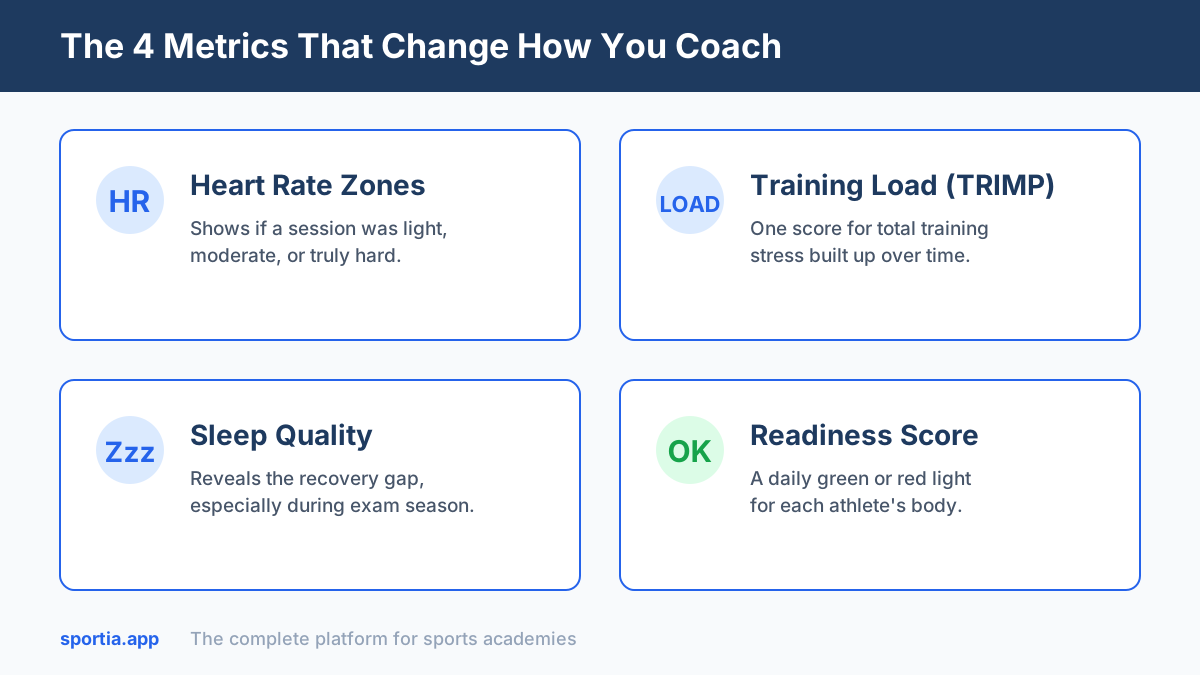
Not every number matters. Focus on four metrics that change how you coach. These four cover most needs for a youth or club academy.
Heart rate and heart rate zones
A band reads heart rate through the wrist. Cheap bands now match a chest strap within one to three beats. You can split effort into zones. Zone 1 is light. Zone 2 is moderate. Zone 3 is hard. Time in each zone tells you if a session was easy or brutal.
Training load (TRIMP)
TRIMP stands for Training Impulse. It mixes heart rate and time into one load score. A long, hard session scores high. A short, light one scores low. Track this score over weeks. It helps you spot when an athlete trains too much, too soon.
Sleep quality
Young athletes need eight to ten hours of sleep. Many get far less during exam season. A wearable shows the gap. Poor sleep means slow recovery and more injuries. Now you can talk to parents with real numbers, not just advice.
Heart rate variability (HRV)
Heart rate variability measures the tiny gaps between heartbeats. Higher variability usually signals a recovered, relaxed body. Lower variability often signals stress, illness, or incomplete recovery. Many premium devices calculate HRV automatically every morning. It is one of the most reliable early signals that an athlete needs an easier day.
Readiness or recovery score
Premium bands combine these signals into a single daily readiness score. The calculation blends resting heart rate, heart rate variability, and sleep quality into one number. A low score means rest or go easy. A high score means the body can handle a demanding session. It works like a simple green or red light for each athlete.
Affordable wearables for Indian academies
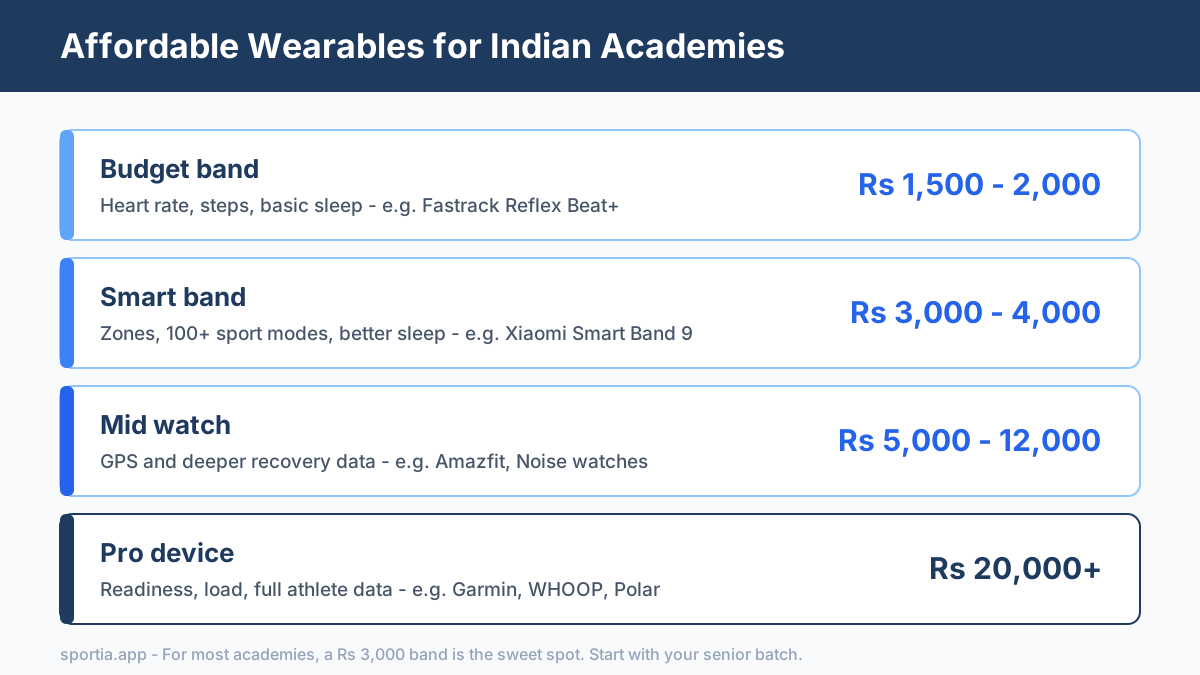
You do not need a 40,000 rupee watch to start. India has strong budget options. Heart rate tracking is now accurate even on cheap bands. Here is a simple guide by price.
| Tier | Price (INR) | Good for | Example |
|---|---|---|---|
| Budget band | 1,500 - 2,000 | Heart rate, steps, basic sleep | Fastrack Reflex Beat+ |
| Smart band | 3,000 - 4,000 | Zones, 100+ sport modes, better sleep | Xiaomi Smart Band 9 |
| Mid watch | 5,000 - 12,000 | GPS, deeper recovery data | Amazfit, Noise watches |
| Pro device | 20,000+ | Readiness, load, full athlete data | Garmin, WHOOP, Polar |
For most academies, a 3,000 rupee band is the sweet spot. It tracks heart rate zones and sleep well. Buy a few for your senior or competitive batch first. You do not need one for every beginner.
A real example of what the data changes
Consider a badminton academy in Pune with 40 athletes across three batches. The head coach buys eight bands for the competitive batch of senior players. Within two weeks, the data reveals a clear pattern that nobody expected.
Two players show a steady drop in readiness every Thursday and Friday. The reason becomes obvious after a quick chat. Both attend extra tuition late on Wednesday nights and sleep barely six hours. Their bodies arrive at Thursday practice already drained. Before wearables, the coach simply thought they were lazy at the end of the week.
With the data, the coach moves their hardest sessions to Monday and Tuesday. He keeps Thursday lighter for these two athletes. Their performance improves within a month, and one avoids a likely overuse injury. That single insight justified the entire cost of the bands.
How Sportia connects your wearables
Buying bands is step one. The hard part is reading the data. A coach cannot open ten different apps each morning. This is where your academy software helps.
Sportia connects with seven wearable providers. These are Strava, Garmin, WHOOP, Oura, Polar, Wahoo, and Apple Health. Each athlete links their device once. After that, their data flows into their Sportia profile. You see heart rate, sleep, load, and readiness for the whole batch in one screen.
This means no spreadsheets and no app-hopping. The same profile holds their attendance, training logs, and now their body data. It gives you the full picture of each athlete in one place.
How to set up wearable tracking step by step
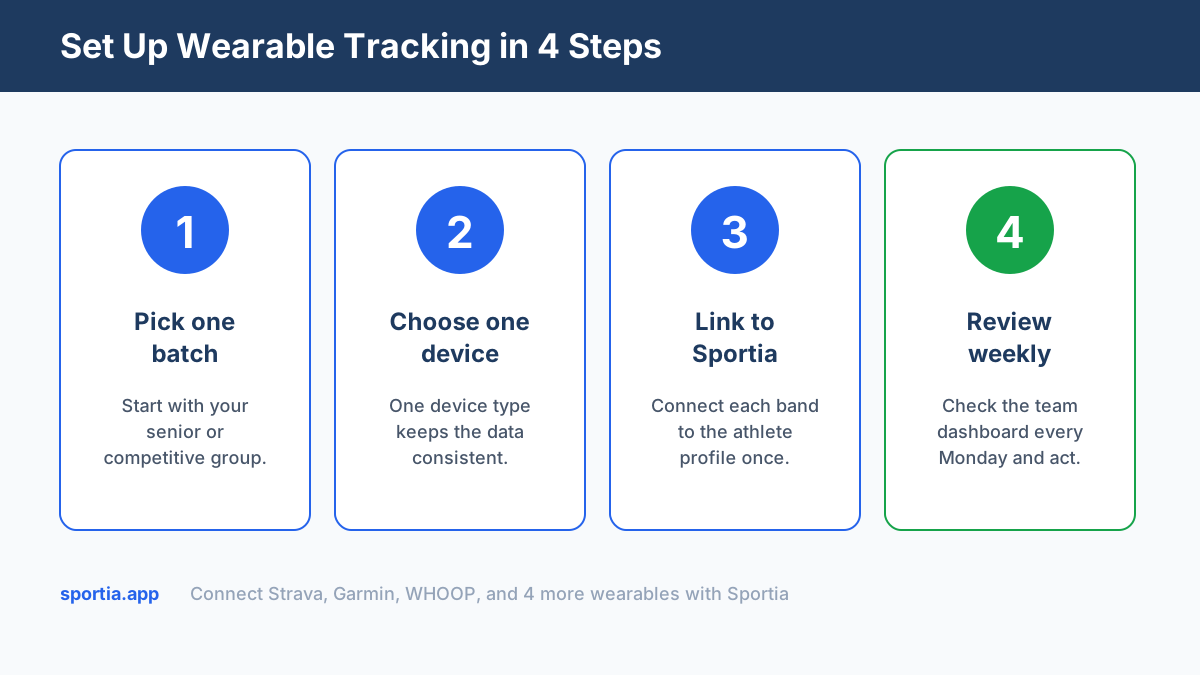
Starting is easier than most coaches expect. Follow these steps with one batch first.
- Pick one group to start. Your senior or competitive batch is best.
- Choose one device type so the data stays consistent.
- Ask each athlete to wear the band during training and sleep.
- Link each device to the athlete's Sportia profile once.
- Check the team dashboard every Monday for trends.
- Act on the data. Rest a tired athlete or push a fresh one.
Using wearable data to prevent overtraining
The biggest win from wearables is injury prevention. Young athletes get hurt when load rises too fast. A common rule is the 10 percent rule. Do not raise weekly training load by more than 10 percent.
Wearables make this easy to watch. If an athlete's load score jumps too high, you see it. If their readiness drops for three days straight, you see that too. You can then cut their load before a strain becomes a tear. Pair this data with smart on-field work like speed and agility training for young athletes to keep growth safe.
Sports scientists often use the acute-to-chronic workload ratio for this. It compares this week's load against the average of recent weeks. A ratio that climbs above 1.5 usually signals a dangerous spike. You do not need to calculate this by hand. Software that reads your wearable data can highlight these spikes for you automatically.
Wearables and young athletes: consent and privacy
Most academy athletes in India are minors. Collecting their body data carries real responsibility. You must handle this carefully to keep parents comfortable and confident.
Always get written consent from a parent before tracking a child's health data. Explain what you collect and why it helps their child train safely. Sportia automatically flags minors and tracks consent status, which makes this process simpler to manage. Never share an individual athlete's data outside the coaching team without permission. Treat heart rate and sleep data as private medical information, because that is exactly what it is.
Coach alerts that matter
You are busy. You cannot stare at data all day. So watch for just three warning signs:
- Readiness dip: a low recovery score for several days in a row.
- Load spike: a sudden jump in training load versus last week.
- Sleep drop: a clear fall in sleep hours, often during exams.
Any one of these is a signal to talk to the athlete. Most of the time, a short rest fixes the problem. This is the same care you give your staff and structure, as covered in our guide on building a coaching staff hierarchy.
When wearables make sense and when they do not
Wearables are powerful but not for every academy. Be honest about your size and goals.
Wearables are worth it when:
- You train competitive or serious athletes who chase results.
- You have athletes recovering from injury.
- Your batch trains five or more days a week.
Wearables can wait when:
- You run a beginner batch of young kids for fun and skill.
- You meet only once or twice a week.
- You have not yet sorted out basics like attendance and fees.
If you are still tracking attendance on paper, fix that first. A simple system like a digital attendance tracking setup gives a faster payback than wearables. Add body data once your core operations run smoothly.
Frequently Asked Questions
How do you use wearables for athlete monitoring?
Give athletes a fitness band or watch to wear during training and sleep. Track heart rate, training load, sleep, and recovery. Review the data each week to spot fatigue and adjust training before injury happens.
What is the cheapest wearable for sports academies in India?
Budget bands like the Fastrack Reflex Beat+ start under 2,000 rupees and track heart rate and sleep. For better data, a band around 3,000 to 4,000 rupees, such as the Xiaomi Smart Band 9, is a strong value.
Which metrics should a coach track with wearables?
Focus on four metrics. These are heart rate zones, training load, sleep quality, and a daily readiness score. Together they show how hard an athlete trains and how well the body recovers.
Can wearables prevent sports injuries?
Wearables cannot stop every injury. But they flag risk early. A sharp rise in training load or a drop in recovery often comes before a strain. Acting on these signs lowers injury risk.
Do I need wearables for a beginner academy?
Usually not. Beginner batches gain more from solid coaching, attendance, and fee systems. Add wearables once you train competitive athletes or run frequent, high-intensity sessions.
How does Sportia work with wearables?
Sportia connects with seven providers, including Strava, Garmin, WHOOP, Oura, Polar, Wahoo, and Apple Health. Athletes link their device once, and their data appears in their Sportia profile for easy review.
Start monitoring your athletes the smart way
Wearables turn guesswork into clear data. You learn who is tired, who is ready, and who is at risk. Start small with one batch and one device type. Then grow from there. Connect Strava, Garmin, WHOOP, and four more wearables with Sportia to see every athlete's data in one place. Start your free 14-day trial of Sportia and bring real body data into your coaching.