

10 Badminton Drills Every Junior Player Should Practice
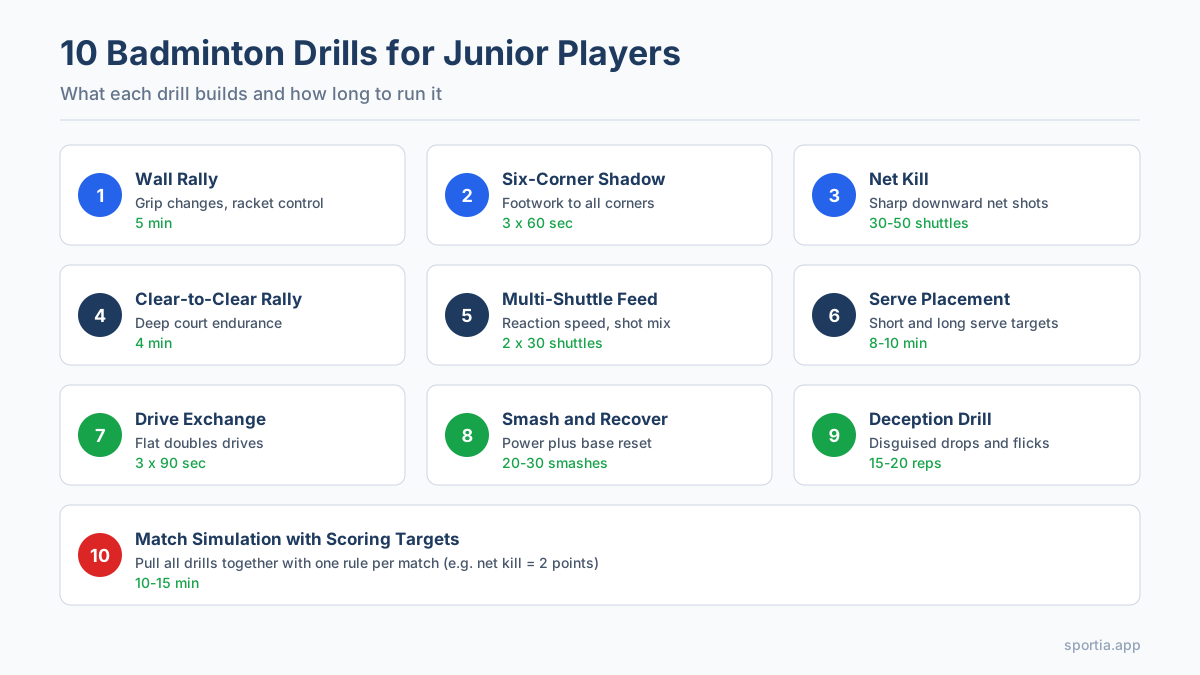
Junior badminton players love to play matches and chase smashes, but they are less keen on the patient work of drills. Every solid badminton career, however, begins with the same handful of badminton drills for beginners that build clean strokes, fast feet, and steady nerves. The right ten drills, run carefully each week, will lift any U-12 or U-14 player faster than a dozen friendly games against weaker opposition.
This guide gives you ten proven badminton drills for juniors, with the goal of each drill, the setup, and a simple coach cue you can repeat through the session. You also get a sample 45-minute session plan for a U-14 batch and a list of the common mistakes coaches make at this stage of player development.
Why Drills Matter More for Juniors than Matches
A junior player who only plays competitive matches develops poor habits at high speed. Footwork becomes sloppy under match pressure, and grip changes get skipped because the player rushes between shots. Net play often becomes a flick lottery rather than a planned, deliberate shot selection. Structured drills lock in correct technique first, before pace and competitive pressure get layered on top of it.
For ages 8 to 14, your weekly training mix should follow a simple rule that mirrors how junior athletes actually develop physical skills. Spend roughly 60 percent of training time on skill development drills, around 25 percent on match play scenarios, and approximately 15 percent on supporting fitness work. The skill development bucket is where these ten essential drills live throughout the season.
Always run each drill at the appropriate pace for the individual player in front of you. A single drill performed with focused attention for 6 minutes will always outperform the same drill rushed through for 15 minutes. Introduce scoring targets, time pressure, or game-like constraints only after the basic movement pattern is clean, balanced, and reliable.
1. Wall Rally Drill (Forehand and Backhand Control)
Goal: Build clean grip changes and reliable racket head control on both forehand and backhand wings.
Setup: The player stands 2 to 3 metres from a flat wall. They hit the shuttle against the wall and try to keep the rally going for as long as possible. Start with the forehand grip for 20 hits, then switch to the backhand grip for another 20 hits, and finally alternate between the two grips on every shot.
Coach cue: Repeat "Soft hands, short swing" through the drill. Most juniors swing far too hard at the wall, which only makes the next shot harder to control. The wall returns exactly what you send into it, so a calm grip teaches a calm rally.
Time: 5 minutes per player. Track each junior's personal best rally count each week, and post the leaderboard in your batch group for some friendly pressure.
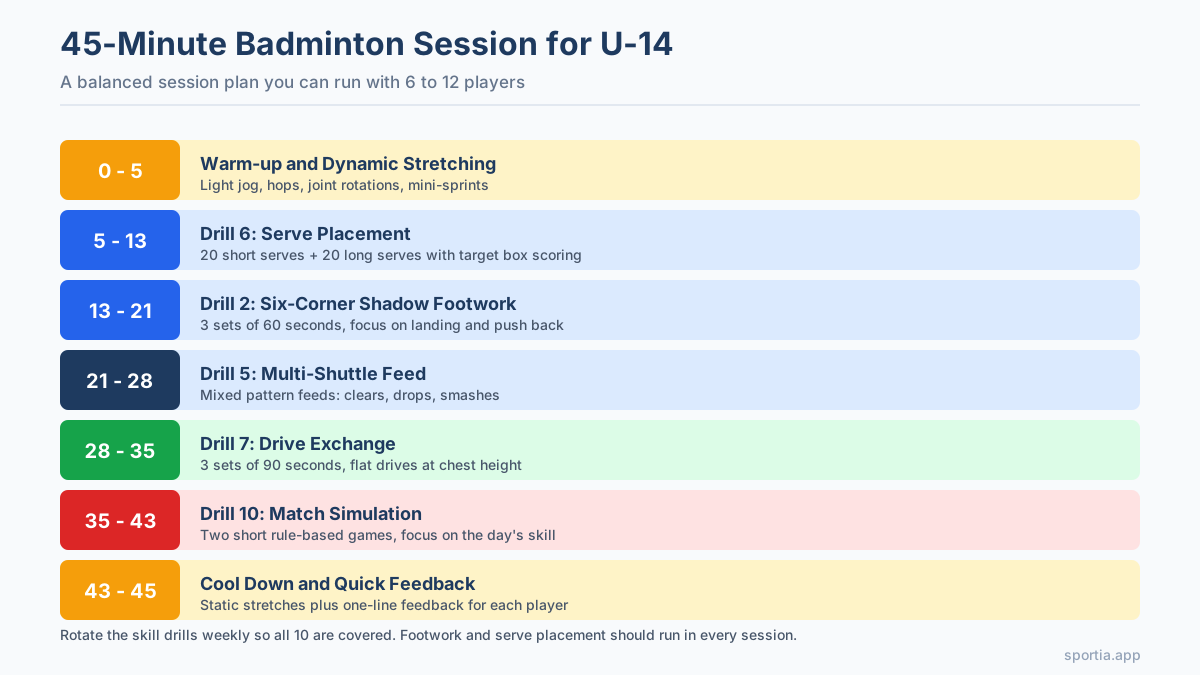
2. Six-Corner Shadow Footwork
Goal: Move quickly and cleanly to all six corners of the court without a shuttle in play. This is widely seen as the single best drill for badminton footwork at any level.
Setup: Mark the six corners of the half-court with cones, covering the two front corners, two mid corners, and two rear corners. The player starts at the centre base position with knees bent and weight on the balls of the feet. The coach calls out a number from 1 to 6, and the player splits, moves directly to that corner, plays a shadow shot, and recovers smoothly back to base before the next call.
Coach cue: Keep saying "Land soft, push back fast." The push off the corner is far more important than the actual run towards it. A quiet landing means the player is balanced and ready to move again instantly.
Time: 3 sets of 60 seconds with 30 seconds rest between sets. Build up to 90 seconds per set for U-14 players who already show clean form.
3. Net Kill Drill (Quick Reflexes at the Net)
Goal: Train sharp, downward finishing shots at the net. Net kills end short rallies decisively in junior matches and teach players to take the shuttle early.
Setup: The coach stands across the net with a stack of shuttles ready to feed. The coach gently lifts shuttles to a point just above tape height, and the player taps each one down to the other side with a short, fast, downward motion. The player must reset to ready stance after every shot, with the racket up and weight on the toes.
Coach cue: Drill "Tape height or above only" into the player's head. Below the tape, the right reply is a soft net shot, not a kill. Hitting low shuttles down hard is the most common error juniors make, and it usually ends in the net.
Time: 30 to 50 shuttles per player. Stop the drill the moment form starts to drop, even if the player begs for one more round.
4. Clear-to-Clear Rally (Endurance and Deep Court Control)
Goal: Build the high overhead clear, deep length, and back-court endurance that singles play depends on at every level.
Setup: Two players stand at the rear of each side of the court. They hit only overhead clears throughout the rally, with no smashes and no drops allowed. Each shuttle must land inside the back tramline area to count as a successful clear.
Coach cue: Repeat "Hit it high and to the back line, boring is good here." This drill is supposed to feel slow and steady. It is the one drill where a long rally with calm shots beats any fancy variation a junior wants to try.
Time: 4 minutes per pair. Count the rallies that land in the back tramline area, set a class target for the day, and reward the pair with the highest clean-clear count.
5. Multi-Shuttle Feed (Reaction Speed and Shot Variety)
Goal: Train fast reaction and a wide shot mix in a steady, controlled flow that builds court awareness without breaks.
Setup: The coach feeds a row of 20 to 30 shuttles in 30 to 60 seconds, depending on the player's level. The feed pattern can be all clears, all drops, all smashes, or a random mix that forces decision-making. The player plays each shuttle with the right shot and resets to base before the next feed arrives.
Coach cue: Remind your senior players that "quality of feed sets quality of drill." Bad feeds break the player's rhythm and teach the wrong patterns. Feed at a pace that the junior can handle cleanly, then add speed only as form holds up.
Time: 2 sets of 30 shuttles per player. Vary the pattern in each round so the junior cannot just guess the next shot before it lands.
6. Serve Placement Drill (Short and Long Serve Accuracy)
Goal: Lock in short serve accuracy for doubles play and long serve power and depth for singles play.
Setup: Place a clear target box at the front of the receiver service court using cones or chalk markings. Each player takes 20 short serves first, then 20 long serves with the same starting stance. Score one point for each serve that lands inside the target box, and zero for any serve outside.
Coach cue: Drill in "same starting stance for short and long, hide the shot from the receiver." A junior who shows their serve early loses the rally before it begins, so disguise is half the value of the drill.
Time: 8 to 10 minutes per player. Always run this drill at the very start of every session, when the arm is fresh and the racket head feels light.
7. Drive Exchange (Flat, Fast Shots for Doubles)
Goal: Build flat drive shots, fast hands, and doubles-style mid-court control under steady pressure.
Setup: Two players stand opposite each other at mid-court positions, roughly the doubles back boundary. They drive the shuttle back and forth at chest height as fast as they can hold the rally. No lifts above the head are allowed, and no smashes either. The goal is purely flat, fast drives.
Coach cue: Repeat "short backswing, quick wrist, stay on the toes." Big swings kill drive rallies because the racket cannot return to ready position in time. Keep the swing short and controlled.
Time: 3 sets of 90 seconds each, with 30 seconds rest between sets to recover and reset the grip.
8. Smash and Recover (Power Plus Quick Return to Base)
Goal: Train the smash and the fast recovery step that follows it together as one connected movement. Most juniors smash hard and then freeze in place. Top juniors smash and immediately reset to a balanced base position.
Setup: The coach feeds a high lift to the player's rear court. The player smashes the shuttle down and then quickly steps back to centre base. The coach immediately feeds the next shuttle to a different corner of the court, and the player must recover in time to play that shot too.
Coach cue: Drill in "smash, scissor jump, push back, three beats." Make the recovery step a built-in habit rather than an afterthought once the rally is won.
Time: 20 to 30 smashes per player, broken into 2 or 3 short sets so power does not drop off.
9. Deception Drill (Disguised Drops and Flicks)
Goal: Hide the shot until the very last moment so the receiver cannot read it early. This is the skill that takes a junior from solid to sharp at the regional and state level.
Setup: The player approaches a high lift using the same body shape and swing path as a clear. At the last moment, the shot finishes as either a soft drop or a quick flick instead. The coach watches closely for any tells in the body, shoulder, or arm before the shot is played.
Coach cue: Keep saying "same prep, different finish, eyes on the shuttle and not the target spot." A junior who looks at the target before the shot lands will lose the deception value of the drill.
Time: 15 to 20 reps per player. Run this drill once a week and not daily, since deception is best built in small, focused doses.
10. Match Simulation with Scoring Targets
Goal: Pull all the earlier drills together under match pressure, with a clear focus on the skill of the day rather than the score alone.
Setup: Two juniors play a half-court match to 11 points. Add one constraint rule that targets the day's drill, so the match becomes a directed exercise. Examples include rules like "every rally must include at least one drop shot," or "a successful net kill counts as 2 points instead of 1," or "no smash is allowed before rally 5 begins."
Coach cue: Tell players to "win the rule, not just the point." This forces juniors to use the day's drill skill in real play, where it matters most.
Time: 10 to 15 minutes total. Run two short rule-based matches with different constraints, so each player tries the skill in two different patterns.
How to Structure a 45-Minute Badminton Session for U-14 Players
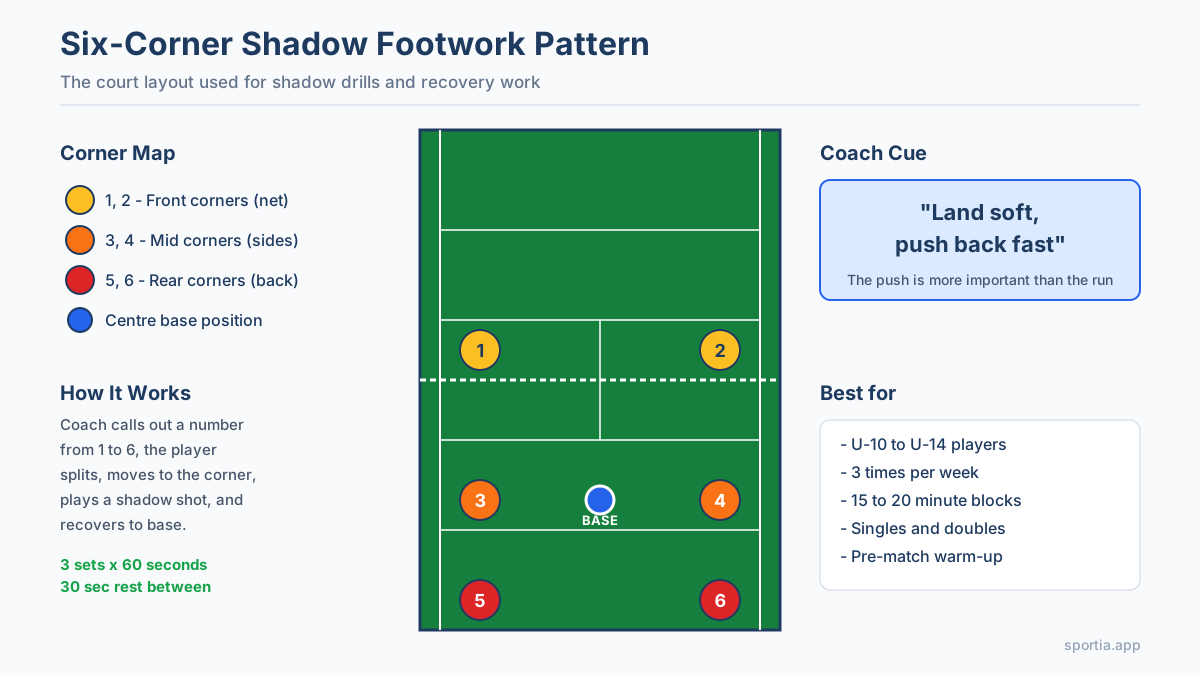
You do not need to fit all 10 drills into one session. Pick 4 to 5 drills per day and rotate them across the week. Here is a sample 45-minute U-14 session that mixes badminton coaching drills India coaches can run with 6 to 12 players on one or two courts.
- 0 to 5 minutes: Warm-up and dynamic stretching
- 5 to 13 minutes: Serve placement drill (Drill 6) - short and long serves
- 13 to 21 minutes: Six-corner shadow footwork (Drill 2) - 3 sets
- 21 to 28 minutes: Multi-shuttle feed (Drill 5) - clears and drops
- 28 to 35 minutes: Drive exchange (Drill 7) - 3 sets
- 35 to 43 minutes: Match simulation (Drill 10) - rule-based games
- 43 to 45 minutes: Cool down and quick feedback
Rotate the skill drills across the week so that by Sunday you have covered all 10. Footwork (Drill 2) and serve placement (Drill 6) should appear every session. The other drills can rotate.
Common Mistakes Coaches Make with Junior Drills
Even experienced coaches occasionally fall into these familiar traps. Actively watch for them inside your weekly batches and correct them early.
- Too many drills, too little volume: Attempting 10 drills inside 60 minutes feels productive but stays shallow. Choose 4 to 5 specific drills and execute them properly
- No scoring or measurable feedback: Juniors quickly lose attention without a clear target. Introduce rep counts, time goals, or rally streaks for every drill
- Repeating the identical drill every session: Skills only transfer if you vary the stimulus. Alternate between forehand and backhand wings, and between slow and fast tempo
- Feeding poorly during multi-shuttle drills: A weak or inconsistent feeder ruins the entire exercise. Always train your senior players to feed properly as part of their own development
- Skipping the cool-down period: Just two minutes of dedicated stretching prevents most niggling injuries before they grow into something serious
- Keeping no notes or progress tracking: If you cannot remember exactly what each junior worked on last week, that junior cannot keep improving in the right direction
If you coach more than 8 juniors at a time, drill rotation is hard to track on paper. Tools like a clear coaching plan and a session log will save you from the same mistakes week after week.
Drills That Cross Over to Other Sports
The footwork, agility, and reaction drills above also help young athletes in other sports. Speed and balance are common to all racket and team sports. The speed and agility guide covers extra ladder and cone drills you can mix in. Coaches in team sports can adapt these to their own court or field, much like the football drills for young players work on space and recovery.
How to Track Drill Progress Across a Batch
Technical skills only stick if you measure them consistently throughout the season. Choose three specific numbers to track per junior, per month, and revisit them regularly. For example, the following baseline metrics work for any U-12 or U-14 batch.
- Best wall rally streak achieved in 60 continuous seconds
- Number of accurate serves landing inside the target box out of 20 attempts
- Six-corner shadow footwork time for one complete circuit
Re-test these benchmarks once a month, ideally on the same weekday and at the same time. Show every junior their own personal progression chart afterwards. Visible improvement is the strongest motivator available at this developmental age. Sportia's coaching library lets you save drills, attach them directly to specific batches, and log detailed notes on every session. It is a much cleaner way to keep your drill plan, scores, and coaching notes in one location rather than scattered across phone galleries, paper notebooks, and WhatsApp groups.
Frequently Asked Questions
What are the best badminton drills for beginners?
The best badminton drills for beginners focus on grip, footwork, and serve placement. Start with the wall rally drill, six-corner shadow footwork, and short and long serve targets. These three build clean form before you add pace and game-like rallies.
How long should a junior badminton training session be?
For U-10 players, 45 minutes is enough. For U-14 players, 60 to 75 minutes works well. Anything over 90 minutes for juniors leads to drop in form and risk of overuse injury. Run sessions 3 to 5 times a week, not 6.
How often should juniors do shadow footwork?
Three times a week, for 15 to 20 minutes each session, is the right load for U-12 and U-14 players. Focus on clean landings and fast push back to base. Speed without balance hurts more than it helps at this age.
What age can a child start badminton drills?
Children can start basic badminton drills from age 5 or 6. Start with simple grip work, gentle wall rallies, and slow shadow footwork. Add multi-shuttle feeds and match play from age 8 onward, when the player can hold form for a full minute.
How can I make junior badminton drills more fun?
Add scoring, time goals, and team challenges. Turn the wall rally into a class league. Make the six-corner drill a relay race. Add bonus points for clean landings or hidden shots. Fun does not mean less serious, it means more engaged.
Do junior players need fitness drills along with badminton drills?
Yes, but keep the load right for the age. U-10 and U-12 players need bodyweight fitness only, mostly hops, skips, and balance work. U-14 players can add light core work and short sprint drills. Avoid heavy strength work before age 14.