
Festival Season Attendance: Keeping Your Academy Running Through Ganeshotsav
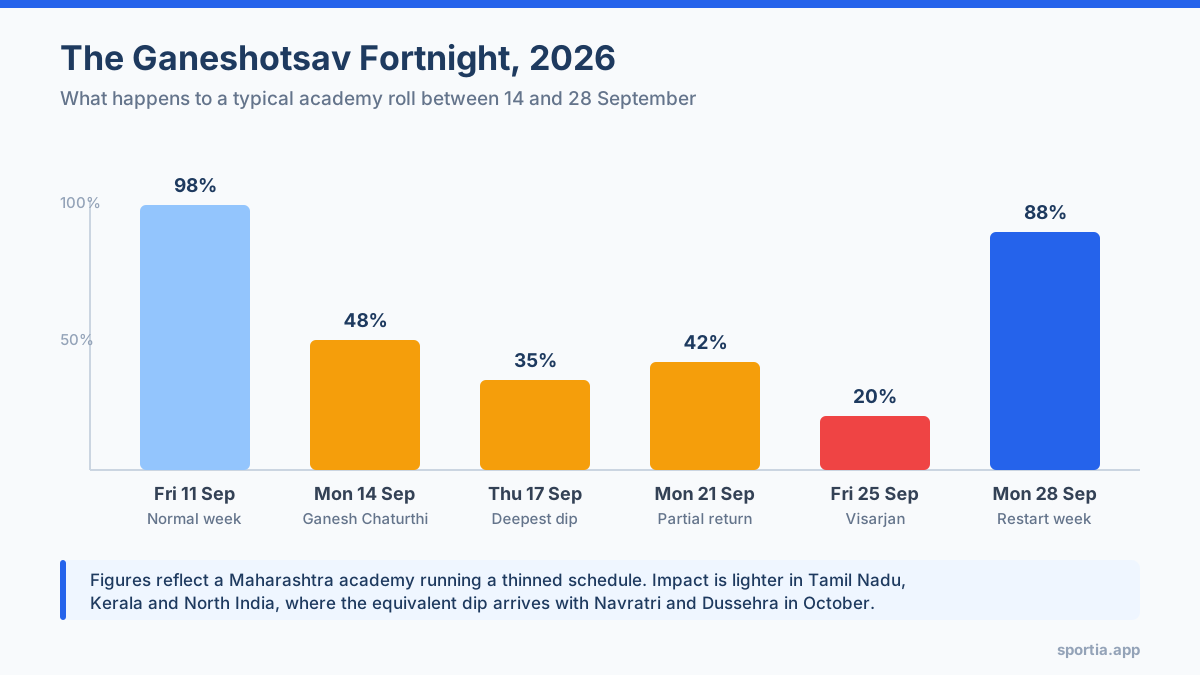
Ganesh Chaturthi falls on Monday 14 September 2026. Anant Chaturdashi and the big Visarjan processions land on Friday 25 September. Between those two dates sit almost two weeks of thin rolls, missing coaches and locked grounds.
Most academy owners plan for one holiday, but what they get is a fortnight. The way you handle it decides whether October starts at full strength or at sixty percent.
This guide covers how to manage sports academy attendance during festivals without losing athletes, money or your ground slot. The advice is built around Ganeshotsav, but it works just as well for Navratri, Durga Puja and Dussehra in October.
The fortnight problem, and where it bites hardest
A single holiday is easy, because you cancel one session and move on. Ganeshotsav is not a single holiday.
Maharashtra declared Sarvajanik Ganeshotsav a state festival in July 2025. The state now funds pandal infrastructure and security, with grants of up to five crore rupees for large mandals. Mumbai alone hosts more than 10,000 public pandals and over two lakh home idols. That scale changes daily life for two weeks, not one day.
The hit is not even across India. Plan by where you are:
- Maharashtra and Goa: the full fortnight. Expect rolls to drop by half from day one.
- Karnataka, Telangana and Andhra Pradesh: heavy on the first three days and on Visarjan day. Mid-festival weekdays hold up better.
- Gujarat: a real dip, then a second one when Navratri starts on 11 October.
- Tamil Nadu and Kerala: lighter. Kerala academies already took their hit at Onam on 26 August.
- North and East India: mild now. Your fortnight comes in October with Durga Puja and Dussehra on 20 October.
Write your own dates down before you plan anything. A Pune academy and a Lucknow academy need different plans this month.
Decide early: pause, thin out, or run through
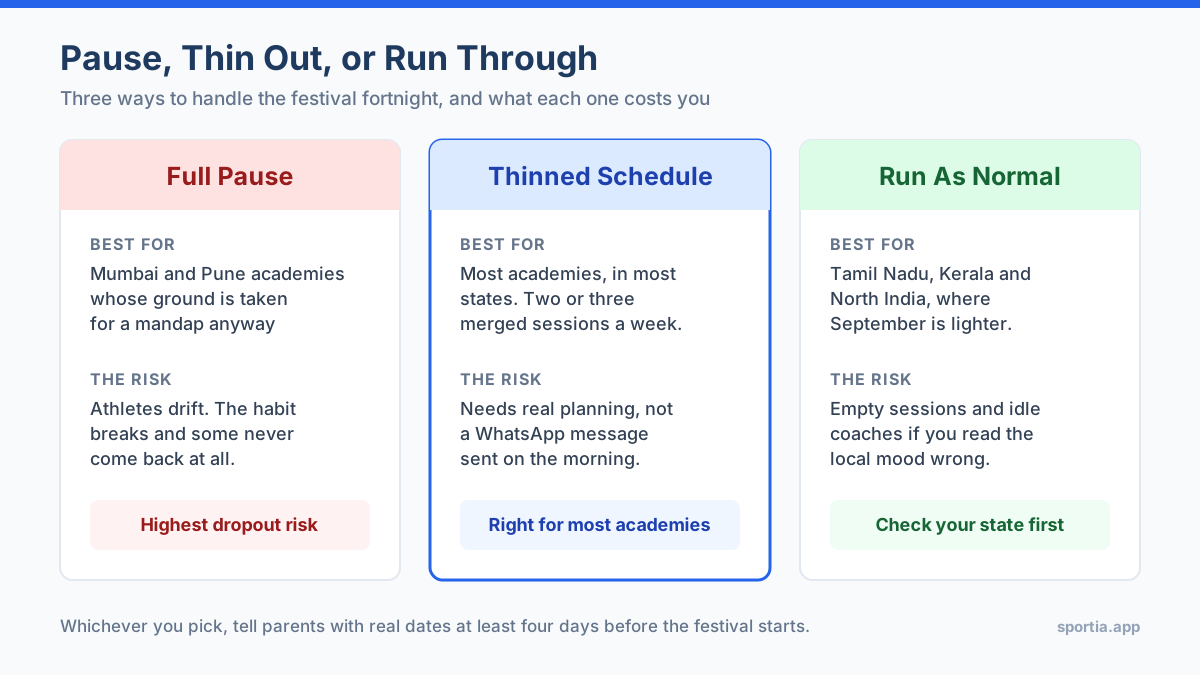
You have three real options. Pick one now, not on the morning of the fourteenth.
| Option | Best for | The risk |
|---|---|---|
| Full pause | Mumbai and Pune academies where the ground is booked for a mandap anyway | Athletes drift. Some never come back. |
| Thinned schedule | Most academies, in most states | Needs real planning, not a WhatsApp message on the day |
| Run as normal | Tamil Nadu, Kerala, North India this month | Empty sessions if you read your local mood wrong |
Tell parents by 10 September at the latest. Four days is the bare minimum. A week is better.
Send one clear message with the dates, not a vague note about festival timings. Parents plan travel around what you tell them. If you stay quiet, they assume you are shut and book a trip to the village.
Why cancelling costs more than a thinner schedule
Shutting for twelve days feels simple, but it is the most expensive thing you can do.
Habit is the thing that keeps a child in sport. Break it for two weeks and you are not restarting a routine, you are selling the academy to that family again.
Research on youth sport in India backs this up. Under Khelo India in 2018-19, 1,518 young athletes were picked for training camps. Only 625 turned up. The other 893 dropped out. Not because they lost interest in sport, but because other commitments took over once the link was broken.
Offline coaching batches in India run at roughly twenty percent dropout in a normal year. A badly handled festival break can push a chunk of your annual loss into one fortnight.
A thinned schedule keeps the thread alive. Even two sessions a week, merged and short, tells every family that the academy is still running and still expects their child.
Merging batches without losing the roll
Here is what most owners do. They cancel the 6 AM batch, cancel the 5 PM batch, and tell everyone to come at 7 AM on Saturday. Then nobody knows who belongs where.
Merging is the right call. Losing the thread of who sits in which batch is not.
Take a 60-athlete academy running six batches. Through the festival, you might run three. Two junior batches merge into one. Two senior batches merge into one. The beginner batch pauses fully.
Three rules make this work:
- Keep the original batch on record. The merge is temporary. Every athlete still belongs to their real batch.
- Mark attendance against the athlete, not the session. You need to know that Aarav came four times in the fortnight, whichever slot he used.
- Do not merge across skill levels. An under-10 beginner in a senior session is a safety problem and a coaching problem.
Cross-batch check-in matters here. If an athlete can scan into whichever session they can reach, your attendance record stays honest without any manual fixing. QR attendance handles this well, because the athlete is marked present in the session they actually attended while staying in their home batch.
If you still run a paper register, festival fortnight is when it breaks. A merged session on a register page tells you nothing about who missed what. This guide to academy attendance tracking goes deeper on the problem.
The fees question every parent will ask
Someone will ask for a discount, usually by day three, so have your answer ready before they ask.
Most Indian academies charge a monthly fee for a set number of sessions. If September normally has twenty sessions and you run twelve, a parent has a fair point.
Three ways to handle it, from worst to best:
- Refuse and argue. You keep the money and lose goodwill. Some families quietly leave in October.
- Give an ad hoc discount to whoever complains loudest. Worse. The quiet families find out and feel cheated.
- Set one policy and apply it to everyone. The only version that holds up.
A session-quota model solves this cleanly. Parents pay for a block of sessions with a validity window. If eight sessions go unused in September, they roll into October. Nobody loses money and nobody argues.
If you bill by the month, say this instead: fees stay the same, and you are adding make-up sessions in the first week of October. Put the make-up dates in the same message. A promise with dates is credible. A promise without dates is not.
Send fee reminders before the festival starts, not during it. Nobody pays an invoice on Visarjan day. This post on fee reminders covers the timing in detail.
Your ground may not be yours this fortnight
This is the one that catches owners out. You planned a thinned schedule, and then the ground committee tells you the maidan is booked for a mandap.
In Maharashtra especially, open grounds, school playgrounds and community spaces get used for pandals and processions. Your regular slot may simply not exist from the fourteenth.
Call your ground contact this week. Ask three questions:
- Which exact dates is the ground unavailable?
- Are early morning slots still usable, even if evenings are not?
- Is any part of the ground still open, or is the whole space gone?
Early mornings usually survive. Pandal activity peaks in the evening. A 6 AM session often runs fine on a ground that is unusable at 6 PM. If your academy normally trains in the evening, shifting to mornings for two weeks may save the whole fortnight.
Have a backup venue in mind. An indoor hall, a school hall, even a smaller ground. Fitness and skill work do not always need the full pitch.
Coach leave, and the rota that saves you
Your coaches have families too, and many will want the same days off that your athletes want.
Ask for leave requests by 10 September, in writing and with dates rather than verbally.
Then build a simple rota. In a five-coach academy, aim for two coaches available on any given day through the fortnight. That is enough to run merged sessions safely.
Two things to get right:
- Spread Visarjan day. Everyone will ask for the twenty-fifth. Someone has to be available, or you cancel that day openly and tell parents in advance.
- Name a substitute for every session. Not a general promise of cover. A named coach against a named session.
A shared schedule that every coach can see on their phone removes most of the confusion. When a coach can check the rota without calling you, you stop being the switchboard. This guide to batch scheduling covers how to set this up properly.
The quiet exit: spotting dropouts hiding in a festival break
Here is the part that most academy owners miss entirely.
Some athletes were already drifting before the festival, and the break gives them a clean way out. There is no awkward conversation and no notice, they simply do not come back.
You will not spot them in the fortnight, because everyone's attendance looks bad. You spot them by looking at August.
Pull your August attendance before the festival starts. Flag any athlete who came to less than half their sessions. Those are your risk cases.
Message those families directly in the first week of the festival. Not a bulk message. A short personal one:
Hi Meera, Ganpati Bappa Morya. Aarav has missed a few sessions recently. We are running merged sessions on Tuesday and Saturday through the festival if he wants to keep his rhythm. Back to normal from the twenty-eighth. Hope to see him.
That message costs you two minutes. It catches families who were half out the door.
The restart week
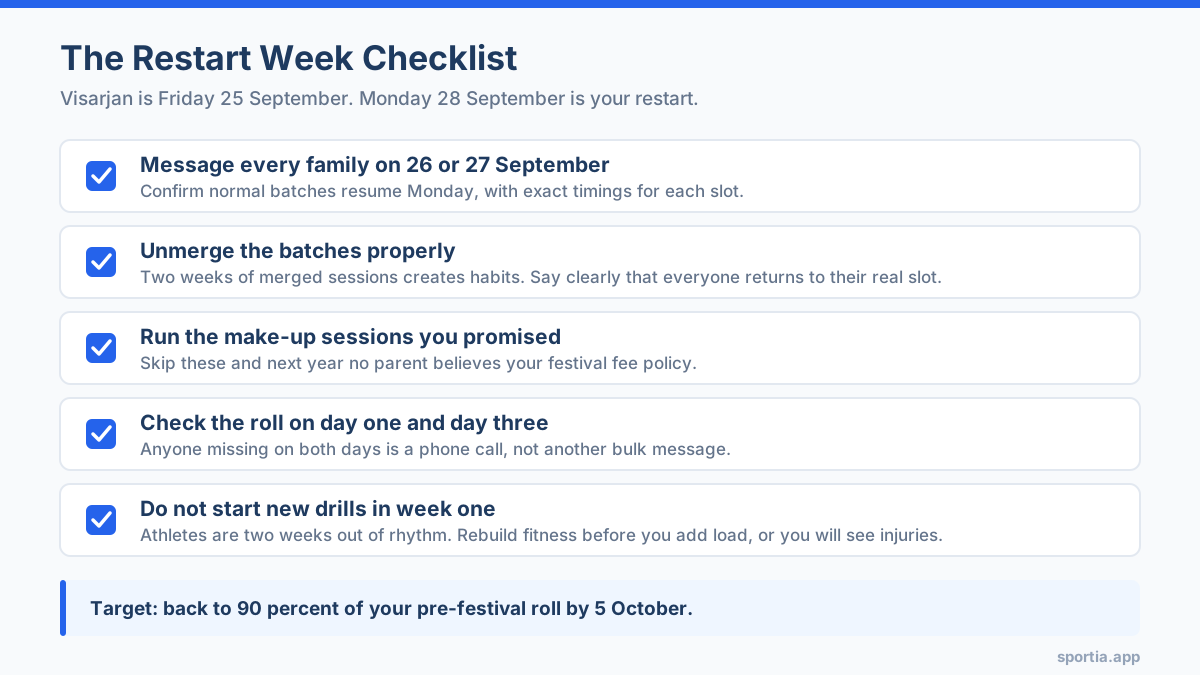
Visarjan falls on Friday 25 September, which makes Monday 28 September your restart.
Do not just reopen and hope for the best, because the restart works better as a small campaign.
- Message every family on the twenty-sixth or twenty-seventh. Confirm that normal batches resume Monday, with exact timings.
- Unmerge the batches properly. Every athlete goes back to their real slot. Say so clearly, because two weeks of merged sessions creates habits.
- Run the make-up sessions you promised. If you promised them, they must happen. Skip this and next year nobody believes you.
- Check the roll on day one and day three. Anyone missing on both is a phone call, not a message.
- Do not start new drills in week one. Athletes are two weeks out of rhythm. Rebuild fitness before you add load, or you will see injuries.
Aim to be back at ninety percent of your pre-festival roll by 5 October. If you are at seventy, you have a retention problem, not a festival problem.
Remember that Navratri starts on 11 October and Dussehra falls on 20 October. In Gujarat, West Bengal and North India, your restart week is short. Plan the October dip while you are planning this one.
A simple plan you can run this week
If you do nothing else, do these five things:
- Call your ground contact and confirm which dates you actually have.
- Collect coach leave requests in writing.
- Publish your festival schedule to parents with real dates.
- Pull August attendance and message your at-risk families.
- Fix your fee policy in one line and apply it to everybody.
Festival season is not a problem to survive. Handled well, it is the fortnight where families notice that your academy is organised and the one down the road is not.
Sportia lets you reschedule batches, merge sessions temporarily, track attendance across batches and roll unused sessions into the next month. You can start a free 14-day trial and have your festival schedule set up before Monday.
Frequently Asked Questions
Should a sports academy close during Ganesh Chaturthi?
In most cases, no. A thinned schedule of two or three merged sessions a week keeps the habit alive and protects your roll. Full closure makes sense only if your ground is genuinely unavailable for the whole fortnight.
How do I manage sports academy attendance during festivals?
Merge batches into fewer sessions, but keep every athlete on their original batch record. Mark attendance against the athlete rather than the session, so a child who attends a different slot is still counted correctly.
Should parents pay full fees for a festival month?
Set one policy and apply it to every family. The cleanest answer is a session quota that rolls unused sessions into the next month. If you bill monthly, keep fees the same and add dated make-up sessions in October.
When should I tell parents about my festival schedule?
At least four days before the festival starts, and a week is better. Parents plan travel around your schedule. If you say nothing, they assume you are closed and make other plans.
How long does it take for attendance to recover after a festival break?
About one week if you handle the restart well. Target ninety percent of your pre-festival roll within seven to ten days. If you are still well below that, the issue is retention rather than the festival.
Which Indian states are worst affected by Ganeshotsav closures?
Maharashtra and Goa see the biggest impact across the full fortnight, followed by Karnataka, Telangana and Gujarat. Tamil Nadu, Kerala and most of North and East India are far less affected in September.