

Festival Season Nutrition: Keeping Young Athletes on Track Through Ganeshotsav
Every year, coaches watch the same thing happen. Ganeshotsav begins, and by the second week half the squad is heavy legged, slow in drills, and short of breath sooner than usual.
Most coaches blame the sweets. That is the wrong target, and chasing it makes things worse.
The real damage over a festival fortnight comes from the broken routine, not the modak. A child who eats four modaks but sleeps normally and drinks water will train perfectly well. A child who eats one modak but goes to bed at one in the morning for ten nights will not. Get that order right and the rest of this festival season diet advice becomes much simpler.
Ganesh Chaturthi falls on Monday 14 September this year, with Visarjan on Anant Chaturdashi on Friday 25 September. That is a long stretch of disrupted evenings across Maharashtra, Goa, Karnataka, Telangana and Gujarat.
What Ten Days of Festival Season Actually Does
Four things change at once, and they compound.
- Sleep gets shorter. Late pandal visits and family gatherings push bedtime back by two or three hours.
- Meal timing scatters. Lunch at four, dinner at eleven, breakfast skipped entirely.
- Hydration drops. Long days out, sweet drinks instead of water, and nobody carrying a bottle.
- Sugar and fat rise. This is the part everyone notices, and the least important of the four.
Rank them honestly and sleep sits at the top. A tired athlete moves badly, reacts slowly, and picks up more niggles. No amount of clean eating compensates for ten nights of four hours' sleep.
So the first conversation with parents should be about bedtime, not barfi.
The Sweets Question: Why Total Restriction Backfires
Some coaches tell young athletes to refuse sweets entirely for the fortnight. It sounds disciplined. It fails for three reasons.
First, it is socially impossible. A twelve year old cannot decline prasad at a family gathering without causing offence, and you have just put that child in an awkward position with their grandmother.
Second, it does not work. Children who are told a food is forbidden tend to eat more of it when nobody is watching, and then feel bad about it.
Third, and most seriously, it can start something unhealthy. Teaching a growing child to feel guilt about festival food is a genuinely poor trade for a marginal training benefit. Young athletes are already a group at higher risk of a difficult relationship with food.
The goal for a young athlete during a festival is normal eating, not restricted eating. Enjoy the sweets, keep the regular meals, and protect sleep and water. If a child shows real anxiety about food, that is a conversation for a doctor or a registered dietitian, not a coach.
Modak, Ladoo and Prasad in Context
Numbers help a coach and a parent think clearly. They are context, not targets to police, and nobody should be counting a child's calories during a festival.
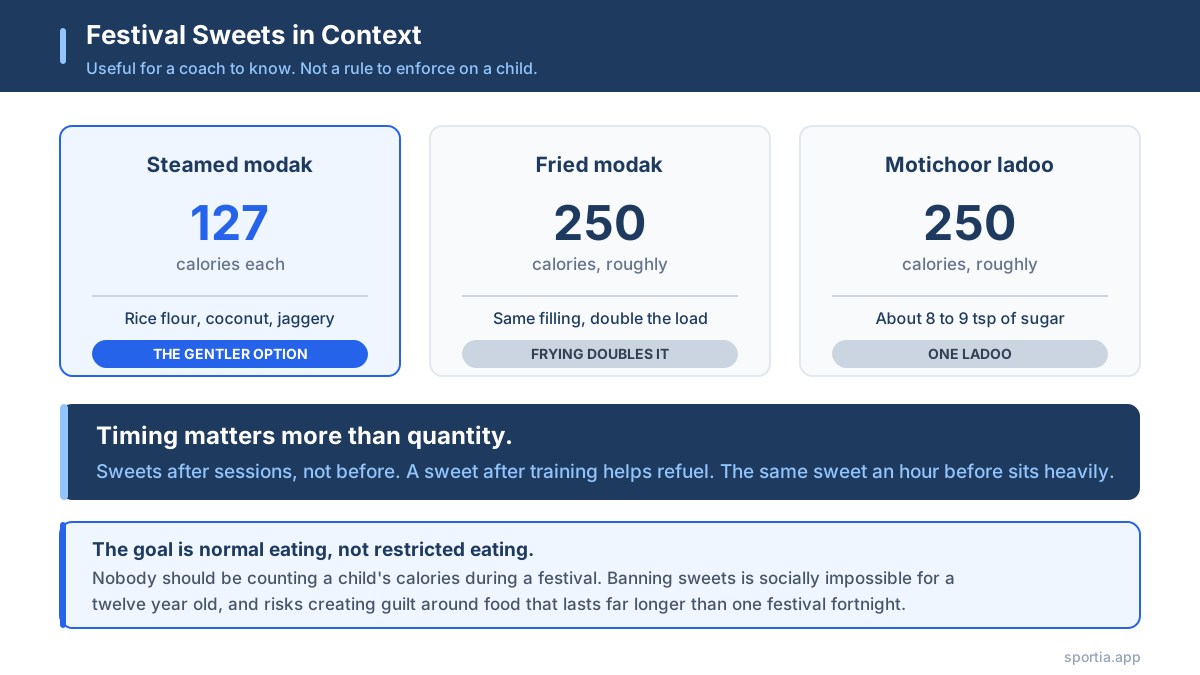
| Sweet | Roughly | Worth knowing |
|---|---|---|
| Steamed modak | About 127 calories each | Rice flour, coconut and jaggery. The gentler option. |
| Fried modak | Around 250 calories | The frying roughly doubles it. |
| Motichoor ladoo | About 250 calories | Roughly 8 to 9 teaspoons of sugar in one ladoo. |
Two useful things fall out of that table.
Steamed beats fried, every time. If a family is making modak at home, steamed is the easy win and nobody has to give anything up.
Timing matters more than quantity. A sweet eaten right after training is genuinely useful, because the carbohydrate helps refuel. The same sweet an hour before training sits heavily and helps nobody.
The practical rule is simple. Sweets after sessions, not before. That one shift solves most of the problem without a single argument.
Fried Food and Training
Fried festival food deserves its own note, because the mechanism is often misunderstood.
Fat slows the rate at which the stomach empties. That is normal and not harmful in itself. The problem arrives when a child eats a fried, heavy meal and then trains within a couple of hours.
During exercise the body sends blood to working muscles and away from the gut. Food that is still sitting there causes trouble. The result is nausea, a stitch, cramping, or simply a child who cannot push hard and does not know why.
There is a second, slower effect worth understanding. Across a fortnight, heavy late meals and short nights stack up. Training quality drifts down gradually rather than crashing on any single day, which is why coaches often notice the problem in week two rather than day two.
Practical guidance for the fried food question.
- Leave a gap of two to three hours between a heavy meal and a session.
- On a heavy eating day, move the session to before the meal rather than after.
- Keep the pre training meal light and familiar, whatever else the day holds.
- Do not try a new festival dish on the morning of a match.
The wider principles are set out in the guide on pre match and post match nutrition for young athletes .
Fasting: What Is Safe for a Growing Athlete
Some families fast during the festival period, and older children often want to join in. This needs a clear answer.
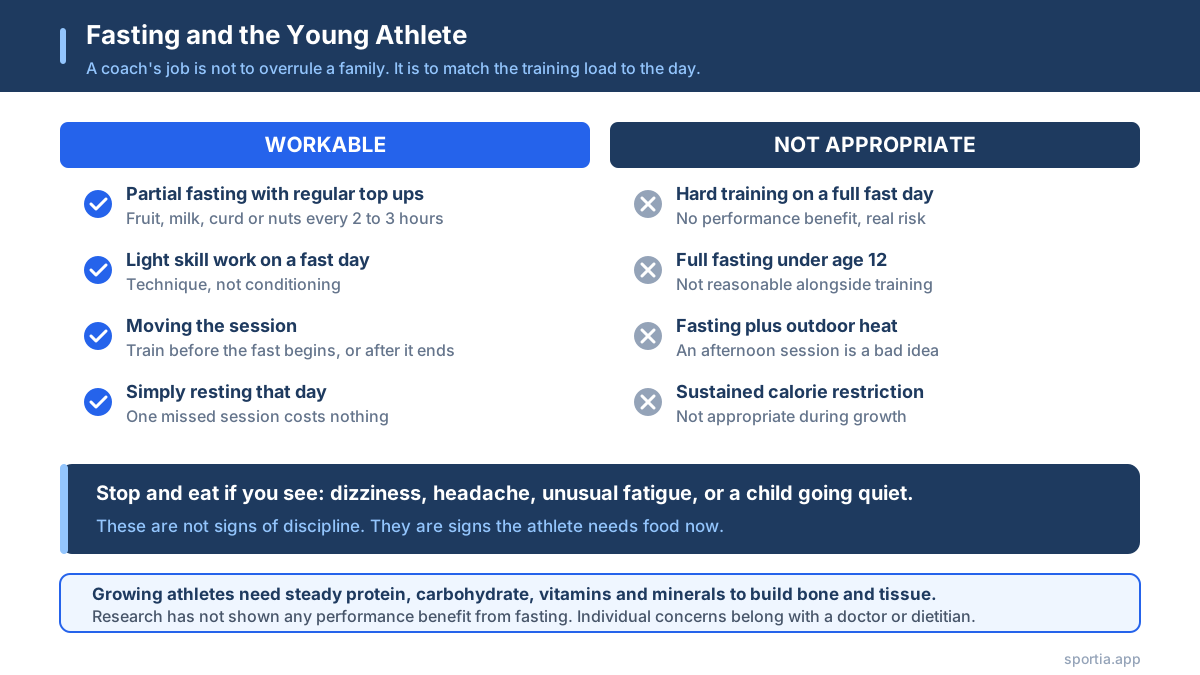
The evidence is consistent on the main point. Sustained calorie restriction is not appropriate for children and adolescents who are still growing. A growing athlete needs steady protein, carbohydrate, vitamins and minerals to build bone and tissue. Cutting carbohydrate sharply tends to leave them tired and weak, and studies have not shown any performance benefit from fasting.
That does not mean a family's practice should be dismissed. It means adjusting sensibly.
- Do not train hard on a full fast day. Move the session, reduce it to light skill work, or rest.
- Partial fasting is more workable. Fruit, milk, curd and nuts every two to three hours keeps energy reasonably steady.
- Younger children should not fast fully. Under 12 especially, this is not a reasonable ask alongside training.
- Watch for warning signs. Dizziness, headache, unusual fatigue or a child going quiet means stop and eat.
- Never combine a fast with heat. An afternoon outdoor session on a fasting day is a genuinely bad idea.
A coach's job here is not to overrule a family. It is to make sure the training load matches what the athlete has eaten that day.
Hydration When the Routine Breaks
This is the quietest problem of the fortnight and the easiest to fix.
Long days out, crowded pandals, warm weather and a bottle left at home. Children rarely ask for water when they are excited and distracted, and sweet drinks do not replace it.
Three habits carry a squad through.
- A bottle goes everywhere. Not just to training. To the pandal, to the relatives' house, into the car.
- Drink before you feel thirsty. By the time a child feels thirst, they are already behind.
- Check urine colour. Pale is fine, dark means drink more. Children understand this instantly, and it needs no equipment.
Nimbu paani, coconut water and buttermilk all work well in Indian conditions and feel like part of the festival rather than a restriction. Cold drinks and packaged juice are the ones to keep occasional.
When a Competition Falls in the Festival Period
September competitions do land inside Ganeshotsav, and a plan helps.
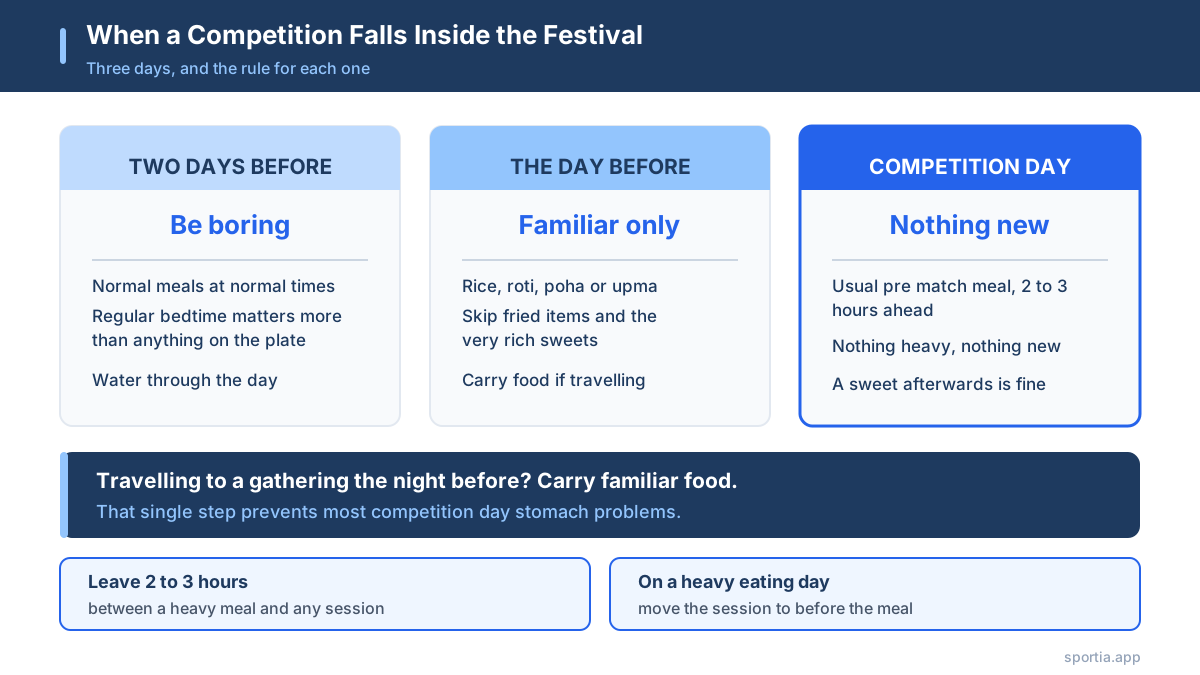
Two days before. Normal meals at normal times. This is the day to be boring. Regular sleep matters more than anything on the plate.
The day before. Familiar food only. Keep carbohydrate steady with rice, roti, poha or upma. Skip the fried items and the very rich sweets. Water throughout the day.
Competition day. The usual pre match meal, two to three hours ahead. Nothing new, nothing heavy. A banana or a small sweet afterwards is a fine way to refuel, and it lets the child join in.
One point for parents. If the family is travelling to a gathering the night before, carry familiar food rather than relying on what is served. That single step prevents most competition day stomach problems.
Rebuilding in the Week After Visarjan
The week after the festival matters more than most coaches realise. Athletes come back heavier, slower and often a little demotivated.
Resist the urge to punish. A brutal session on the first day back tells athletes that training is a penalty for enjoying a festival, and some of them quietly stop coming.
A sensible return looks like this.
- Days 1 to 2. Restore normal meal timing and sleep first. Train at moderate intensity.
- Days 3 to 4. Rebuild volume. Push hydration hard, since most athletes return under hydrated.
- Days 5 to 7. Return to normal intensity. Most squads are back to baseline by now.
- Protein first at meals. Dal, curd, eggs, paneer and sprouts help athletes feel settled again.
Good options are covered in the guides on protein rich Indian foods for young athletes and on a vegetarian diet plan for Indian athletes .
What Coaches Should Say to Parents, and What They Should Not
The wording here decides whether parents cooperate or quietly ignore you.
| Say this | Not this |
|---|---|
| "Try to keep bedtime close to normal during the festival." | "No late nights." |
| "Sweets are better after training than before." | "No sweets for ten days." |
| "Please send a water bottle everywhere this fortnight." | "They are not drinking enough." |
| "Steamed modak sits lighter before a session." | "Fried food will ruin their fitness." |
| "If she is fasting, we will keep the session light that day." | "She cannot fast and train." |
The pattern is simple. Offer a swap rather than a ban, and never position the festival as the enemy of the sport. Parents who feel judged stop replying.
Frequently Asked Questions
Can young athletes eat sweets during festivals?
Yes, and telling them not to usually backfires. Timing matters far more than quantity, so sweets after a training session are more useful than sweets before one, because the carbohydrate helps refuel. Total restriction is socially difficult for a child and risks creating guilt around food.
Is fasting safe for a child who trains?
Sustained calorie restriction is not appropriate for children and adolescents who are still growing, and research has not shown any performance benefit from fasting. If an older child does fast, keep training light or move the session, and never combine a fast with an outdoor session in the heat. Children under 12 should not fast fully alongside regular training.
How many calories are in a modak?
A steamed modak is roughly 127 calories, while a fried one is around 250. A motichoor ladoo is also about 250 calories and carries the equivalent of 8 to 9 teaspoons of sugar. These figures are useful context for a coach, not numbers to police with a child.
What should a young athlete eat before a match during the festival season?
Familiar food only, two to three hours before. Rice, roti, poha or upma keep carbohydrate steady without sitting heavily. Avoid fried items and rich sweets the day before, and never try a new festival dish on competition morning.
Why do athletes feel sluggish during festival season?
Short sleep is usually the main cause, not sweets. Late nights, scattered meal timing and low water intake compound across a fortnight, and training quality drifts down gradually rather than dropping on one day. Fixing bedtime and hydration solves more than changing the food.
How long does it take to get back to normal after the festival?
Most squads return to baseline within five to seven days. Restore normal meal timing and sleep in the first two days, rebuild volume mid week, and push hydration throughout, since athletes usually come back under hydrated. Avoid punishing sessions on the first day back.
Watch the Pattern, Not the Plate
The academies that come through a festival fortnight well are not the strict ones. They are the ones that protected sleep, kept water bottles moving, and adjusted the training load to match what athletes had actually eaten that day.
The hard part is noticing early. A coach with 60 athletes cannot hold every child's sleep and hydration in their head. Sportia lets you log wellness notes against each athlete alongside attendance, so a pattern of tired sessions is visible on a record rather than remembered vaguely three weeks later.
Start a free 14 day Sportia trial and keep track of how your squad actually comes through the season.