

Heart Rate Zones Explained: A Beginner's Guide for Endurance Athletes
Ask ten endurance athletes at an Indian academy what zone they trained in this morning, and nine will not know. Ask their coach, and the honest answer is often the same. Heart rate zones sound like elite science, so most academies never start.
They are not elite science at all. Zones are just a way of naming how hard an effort is, so that hard days are properly hard and easy days are genuinely easy. That single change fixes more endurance programmes than any new drill.
This guide starts from zero. What your heart rate actually tells you, what the five zones are, how to find your own numbers, and what to watch for once you start tracking. It also covers something most guides skip, which is how badly Indian heat distorts every reading you take.
Heart Rate Basics: The Three Numbers That Matter
Before zones make any sense, three separate numbers need clarifying.
Resting heart rate
This is your heart rate when you are completely at rest. Measure it first thing in the morning, before getting out of bed, and before any tea or coffee. Count the beats for 60 seconds, or read it off a watch you wore overnight.
Most untrained teenagers sit somewhere around 70 to 85 beats per minute. Trained endurance athletes often drop into the 45 to 60 range. A lower resting rate generally means the heart pumps more blood per beat, so it needs fewer beats.
The exact number matters far less than the direction it moves. A single reading tells you almost nothing, whereas two weeks of readings tell you a great deal.
Maximum heart rate
This is the highest rate your heart can reach during all out effort. It is largely determined by age and genetics. Training makes you considerably fitter, but it does not raise your maximum.
Two common formulas are used to estimate it.
- The old one: 220 minus your age. Simple, widely quoted, and frequently inaccurate by 10 to 20 beats.
- The better one: 208 minus 0.7 times your age. This is the Tanaka formula, and it tends to fit real athletes more closely.
For a 16 year old, the first gives 204 and the second gives about 197. That gap of seven beats is enough to push a session into the wrong zone, which tells you how rough these estimates really are.
Heart rate reserve
This is simply your maximum minus your resting rate. It describes the working range your heart actually has available. An athlete with a max of 197 and a resting rate of 55 has a reserve of 142 beats to play with.
Zones can be calculated from either the maximum or the reserve. This guide uses percentage of maximum, because it is considerably easier to begin with.
The Five Zones, Explained Simply
Zones split that working range into five bands, and each band develops something different.
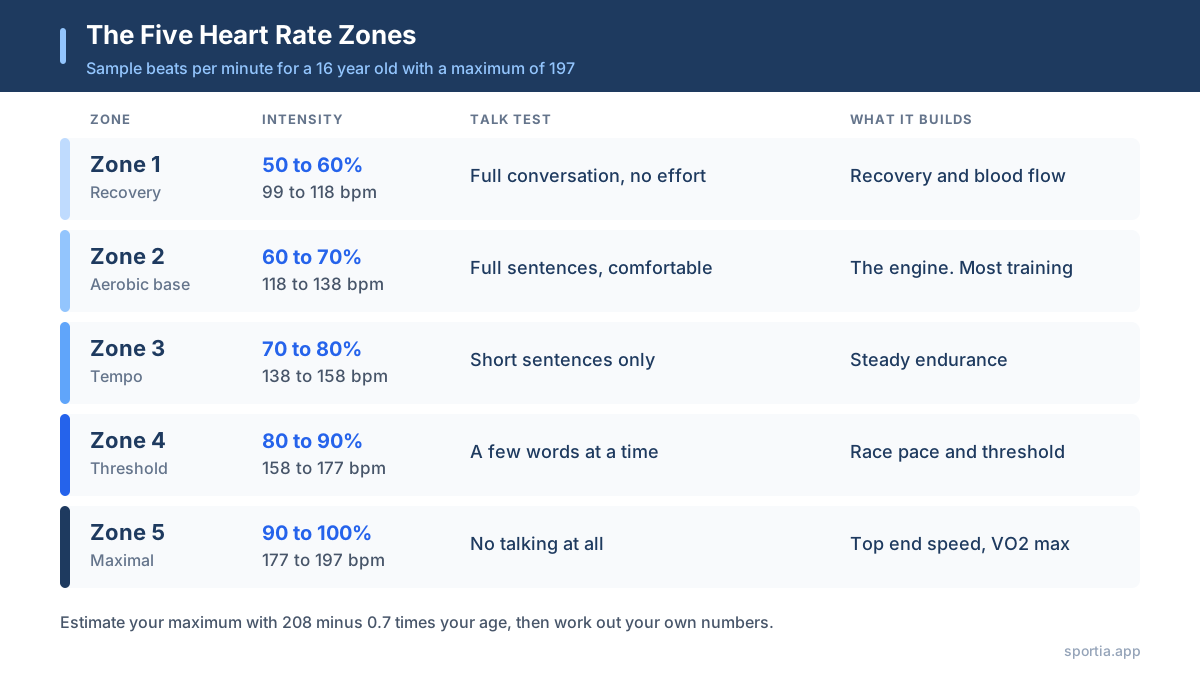
The numbers below assume a maximum of 197, which suits a typical 16 year old. Work out your own from your own maximum.
| Zone | % of max HR | Sample bpm | How it feels | What it builds |
|---|---|---|---|---|
| Zone 1 | 50 to 60% | 99 to 118 | Very easy. Full conversation. | Recovery and blood flow |
| Zone 2 | 60 to 70% | 118 to 138 | Easy. Can talk in full sentences. | Aerobic base and fat use |
| Zone 3 | 70 to 80% | 138 to 158 | Moderate. Short sentences only. | Steady endurance |
| Zone 4 | 80 to 90% | 158 to 177 | Hard. A few words at a time. | Threshold and race pace |
| Zone 5 | 90 to 100% | 177 to 197 | Maximal. No talking at all. | Top end speed and VO2 max |
What is actually happening in the body
Behind those five bands sit two physiological turning points, and they essentially explain everything.
The first turning point is where your body starts producing more lactate than it did at rest, but still clears it easily. Below that line, in zones 1 and 2, you are working almost entirely aerobically. Oxygen supply keeps up, fat provides a lot of the fuel, and you could keep going for hours.
The second turning point is where lactate starts building faster than your body can clear it. That is the top of zone 4. Past that line, in zone 5, the clock starts running and you have minutes rather than hours.
Zones 3 and 4 sit between the two lines. This is the genuinely useful middle, where the body still copes but is being pushed to cope considerably better.
Zone 2 Is Where Most of the Work Belongs
New athletes almost always train too hard on easy days, because moderate discomfort feels productive. It genuinely is not.
Most endurance programmes that work follow a rough 80/20 split. Around 80 percent of training time sits in zones 1 and 2, and around 20 percent sits in zones 4 and 5. Zone 3 gets used deliberately, not by accident.
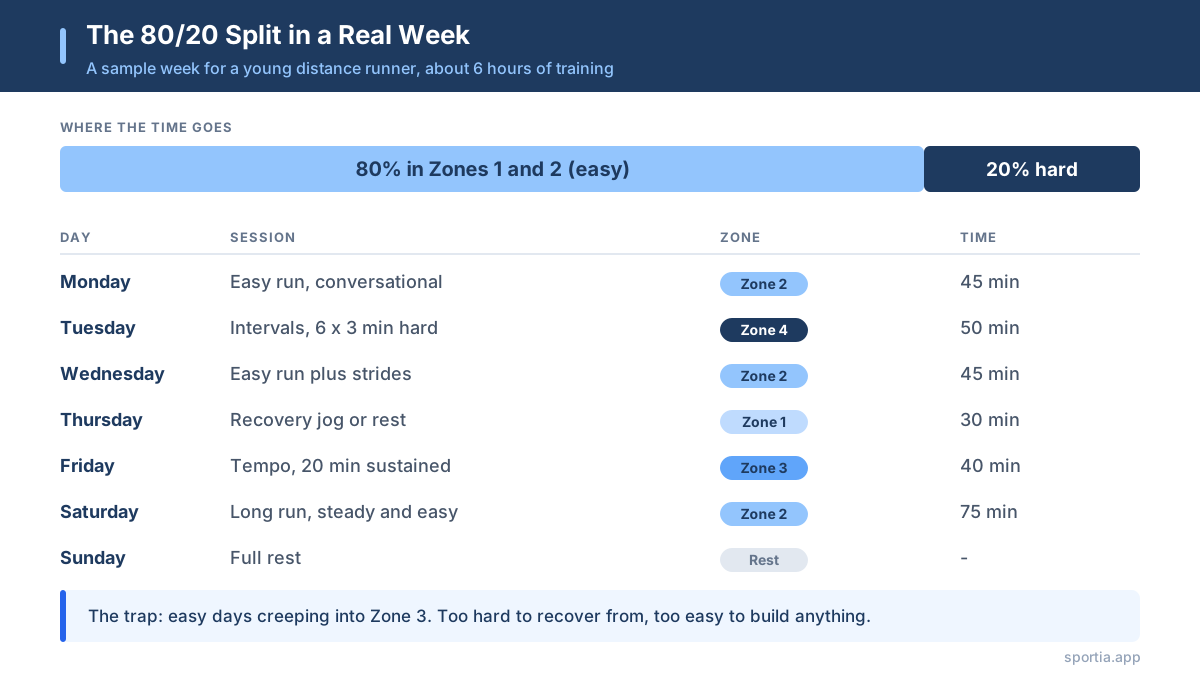
The trap has a name. Athletes drift into zone 3 on easy days, because zone 3 feels like real training. The session is then too hard to recover from and too easy to drive real gains. Weeks of that produce tired athletes who are not improving, and coaches who cannot understand why.
Zone 2 develops the underlying engine. It grows the heart's pumping capacity, adds capillaries to working muscle, and improves how well the body burns fat for fuel. None of that is visible in a single week, which is exactly why athletes skip it.
You Do Not Need a Monitor: The Talk Test
Most Indian academies have no heart rate straps, and a good chest strap costs Rs 3,000 to Rs 9,000. You can still coach zones effectively at absolutely no cost.
The talk test tracks the same physiology, because breathing changes at the same points lactate does. Research shows it lines up closely with the two turning points described above.
- Zones 1 and 2. The athlete can hold a full conversation without gasping between words.
- Zone 3. Short sentences only. Talking is possible but not comfortable.
- Zone 4. Two or three words at a time, then a breath.
- Zone 5. Conversation becomes impossible.
Run an easy session and make the athletes actually talk. If a group cannot answer a simple question in a full sentence, the easy run is not easy, and you have just found your problem.
For a coach with 30 athletes and no budget, the talk test is not a poor substitute. It is often the more practical tool, because it works on every athlete at once and never needs charging.
Why Heart Rate Lies in Indian Conditions
Here is the part most zone guides written abroad leave out. In Indian heat, the number on the watch stops matching the effort.
Cardiac drift
During a long session at a steady pace, heart rate slowly climbs. The pace has not changed, but the numbers keep rising. This is called cardiac drift, and it has two causes.
First, sweating reduces the fluid in your blood, so each beat moves less of it. The heart compensates by beating faster. Second, the body sends more blood to the skin to shed heat, which leaves less for the working muscles.
Heat and humidity make both effects much worse. On a humid morning in Chennai or Kolkata, sweat does not evaporate well, so cooling fails and the heart works harder still. An athlete running an honest zone 2 pace can drift into zone 3 numbers by the fortieth minute without running any faster.
What to do about it
- Judge long sessions by pace and the talk test, not by the heart rate number alone.
- Expect drift and allow for it. A rise of 5 to 10 beats across a long easy run in the heat is normal, not a failure.
- Fix hydration first. Drink to match sweat loss, because dehydration is the biggest single driver of drift.
- Give it two to three weeks. Athletes adapt to heat, and drift falls noticeably once they do.
- Shift the hard sessions. Early morning or after sunset, whenever the schedule allows.
The wider heat rules matter too, and they are covered in the guide on heat safety for sports training in India .
Zones for Young Athletes: What Changes
This section matters more than any other, because most athletes in an Indian academy are under 18.
Children are emphatically not small adults. Their hearts respond differently to work, their maximum rates are higher, and the age based formulas were built on adults. A formula that is roughly right for a 30 year old can be badly wrong for a 13 year old.
Several factors make a young athlete's readings fluctuate considerably from day to day.
- Growth and maturity. Two 14 year olds can be years apart physically.
- Sleep. A short night raises heart rate through the whole next day.
- Heat. Children manage heat less efficiently than adults.
- Nerves. A trial or a selection session lifts heart rate before anyone moves.
- Exams and stress. The board examination season shows up in the data very clearly.
Practical guidance for coaching under 18 athletes.
- Do not chase a maximum heart rate test. All out tests are unnecessary and risky for young beginners. Estimate instead, and adjust from what you observe.
- Lead with the talk test. Use heart rate as supporting evidence, not as the verdict.
- Keep zone 5 rare. Young athletes gain plenty from zone 2 volume and short, sharp efforts. They do not need weekly maximal sessions.
- Track trends, never single sessions. One odd reading means nothing at this age.
- Build the aerobic base first. There is more long term gain in easy volume than in early intensity.
Any athlete reporting chest pain, dizziness, fainting, or a racing heart at rest should stop training and be seen by a doctor. A heart rate monitor is a training tool, not a medical device, and it does not screen for heart conditions.
Things to Notice Once You Start Tracking
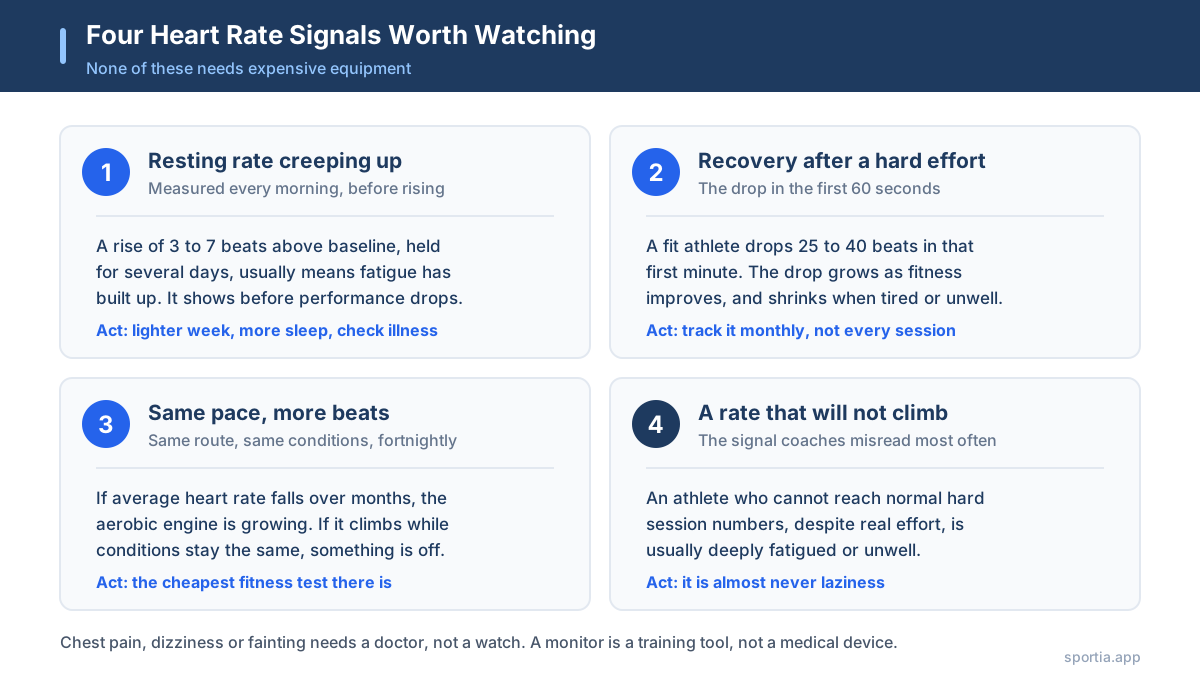
Collecting numbers is easy, but interpreting them is the actual skill. Four signals are worth watching, and none of them requires expensive equipment.
1. Resting heart rate creeping up
This is the most useful early warning you have. After three or four weeks of hard training without proper recovery, resting heart rate typically climbs 3 to 7 beats above an athlete's normal baseline.
That rise usually appears before performance drops, which is what makes it valuable. It does not call for panic. It calls for a lighter week, more sleep, better hydration, and a check for illness. The broader picture is covered in the guide on overtraining in young athletes .
2. Heart rate recovery after a hard effort
Record the heart rate at the end of a hard effort, then again 60 seconds later, and the difference is your recovery number.
A fit athlete usually drops 25 to 40 beats in that first minute. As fitness improves, the drop gets bigger. If an athlete's usual drop shrinks noticeably over a few weeks, fatigue or illness is the likely reason.
3. The same pace costing more beats
Run the same route at the same easy pace once a fortnight, in similar conditions, and record the average heart rate. If the number falls over months, aerobic fitness is improving. If it climbs while conditions stay the same, something is wrong.
This is the simplest fitness test in endurance sport, and it costs nothing.
4. A heart rate that will not climb
This particular signal gets missed regularly. An athlete who cannot reach their normal hard session numbers, despite genuine effort, is usually deeply fatigued or unwell. Coaches often read it as laziness. It is almost never laziness.
Setting This Up in an Academy
You do not need straps for everyone, so begin considerably smaller than that.
- Teach the talk test to every athlete. One session is enough, and it costs nothing.
- Have athletes take resting heart rate three mornings a week. A simple phone note works perfectly well at the beginning.
- Buy two or three chest straps and rotate them through the squad, so athletes learn what each zone feels like.
- Label every session in the plan. Write the target zone on the whiteboard, so nobody guesses.
- Review trends monthly, not daily.
Once athletes own watches, the data becomes worth centralising. Sportia connects to Strava, Garmin, Polar, WHOOP, Oura, Wahoo and Apple Health, pulls session load and readiness into the athlete's record, and keeps it beside attendance and progress history. That way a coach reviewing a tired athlete can see training load and recent sessions together, rather than opening seven different apps. There is more detail in the guide on wearables and athlete monitoring .
Frequently Asked Questions
What are heart rate zones in simple terms?
Heart rate zones are five bands that describe how hard you are working, measured as a percentage of your maximum heart rate. Zone 1 is very easy and zone 5 is all out effort. Each band trains a different quality, which is why coaches spread training across them rather than working hard every day.
How do I calculate my maximum heart rate?
The most reliable simple estimate is 208 minus 0.7 times your age, which gives about 197 for a 16 year old. The older 220 minus age formula is easier to remember but is often out by 10 to 20 beats. Both are only estimates, so treat the resulting zones as a starting point and adjust them from how efforts actually feel.
What is zone 2 training and why does everyone talk about it?
Zone 2 is easy aerobic work at roughly 60 to 70 percent of maximum heart rate, where you can still hold a conversation. It builds the aerobic engine by improving how much blood the heart moves and how well muscles use fat for fuel. It gets attention because most athletes neglect it, and because it should make up the bulk of endurance training.
Can I train by heart rate zones without a monitor?
Yes. The talk test tracks the same physiology closely enough for everyday coaching. Full conversation means zone 1 or 2, short sentences mean zone 3, a few words mean zone 4, and no speech means zone 5.
Why does my heart rate go up in the heat even at the same pace?
Sweating reduces blood volume and your body diverts blood to the skin for cooling, so the heart beats faster to deliver the same oxygen. This is called cardiac drift and it is far stronger in humid Indian conditions. Judge long sessions by pace and breathing rather than by the heart rate number alone.
Are heart rate zones safe for children and teenagers?
Zone training is safe for young athletes when the intensity is sensible, but the age based formulas are far less accurate for children than for adults. Use the talk test as the main guide, keep maximal efforts rare, and avoid all out maximum heart rate tests with young beginners. Any chest pain, dizziness or fainting needs a doctor, not a watch.
What resting heart rate should an endurance athlete have?
Trained endurance athletes often sit between 45 and 60 beats per minute, while untrained teenagers are usually 70 to 85. The absolute number matters less than your own baseline. A rise of 3 to 7 beats above your normal, held for several days, usually signals accumulated fatigue.
Start With One Change
If all of this feels like a lot, ignore the zones for a fortnight and fix one thing. Make the easy sessions genuinely easy, using the talk test and nothing else. Most academies find that single change produces better hard sessions within a month.
The numbers become useful once the habit is in place. Zones are only a language for describing effort, and a squad that already understands easy and hard will pick that language up quickly.
When you are ready to track it properly, start a free 14 day Sportia trial and keep training load, wearable data and athlete progress in one place instead of seven.