

Overtraining in Young Athletes: Signs Every Coach Must Know
Overtraining syndrome in young athletes happens when training load keeps outpacing recovery for weeks at a time. It shows up as falling performance, mood swings, frequent illness, and broken sleep. A simple guard rail helps every coach: a child's weekly training hours should not exceed their age in years. Catch the problem early by tracking load and energy, rather than waiting for an injury to force a break.
What Overtraining Syndrome in Young Athletes Really Means
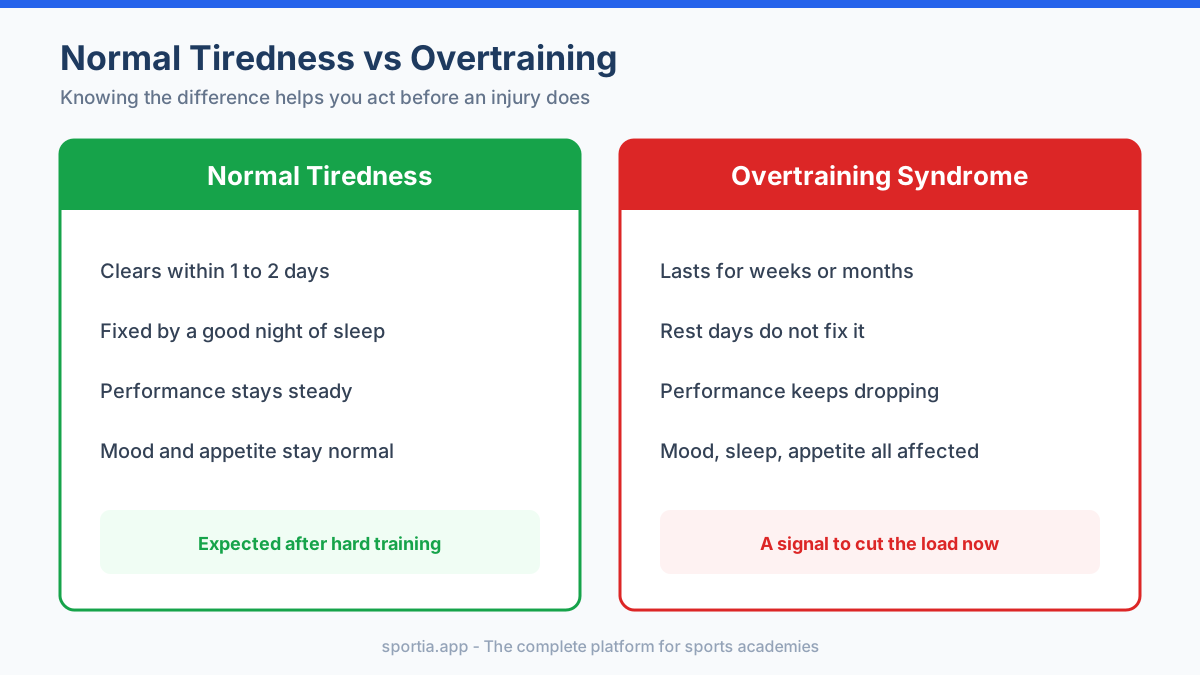
Every athlete feels tired after a hard session, and that is completely normal. A good night of sleep usually fixes it. Overtraining syndrome is a different problem altogether. It is what happens when an athlete trains hard, recovers too little, and repeats that cycle for weeks or months on end.
The body never gets the chance to rebuild itself. Performance does not just flatten out, it actually drops. The athlete feels drained even on rest days. This is not laziness or a bad attitude, and treating it that way only makes things worse.
There is a useful ladder to understand here. Normal training fatigue clears within a day or two. Overreaching is heavier fatigue that still clears within a week or so of lighter work. Overtraining syndrome is the serious stage, where full recovery can take weeks or even months. Your job as a coach is to stop athletes long before they reach that final stage.
Why Young Athletes Are More at Risk Than Adults
Overtraining in children is not just a smaller version of the adult problem. Young athletes carry specific risks that adults simply do not.
- They are still growing. Most girls hit their fastest growth between ages 10 and 12, and boys between 12 and 14. During this phase, bones can lengthen faster than muscles and tendons adapt to them. Hard training on top of rapid growth raises the injury risk sharply.
- They cannot judge their own limits. A 10-year-old will rarely tell a coach that the load is too high. Many will push even harder to win praise and approval.
- They carry school stress too. In India, training collides with tuitions, unit tests, and board exams. The body does not separate physical load from mental load, so exam season becomes a high-risk window for overtraining.
- They specialise too early. Playing a single sport all year round, before the teenage years, is one of the clearest risk factors for overtraining and burnout.
Research backs this up clearly. Young athletes who overtrain are up to twice as likely to suffer overuse injuries such as stress fractures, tendonitis, and muscle strains.
8 Warning Signs of Overtraining in Kids
Overtraining rarely announces itself with one dramatic symptom. It builds quietly over time. Watch for these eight signs of overtraining in kids, and pay close attention when several of them appear together.
- Performance drops. Times get slower, skills turn sloppy, and the athlete works harder for worse results.
- Mood changes. A cheerful child becomes irritable, withdrawn, or quick to anger.
- Frequent illness. Repeated colds, sore throats, and infections point to a tired immune system.
- Sleep problems. The athlete struggles to fall asleep, or sleeps long hours and still wakes up tired.
- Loss of appetite. Eating less, or losing interest in food, is a common early sign.
- More injuries. Niggles, aches, and overuse injuries appear more often and take longer to heal.
- Dreading practice. A child who once loved the sport now finds reasons to skip it.
- Falling grades. Poor focus and constant fatigue start to show up in schoolwork too.
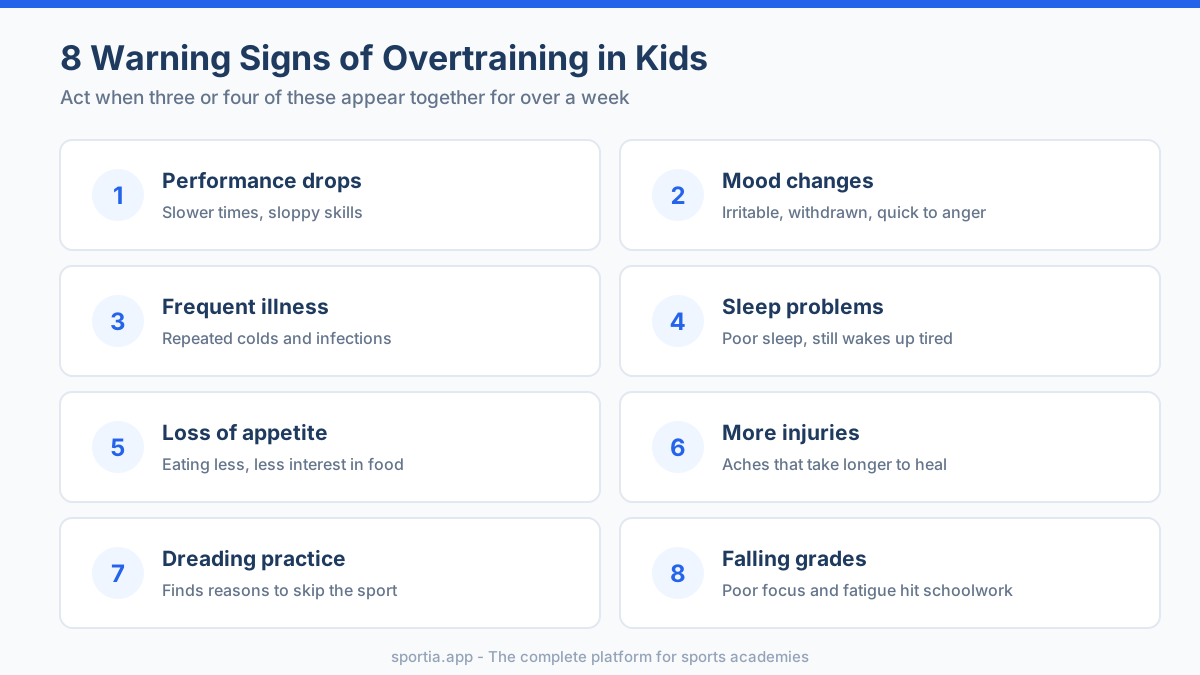
One sign on its own may mean nothing, because any child can have a bad week. But three or four of these signs together, lasting more than a week, is a clear signal to cut the load. Our guide on coaching mistakes that drive athletes away covers more on why young players quit.
How Many Training Hours Are Too Many?
The most practical rule in youth sport is also the easiest one to remember. A young athlete's weekly training hours should not exceed their age in years. A 10-year-old should train no more than 10 hours a week, and a 14-year-old should stay near 14 hours. This count includes every sport and every coached session, not only yours.
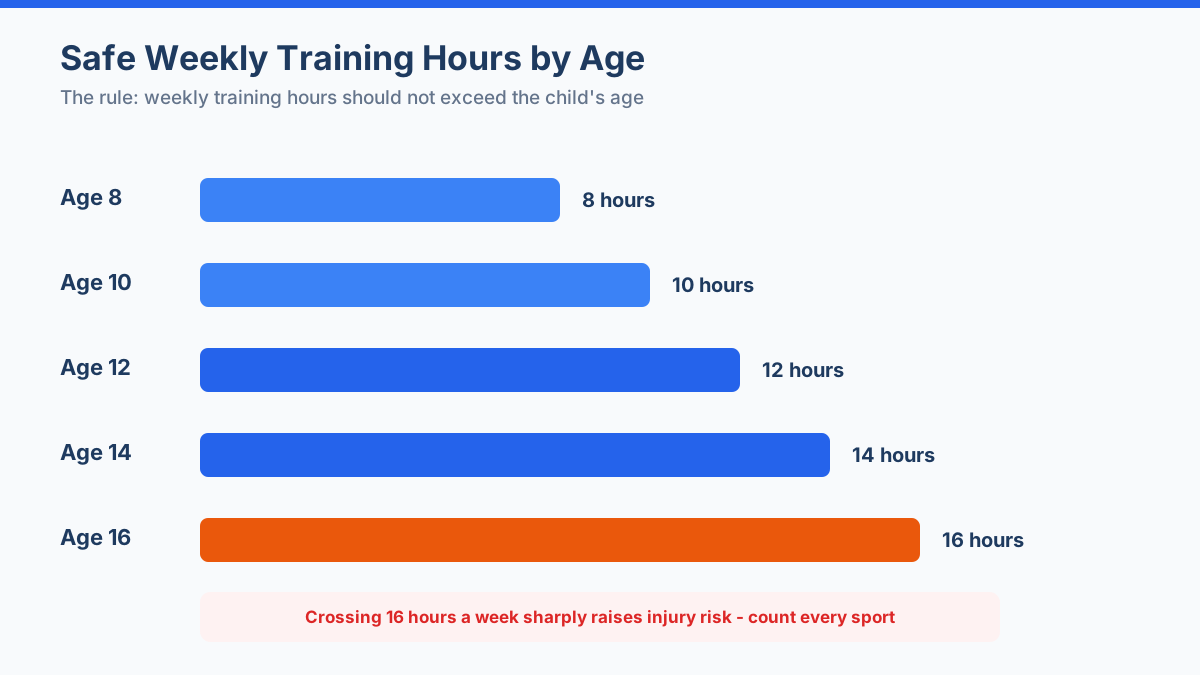
Two more numbers matter here. Crossing 16 hours of training a week sharply raises injury risk for almost any young athlete. And playing a single sport for more than eight months a year raises the risk of overuse injuries. Build at least one full month away from your sport into the year, and ideally two to three months.
The 10 Percent Rule for Training Load
Overtraining is often caused by a sudden jump in load, not by the total amount itself. A child who trains 6 hours a week and then jumps to 12 hours for a tournament is asking for trouble.
The fix is the 10 percent rule. Increase training load by no more than 10 percent from one week to the next. Load means the full picture: hours, intensity, distance, and number of sessions. A slow climb gives muscles, bones, and tendons the time they need to adapt. A sharp climb does not.
This matters most around tournaments and selection trials. Coaches often pile on extra sessions in the final two weeks before a big event. That is exactly when a calmer, steady load protects the athlete best.
Recovery Is Training, Not Time Off
Many coaches and parents see rest as wasted time, but the opposite is true. Adaptation, the actual gain from training, happens during recovery and not during the session itself. Treat recovery as a planned part of training.
- Sleep: This is the most powerful recovery tool of all, and it is free. Young athletes need 9 to 11 hours of sleep a night, so protect it.
- Rest days: Build in at least one or two full rest days every week, with no organised training at all.
- Active recovery: Light, easy movement such as a gentle swim or a walk helps more than total stillness.
- Deload weeks: Every fourth or fifth week, cut the load by 40 to 50 percent. The athlete recovers, then returns stronger.
Total life stress counts too. During exam weeks, treat school as part of the load and reduce training. The body cannot tell the difference between a hard sprint session and a stressful exam hall.
How to Spot Overtraining Early
You cannot fix what you do not measure. The academies that avoid overtraining are the ones that watch for it on purpose, every single week.
Keep it simple. Ask every athlete three quick questions, either before training or once a week:
- How did you sleep last night? (rate 1 to 5)
- How is your energy today? (rate 1 to 5)
- How sore do your muscles feel? (rate 1 to 5)
Track those scores next to attendance and weekly training hours. A pattern of falling sleep and energy scores, alongside rising training hours, is your early warning. It tells you to cut the load before an injury does it for you.
Doing this on paper for a full academy is hard. A platform like Sportia lets you log wellness check-ins, training loads, and attendance for every athlete in one place. You can also connect wearables to track heart rate and recovery. The point is not the tool itself, it is the habit of looking every week. Pair this with smart session design from our guide to speed and agility training for young athletes.
The Hardest Part: Talking to Parents Who Want More
In most Indian academies, overtraining is not caused by the coach alone. It is driven by parents who believe that more hours equal faster results. A parent may enrol a child in your academy, a second coaching centre, and school sport, all at the same time. No single coach ever sees the full load.
This is the conversation that protects your athletes. Have it early, and have it with confidence.
- Show the age rule. The "hours should not exceed age" guideline is simple and hard to argue with, so use it.
- Ask about the full week. Find out every sport and coaching session the child attends, not just yours.
- Reframe rest as performance. Explain that real gains happen during recovery, so rest is not the child falling behind.
- Point to the risk. A burned-out child often quits the sport entirely. Overtraining does not build champions, it ends promising careers early.
A good coach manages the training plan. A great coach also manages the pressure around it. For more on protecting young players, see our guide to common sports injuries in children and how to prevent them.
Frequently Asked Questions
What is the difference between tiredness and overtraining?
Normal tiredness clears after a day or two of rest and good sleep. Overtraining syndrome is deep fatigue that lasts for weeks, comes with falling performance, and does not improve with a single rest day. If a young athlete still feels drained after a full week of lighter training, suspect overtraining.
How many hours should a young athlete train per week?
A widely used guideline says weekly training hours should not exceed the child's age in years. A 12-year-old should train at most around 12 hours a week, counting all sports and coached sessions. Crossing 16 hours a week sharply raises injury risk.
Can overtraining affect a child's school performance?
Yes. Overtraining causes poor sleep, low energy, and trouble concentrating, and all of these directly hurt schoolwork. Falling grades are one of the eight common warning signs. During exam season, reduce training load to protect both health and studies.
How long does it take to recover from overtraining syndrome?
It depends on how early the problem is caught. Mild overreaching clears within a week or two of lighter training. True overtraining syndrome can take several weeks or even months of reduced load to fully resolve, which is why early detection matters so much.
How can a coach prevent overtraining in young athletes?
Follow the age-based hours rule, raise load by no more than 10 percent a week, and schedule rest days and deload weeks. Track sleep, energy, and soreness every week to catch warning signs early. Also talk to parents about the child's full training load across all activities.
Is single-sport specialisation bad for young athletes?
Early specialisation, especially before the teenage years, is one of the clearest risk factors for overtraining and burnout. Playing one sport for more than eight months a year raises overuse injury risk. Encourage at least two to three months away from the main sport each year.
Protect the Athlete, Protect the Career
Overtraining syndrome in young athletes is almost always preventable. The tools are simple: respect the age-based hours rule, raise load slowly, treat recovery as training, and watch for the warning signs every week. The academies that do this keep their athletes healthy, happy, and improving for years.
To make weekly monitoring easy, Sportia lets you track wellness check-ins, training loads, attendance, and wearable data for every athlete in one place. Start a free 14-day trial and build overtraining prevention into your academy's routine.