

Mental Health and Sports Performance: A Guide for Academy Coaches
Mental health shapes sports performance as much as fitness does. To support young athletes, watch for warning signs like withdrawal, lost joy, and constant worry. Build a training space where they feel safe. Know when to refer a child to a professional. This guide shows academy coaches how to protect the mental health of young athletes in India.
A coach sees the body every day. You spot a limp or a tired sprint at once. But the mind is harder to read. A talented player can smile at practice and still feel crushed inside. This guide helps you notice that struggle and respond well.
Why mental health matters as much as physical training
You cannot separate the mind from the body in sport. A worried athlete moves slower. A burned-out player loses focus and makes errors. Research on young athletes shows the scale of this problem. Around one in four elite athletes report anxiety symptoms. About one in five report signs of depression.
For young athletes, the numbers may look smaller on paper. Yet many carry hidden stress that hurts both joy and performance. Their bodies are growing while the pressure keeps rising. As a coach, you are often the first adult to notice when something feels wrong.
Perfectionism is a hidden danger here. Many talented athletes fear failure deeply. They set impossible standards and judge themselves harshly. Research links this perfectionism to a higher risk of burnout, anxiety, and depression. The very drive that makes a child talented can also break them down. Spotting this early is part of good coaching.
Pressure points for young Indian athletes
Young athletes in India face a unique mix of pressures. Understanding these helps you coach with more empathy.
- Parent expectations: many parents invest heavily and expect quick results.
- Board exams: Class 10 and 12 exams collide with training and competition.
- Peer comparison: social media makes every child compare ranks and results.
- Career fear: the worry that sport will not lead to a stable future.
The exam season is especially hard. A child may train all year and then face huge study pressure in the same months. Helping families plan for this matters. Our guide on balancing studies and sports offers practical steps parents can use.
Consider a 15-year-old badminton player in her Class 10 year. She trains six days a week and ranks well at the state level. Then board exams arrive. Her parents cut her practice and warn her about her future. She starts losing matches she used to win. A coach who only sees the poor results might push her harder. A coach who understands the pressure will ease her load and talk to her parents instead. The second coach keeps the athlete. The first one loses her.
Six warning signs a coach should watch for
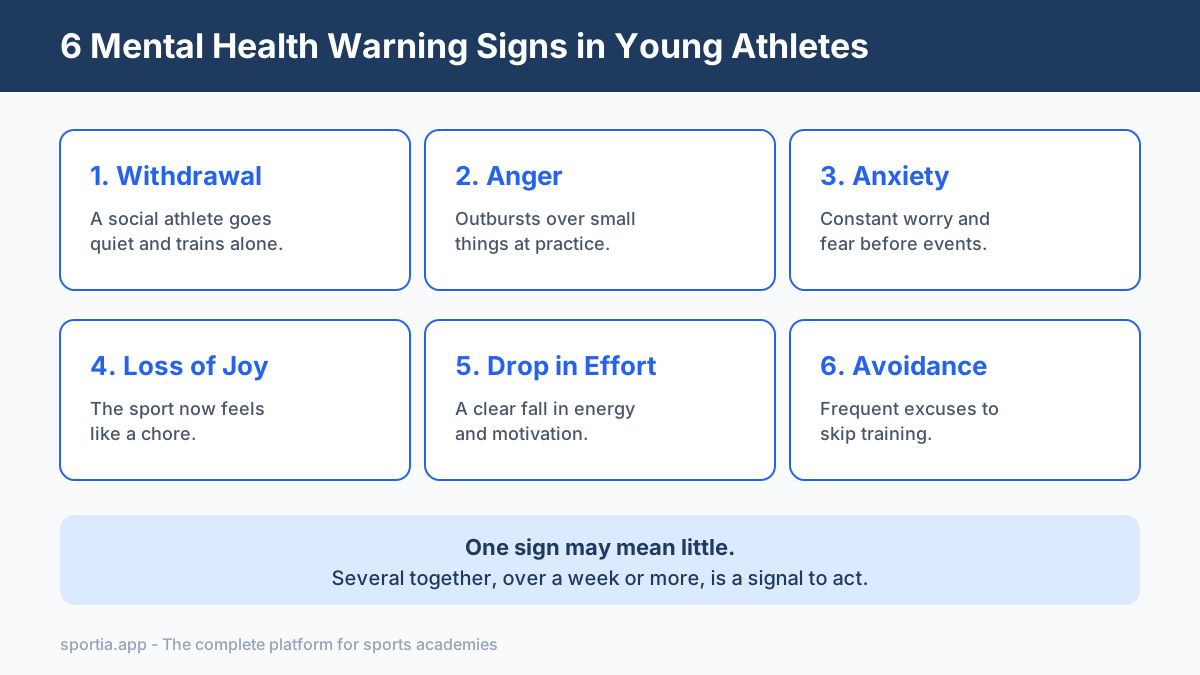
You do not need a psychology degree to spot trouble. You just need to pay attention to change. Watch for these six signs, especially when they last more than a week or two.
- Withdrawal: a social athlete goes quiet and trains alone.
- Anger: sudden outbursts or frustration over small things.
- Anxiety: constant worry, restlessness, or fear before events.
- Loss of joy: the sport that once excited them now feels like a chore.
- Drop in effort: a clear fall in energy and motivation at practice.
- Avoidance: frequent excuses to skip training or competition.
One sign alone may mean little. A bad week happens to everyone. But several signs together, over time, are a clear signal to act. Note that these overlap with physical burnout, so also review the signs of overtraining in young athletes.
Creating a psychologically safe training environment
The culture you build decides whether athletes open up or hide. A safe space does not mean a soft one. You can still demand effort and discipline. The goal is to remove fear of judgement and shame.
Start with these habits:
- Praise effort and improvement, not just wins and medals.
- Never mock a mistake in front of the group.
- Let athletes ask questions without fear of looking weak.
- Treat rest and recovery as part of training, not laziness.
How you react to errors sets the tone for everyone. Harsh public criticism teaches athletes to fear mistakes. That fear blocks learning and growth. Many coaching mistakes that drive athletes away begin with a culture of fear rather than support.
The coach's role versus a counselor's role
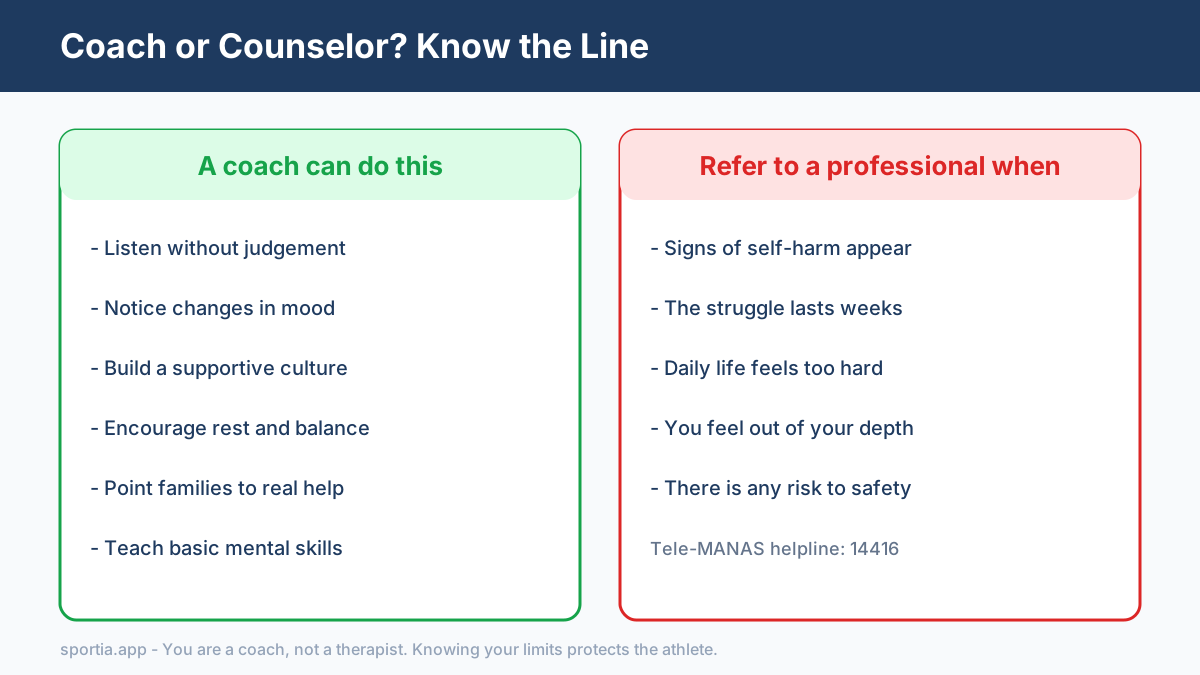
This is the most important part of the guide. You are a coach, not a therapist. Knowing your limits protects both you and the athlete.
Your job is to notice, support, and connect. A trained professional handles diagnosis and treatment. Crossing that line can cause real harm, even with good intentions.
| A coach can do this | Refer to a professional when |
|---|---|
| Listen without judgement | You see signs of self-harm or hopelessness |
| Notice changes in mood and effort | The struggle lasts for several weeks |
| Build a supportive team culture | The athlete cannot cope with daily life |
| Encourage rest and balance | You feel out of your depth |
| Point families to real help | There is any risk to the child's safety |
Building mental skills with your athletes
Mental skills can be trained, just like a cover drive or a serve. You do not need to be an expert to teach the basics. Spend a few minutes each week on these tools.
- Goal setting: set small, clear targets the athlete controls.
- Visualization: have them picture a good performance before it happens.
- Self-talk: replace "I will fail" with "I am ready for this".
- Focus routines: a fixed pre-action habit that steadies the mind.
These skills build confidence over time. They also give an anxious athlete something to do with nervous energy. A child who can calm their own mind performs better under pressure.
Managing pre-competition anxiety
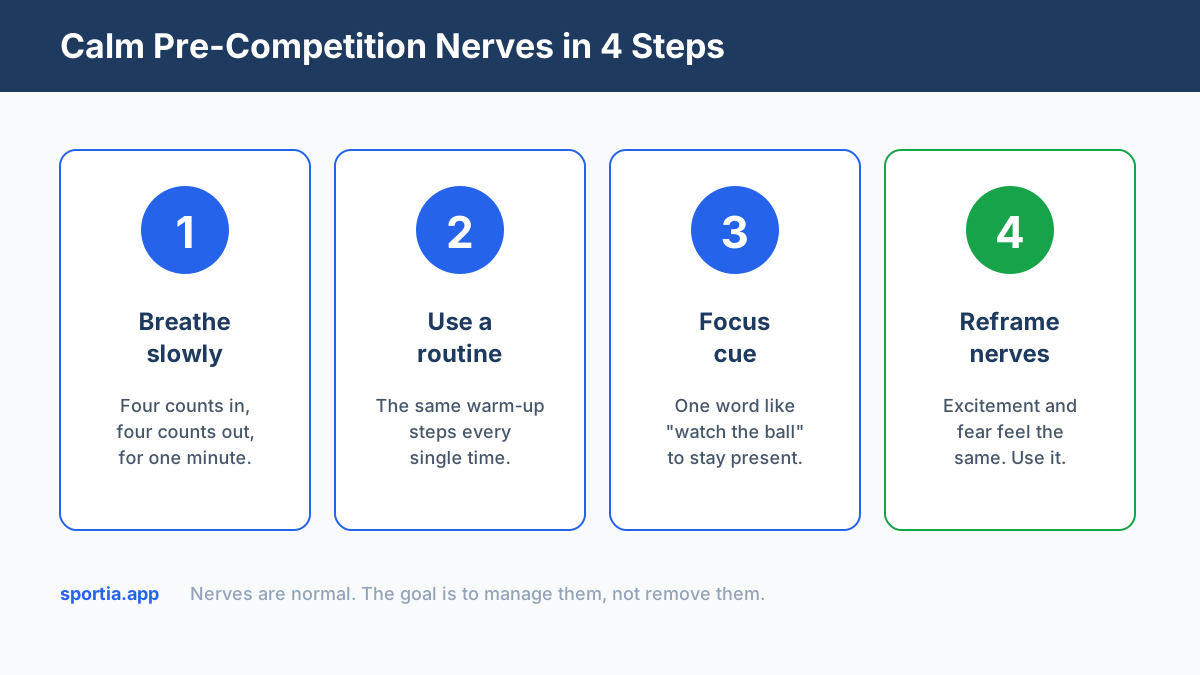
Nerves before a big match are normal. Even top athletes feel them. The goal is not to remove nerves but to manage them. Teach your athletes a simple calming routine they can use anywhere.
- Breathe slowly: four counts in, four counts out, for one minute.
- Use a routine: the same warm-up steps every single time.
- Pick a focus cue: one word like "watch the ball" to stay present.
- Reframe the nerves: tell them excitement and fear feel the same.
How to talk to parents about their child's mental state
This conversation needs care. Many Indian parents still see mental health as a taboo subject. Approach it gently and without blame.
Use these guidelines:
- Speak in private, never in front of other parents or athletes.
- Describe what you see, not what you assume. Share specific changes.
- Frame it around the child's well-being and joy, not just results.
- Suggest support as a strength, the same as physiotherapy for an injury.
Many parents simply do not notice the signs. They may be relieved that someone cares. Your calm, kind words can open the door to real help.
Why this matters for your academy
Caring for mental health is not just the right thing to do. It also keeps your academy strong. Children who lose joy in a sport quit it. When they quit, your enrollment drops and your income falls.
Most young athletes do not leave because of skill. They leave because the sport stopped feeling good. A supportive academy keeps athletes longer and earns parent trust. That trust brings referrals, which is the cheapest growth a small academy can get. Mental health support is both kind and smart business.
Mental health resources in India
You should always have professional resources ready to share. Keep these handy for families who need them.
- Tele-MANAS: the government's free mental health helpline. Dial 14416 or 1800-89-14416. It is available in 20 languages and covers exam anxiety.
- Manas Foundation: works on mental health in sport. Reach them at 8802023901.
- Sports psychologists: many cities now have qualified sports psychologists for one-on-one sessions.
- School counselors: a child's school may already offer free counseling support.
Tracking mood and energy over time also helps you spot trends early. Sportia's training log lets athletes record wellness and mood alongside their training. This gives you a simple, private record to notice change before it grows.
Frequently Asked Questions
How can a coach support the mental health of young athletes?
A coach can listen without judgement, watch for changes in mood and effort, and build a supportive team culture. The key is to notice early signs and connect the athlete with a professional when needed, rather than trying to treat the problem yourself.
What are the signs of poor mental health in young athletes?
Watch for withdrawal, sudden anger, constant anxiety, loss of joy in the sport, a drop in effort, and avoiding training. One sign may mean little, but several together over a week or more is a clear signal to act.
When should a coach refer an athlete to a professional?
Refer when you see signs of self-harm or hopelessness, when the struggle lasts several weeks, when the athlete cannot cope with daily life, or any time you feel out of your depth. A coach supports, but a professional diagnoses and treats.
How do you help an athlete with pre-competition anxiety?
Teach a simple routine. Use slow breathing, a fixed warm-up, and one focus cue like "watch the ball". Reframe nerves as excitement. These tools give the athlete control over nervous energy and steady the mind.
What free mental health support is available in India?
Tele-MANAS is the government's free helpline at 14416, available in 20 languages and covering exam anxiety. Manas Foundation also supports mental health in sport. Many schools offer free counseling too.
Coach the whole athlete, not just the body
Great coaching cares for the mind as much as the muscles. Notice the signs, build a safe space, and know when to get help. Small, steady support changes lives well beyond the field. Track athlete wellness, mood, and energy with Sportia's training log to spot change early. Start your free 14-day trial of Sportia and coach the whole athlete.