

Monsoon-Proofing Your Sports Academy: A Complete Preparation Guide
Monsoon-proofing your sports academy starts in May, not in July. The IMD expects the 2026 southwest monsoon to hit Kerala by May 27, Mumbai by June 11, and Delhi by the last week of June. Academies that publish a written rain policy, line up indoor backup venues, and restructure batches before the first rain keep 80 to 90 percent of their athletes through September.
Why Monsoon Is the Single Biggest Retention Risk for Outdoor Academies
Most academies treat monsoon as a three-month nuisance. The data tells a different story. Academies that wing it lose 20 to 30 percent of their athletes before September. The parents who leave do not come back, and they tell other parents why.
The 2026 monsoon will be unusual. The IMD has tipped 92 percent of normal rainfall. That is below average overall but uneven. Some regions will see heavy short bursts. That means more last-minute cancellations and more upset parents than in past years.
Three things split the academies that grow through monsoon from the ones that bleed athletes:
- They publish their rain policy in writing, before the first rain hits.
- They run a real indoor backup, not a vague "we will see".
- They send cancellation updates the same way every time, and parents come to trust it.
Step 1: Know Your City's Monsoon Calendar
The first rule of monsoon prep for a sports academy in India is simple. "Monsoon" is not one event. The southwest monsoon and the northeast monsoon hit different regions at different times. Plan for your city, not the national average.
| City | Typical monsoon onset | Wettest months |
|---|---|---|
| Thiruvananthapuram | Late May / early June | June to August |
| Mumbai | Mid June | June to September |
| Pune | Mid June | June to September |
| Bengaluru | Early June | June to September |
| Hyderabad | Mid June | July and August |
| Delhi NCR | Last week of June | July and August |
| Kolkata | Mid June | June to August |
| Chennai | October to December (NE monsoon) | October and November |
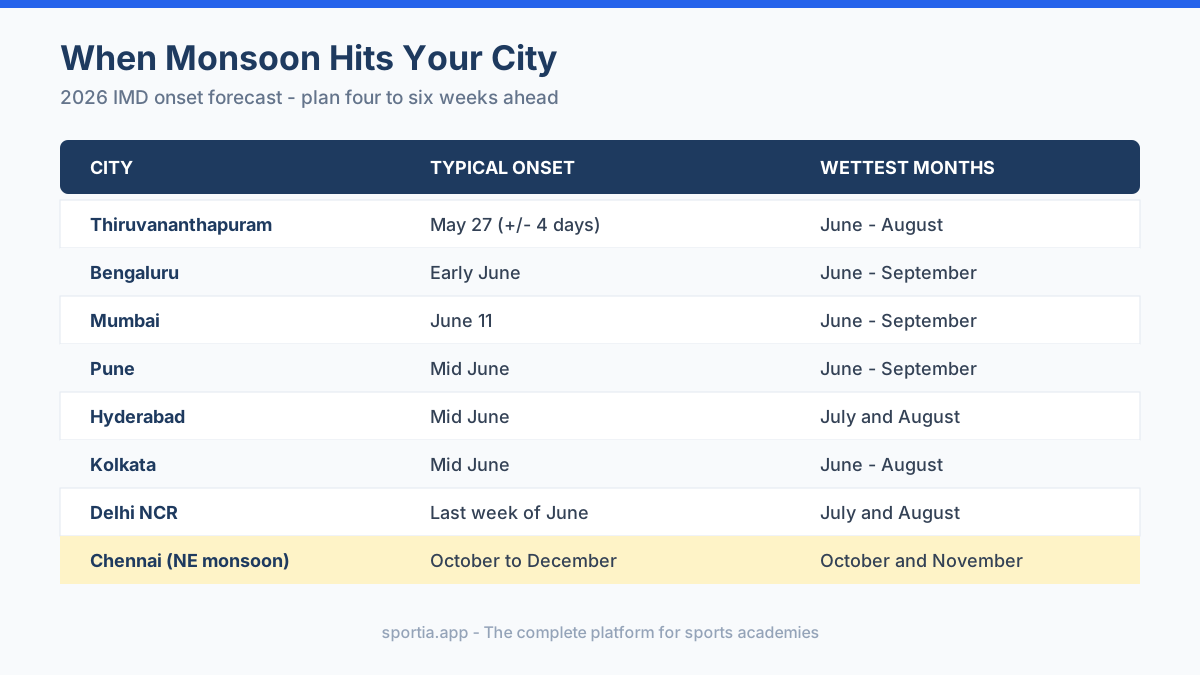
If you run an academy in Chennai or coastal Tamil Nadu, your real monsoon plan should be ready for October, not June. If you run one in Mumbai or Pune, June 1 is your hard deadline. Match your prep to where you are.
Step 2: Line Up Indoor Backup Venues Before June
Your single biggest monsoon call is your backup venue. Without one, every cancelled session is a hit to parent trust. Lock in indoor space before the first rain, while landlords still have free slots.
Real indoor options for Indian sports academies include:
- School halls. Common for evenings and weekends, often free for partner academies.
- Community centres and clubhouses. Great for tier-2 cities and large apartment complexes.
- Indoor badminton and turf courts. Rent by the hour, ideal for ball-sport academies.
- Gyms and fitness studios. Perfect for strength and fitness sessions.
- Apartment complex indoor rooms. Useful if most of your athletes live in a few towers.
Rates vary widely. Indoor turf in Mumbai or Bengaluru runs Rs 1,500 to Rs 3,500 per hour. School halls are often Rs 500 to Rs 1,500 per hour. Book a three-month block deal in May, when the venues are still mostly empty.
Step 3: Publish a Written Rain Cancellation Policy
A clear, written rain policy is the single best thing you can do this month. Send it to every parent before the first rain. Attach it to the May fee receipt if you can.
A good rain policy answers five questions in writing:
- What triggers a cancellation? Heavy rain, wet ground, an IMD red alert, or schools closing nearby.
- Who decides, and by what time? The head coach decides. The call goes out at least two hours before each session.
- How are parents told? One named channel, used the same way every time. Usually a WhatsApp broadcast list.
- What is the backup? An indoor session at venue X, or a set home drill plan shared on the app.
- How are missed sessions handled? Credit days, a paid makeup, or a pro-rata cut in next month's fee.
Print it as a one-page PDF. Share it on your website and pin it in your WhatsApp groups. Parents calm down the moment they have it.
Step 4: Restructure Your Batch Schedule for the Wet Months
Your normal evening schedule will break down two or three times a week at peak monsoon. Move ahead of it now, not later.
Three shifts work in most Indian cities:
- Move more sessions to mornings. In many cities, the heaviest rain falls in late afternoon and evening. A 6 to 8 am slot is far safer.
- Make Saturday and Sunday work harder. Weekends often have lighter rain. Run double batches and build a buffer against midweek losses.
- Move skill and tactics sessions indoors. Save field-only sessions, like full match practice, for clear days.
Most cities only need this shift for 8 to 10 weeks. After September, you return to your normal schedule. Parents accept short-term changes easily when they see the reason in writing.
Step 5: Build a Library of Indoor Drills That Replace Outdoor Sessions
Every outdoor sport has indoor matches that build real fitness and skill. The key is to have them ready, not invent them on a rainy morning. Build a 12-session indoor library you can rotate through monsoon.
| Outdoor session | Indoor replacement (45 to 60 minutes) |
|---|---|
| Cricket batting / bowling | Throwdown drills against a wall, fielding reaction drills, video analysis |
| Football match play | Footwork ladder, small-sided 4 vs 4 in a hall, tactical board sessions |
| Athletics sprints | Bodyweight strength circuit, stair sprints, plyometric set |
| Tennis groundstrokes | Shadow swings, ball-toss drills, footwork patterns |
| Swimming (pool closed) | Dryland strength and flexibility, video analysis of strokes |
| All sports | Sports nutrition workshop, mental skills session, video review |
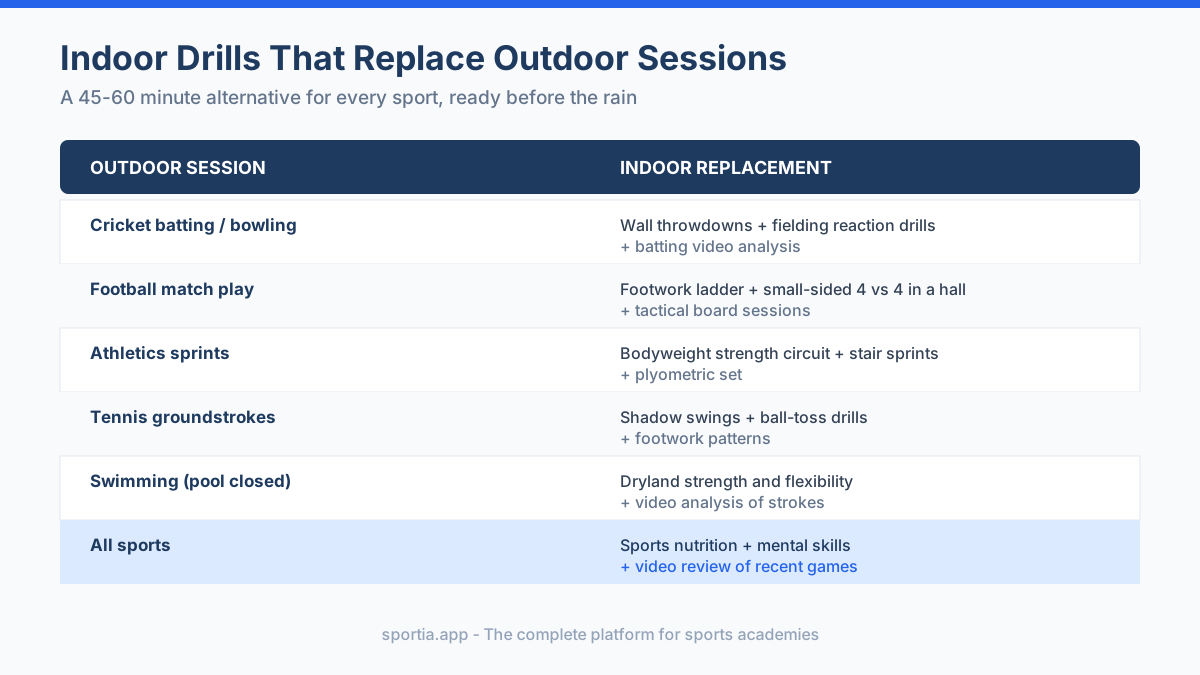
Treat these as proper sessions, not filler. Use them to teach what you never have time for in normal weeks: video analysis, sports nutrition, mental skills, and game tactics. Parents value a smart indoor session far more than a cancelled outdoor one.
Step 6: Communicate Cancellations Without WhatsApp Chaos
The biggest parent gripe during monsoon is not the cancellation itself. It is finding out at the last minute, buried in a 47-message WhatsApp group thread. Fix updates first.
Three simple rules turn the chaos around:
- One channel, every time. Pick WhatsApp broadcast, app push, or SMS. Use the same channel for every update.
- Set a fixed deadline. Cancellation calls go out at the same time each day in heavy rain weeks. For example, by 2 pm for evening batches.
- Same template, every time. "Tonight's batch at [venue] is cancelled due to heavy rain. Makeup: [date and venue]." Boring beats clever.
Read our guide to parent communication beyond WhatsApp groups for the broader playbook.
Step 7: Handle Fees Fairly During Rain-Affected Months
This is where most academies lose parent goodwill. Money feels touchy in monsoon, when sessions feel patchy. Have a clear, written fee policy and stick to it.
Three fair options exist. Pick one and write it down.
- Credit days. Each cancelled session adds a credit day. Use them in a makeup week, often late September.
- Pro-rata refund. If more than 20 percent of monthly sessions are cancelled, refund or carry forward the gap.
- Full cover. Sessions never cancel. They only move indoors. Fees stay the same. Works best when your indoor venue is strong.
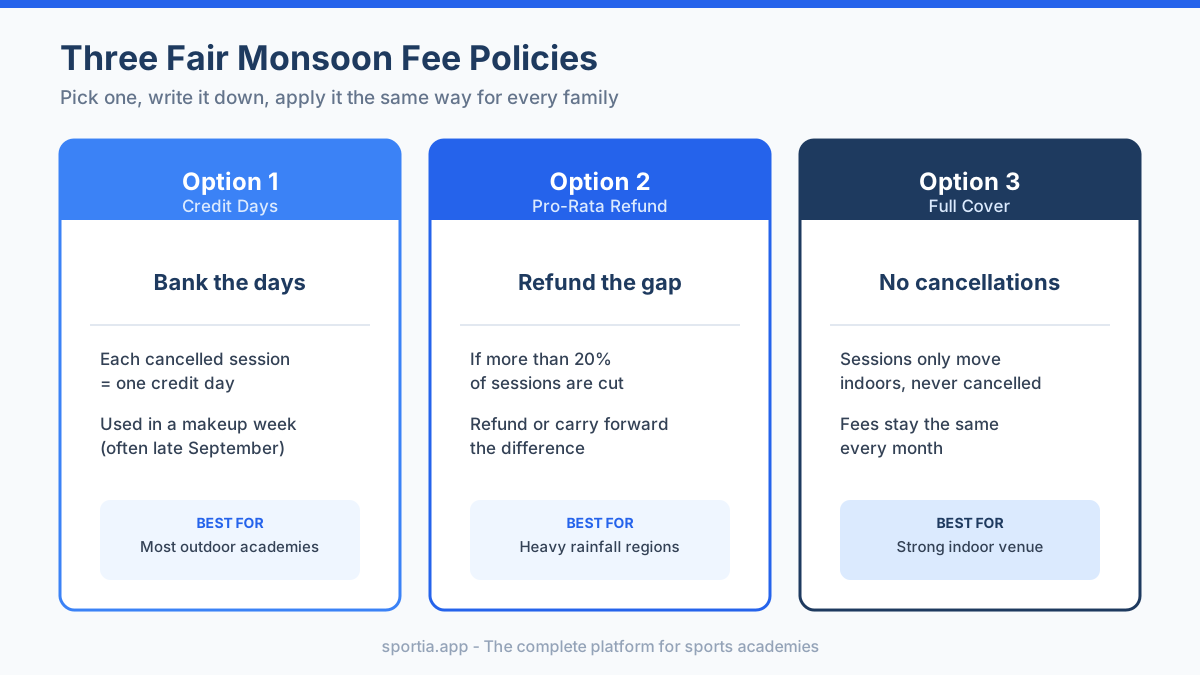
The worst option is no policy at all. Parents accept any of the three above. They will not accept mixed rules from one family to the next, and word spreads fast in school WhatsApp groups.
Step 8: Protect Your Equipment and Facility
Monsoon damage to gear and grounds is a slow cost most academies miss. Spend half a day in May on protection. It saves thousands in repairs.
- Move cricket nets, cones, hurdles, bibs, and rackets into dry, airy storage.
- Treat leather (cricket balls, gloves) with the right oil. Wrap in cloth, not plastic, so it can breathe.
- Check your ground drainage. A cheap waterway along the boundary can save the playing surface all season.
- Service balls, bowling machines, and any wired gear in May. Repairs are slower and costlier once the rain starts.
Common Mistakes Sports Academies Make During Monsoon
- Sharing the rain policy after the first heavy rain, not before.
- Cancelling sessions on the morning of, not the afternoon before.
- Different fee rules for different parents, based on who shouts loudest.
- No indoor sessions at all, only cancellations.
- Posting updates only in one WhatsApp group, while half the parents are in another.
- Treating every city as if the monsoon arrives on the same date.
For multi-location academies, the monsoon plan has to be location-specific. Our guide to managing multiple sports academy locations covers this in detail. For the opposite end of the year, see our summer heat safety guide for India.
Frequently Asked Questions
How early should a sports academy prepare for the monsoon?
Start your monsoon preparation in early May, four to six weeks before the rains arrive. By May 30, your rain policy, indoor backup venues, batch schedule, and parent communication channel should all be set. The IMD's annual onset forecast helps fine-tune your timeline by city.
What is a fair rain cancellation policy for a sports academy?
A fair policy clearly states what triggers a cancellation, who decides and by what time, how parents are informed, what the indoor backup is, and how missed sessions are handled. Pick one fee approach (credits, pro-rata refund, or full continuity) and apply it the same way to every family.
Should academies refund fees for cancelled monsoon sessions?
Refunds are not the only fair option. Credit days or makeup sessions in late September often work better for both the academy and the parent. The key is to commit to one approach in writing and apply it consistently across all athletes.
What indoor activities work for cricket academies during monsoon?
Throwdown drills against a wall, fielding reaction drills, video analysis of batting technique, and tactical board sessions all work well indoors. A 45 to 60 minute indoor session focused on a single skill often produces more learning than a rushed outdoor session in patchy rain.
How do I find an indoor venue for my sports academy during monsoon?
Approach school halls, community centres, indoor badminton or turf facilities, and gymnasiums in your area. Start in early May, when most venues still have free slots. Negotiate a three-month block booking rather than hour-by-hour rentals to lock in better rates.
Will the 2026 monsoon be heavier than usual in India?
The IMD has predicted 92 percent of the long-period average rainfall for the 2026 southwest monsoon, which is slightly below normal overall. However, the rain will be spread unevenly across regions and weeks, with some areas seeing heavier short bursts than usual.
Turn Monsoon Into a Trust-Building Season
Monsoon is not a problem to survive. It is a test of how your academy runs. The ones that pass keep most of their athletes, build deeper trust with parents, and reach September with a stronger book than they had in May. The work that makes that possible starts now, in May, not after the first downpour.
Use Sportia to send schedule changes, cancellation notices, and fee credits to all parents from one place. Batch reschedules, attendance, and fee tweaks stay in sync, so your monsoon never becomes a paperwork mess. Start a 14-day free trial and build a calmer rainy season into your academy.