

10 Table Tennis Drills Every Beginner Should Master
Most beginner table tennis players in India learn the game by rallying for fun, which feels productive but rarely develops proper technique. They hit the ball back and forth, miss frequently, and seldom improve in any planned way. The solution is straightforward. You need a focused collection of table tennis drills for beginners, repeated in the same sequence every session, so that each skill builds directly on the previous one.
This guide provides 10 table tennis practice drills you can run in any school hall, local club, or small academy court. Each drill describes the setup, the number of repetitions to target, what correct form looks like, and the common mistakes worth correcting early. The drills progress deliberately from basic control toward match-like situations. Run them in order and your beginners will develop genuine strokes rather than occasional lucky shots.
These TT coaching drills suit players aged 8 and above, including teenagers who have played casually for a year. You only need a table, a handful of balls, and a coach or partner to feed. A bucket of 30 to 40 balls helps considerably for the feeding drills, although you can begin with as few as six if equipment is limited.
Why Drills Beat Free Rallying
Free rallying feels productive, but it conceals weak technique behind enthusiasm. A player can win points using poor form against another beginner who is equally untrained. Drills isolate one specific skill at a time and force focused repetition. The player practises that movement until the stroke becomes automatic and reliable. That deliberate process is how skill genuinely sticks.
Experienced coaches across India keep the success rate deliberately high during practice. Aim for the player to land 7 or 8 out of every 10 balls in a drill. If they miss more frequently than that, the drill is simply too difficult for their current level. Slow the feed, shorten the distance, or simplify the pattern accordingly. Confidence develops from clean repetitions, not from constant struggle and frustration.
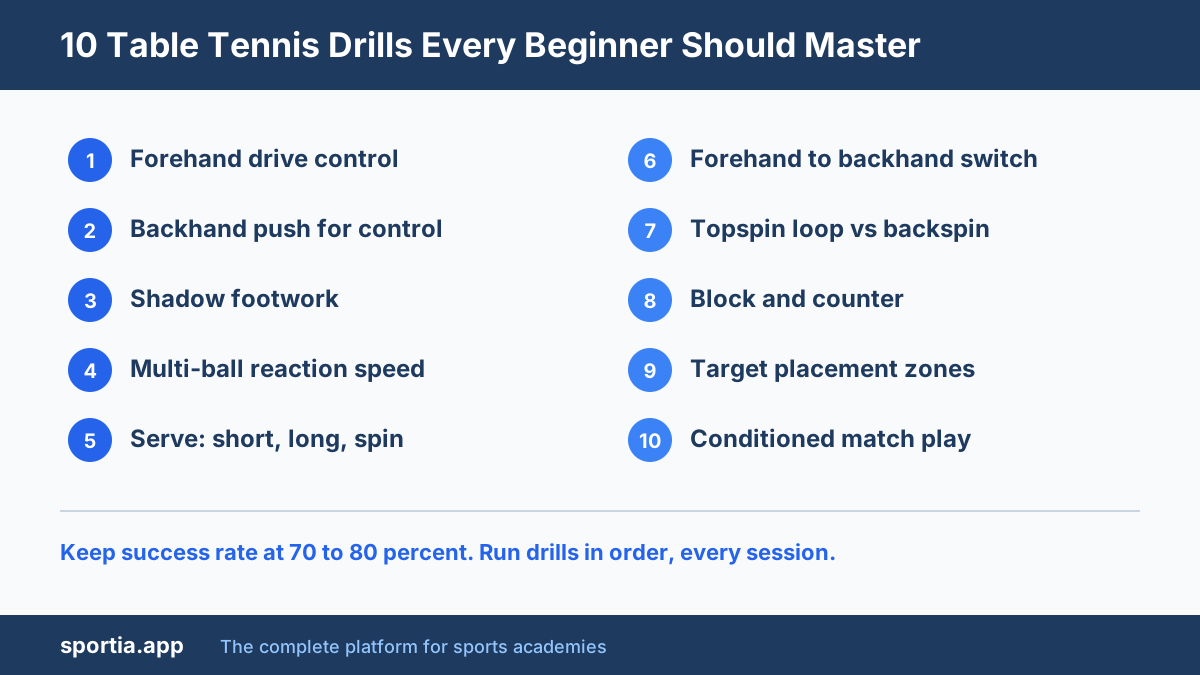
The 10 Beginner Drills
1. Forehand Drive Against the Table
Setup: Both players stand at the forehand corner. One feeds a slow ball to the other's forehand. The hitter drives it back to the same spot. Keep the ball low and on the table.
Reps: Aim for 30 to 50 balls in a row without a miss. Build up to 80 over a few weeks.
What good looks like: The bat travels smoothly from low to high while the elbow stays slightly bent throughout the stroke. The body rotates naturally at the waist rather than relying on the arm alone. The ball then lands deep on the table and bounces low across the net.
Common mistakes: Hitting the ball flat with a stiff, locked arm produces inconsistent returns that float long. Standing square to the table instead of turning the hips reduces both power and control. Players also tend to lift the head early to watch the ball land. Correct these errors by slowing the feed and encouraging the player to brush gently up the back of the ball.
2. Backhand Push for Control
Setup: Feeder gives a slow backspin ball to the backhand. The player pushes it back with a short, controlled stroke. The bat angle stays open, like the face of a clock at 11.
Reps: 20 to 30 controlled pushes in a row.
What good looks like: The stroke remains small and directed forward, with the ball staying low over the net. A clean push carries light backspin on the return, which makes it harder for the opponent to attack.
Common mistakes: A large, exaggerated swing tends to send the ball long beyond the end line. A closed bat angle pushes the ball straight into the net instead. Encourage the player to think "guide, not hit," because the push is fundamentally about touch and accurate placement rather than power.
3. Shadow Footwork (Side to Side)
Setup: No ball needed. The player stands in the ready position behind the table. On your call, they shuffle to the forehand corner, shadow a forehand drive, then shuffle back to the backhand side and shadow a backhand. Feet move first, then the bat.
Reps: 3 sets of 10 movements each side. Rest 30 seconds between sets.
What good looks like: The player takes small, quick steps while staying low with the knees comfortably bent. They consistently return to the central ready position after completing every shadowed shot.
Common mistakes: Crossing the feet destroys balance and slows the recovery between shots. Standing tall between movements wastes precious reaction time. Players also frequently forget to return to the ready spot. This remains the most commonly skipped drill among beginner table tennis footwork drills, yet it is precisely the one that separates genuinely good players from average ones.
4. Multi-Ball Feeding for Reaction Speed
Setup: The coach holds a bucket of balls and feeds one ball every two seconds to the same spot. The player drives each one back. As they improve, the coach feeds faster or to two spots.
Reps: Sets of 20 to 30 balls. 3 to 4 sets per player.
What good looks like: The player recovers quickly between shots and maintains the same stroke shape even as the feeding speed increases. Consistency under pressure matters more than power here.
Common mistakes: Rushing the stroke and losing proper form is the typical breakdown at higher speeds. Reaching with the arm instead of moving the feet leaves players stretched and unbalanced. Multi-ball remains the most efficient drill for a coach with limited court time, because a single feeder can deliver many balls per minute without the natural gaps that rallying creates.
5. Serve Practice: Short, Long, and Spin
Setup: The player serves alone to an empty table. First, 10 short serves that bounce twice on the far side. Then 10 long serves that land deep near the end line. Then 10 backspin serves, brushing under the ball.
Reps: 30 serves total per session, split across the three types.
What good looks like: The short serve stays low and bounces twice on the opponent's side, while the long serve travels fast and lands deep near the end line. A well-executed spin serve makes the ball slow down noticeably or even stop on contact.
Common mistakes: Tossing the ball too low counts as a fault under the official rules and should be corrected immediately. Hitting every serve at exactly the same speed makes the serve predictable and easy to attack. Remind players that the serve is the only shot they fully control, which is exactly why it deserves dedicated daily practice.
6. Forehand to Backhand Switching
Setup: The feeder plays one ball to the forehand, then one to the backhand, in a steady pattern. The player drives each one back. The pattern is fixed, so the player knows where the ball goes next.
Reps: 15 to 20 full switches (one forehand plus one backhand counts as one).
What good looks like: The player steps across to cover the forehand and then resets smoothly for the backhand. The bat transitions cleanly between the two strokes without any hesitation.
Common mistakes: Reaching across the body instead of moving the feet leaves players cramped and off balance. Getting stuck on one wing also breaks the rhythm of the pattern. Because this drill combines strokes and footwork together, do not introduce it until drills 1, 2, and 3 are genuinely solid.
7. Topspin Loop Against Backspin
Setup: The feeder pushes a backspin ball. The player loops it back with topspin, brushing up the back of the ball. Start at slow speed and focus on spin, not power.
Reps: 15 to 20 loops in a row. Quality over quantity here.
What good looks like: The legs bend and the whole body lifts smoothly into the shot as the weight transfers from the back foot to the front foot. The bat brushes up the back of the ball, and the resulting loop arcs over the net carrying heavy topspin.
Common mistakes: Hitting the ball flat usually puts it straight into the net, because backspin drags it downward. Using only the arm without any leg drive produces a weak, spinless loop. Looping against backspin is easier to learn first, since you are adding to the existing spin rather than fighting against it. For that reason, always teach this loop before introducing the loop against topspin.
8. Block and Counter Drill
Setup: The feeder loops or drives a topspin ball. The player blocks it back with a short, firm stroke and a slightly closed bat. Once the block is steady, the player counters with a small drive instead.
Reps: 20 to 30 blocks, then 15 counters.
What good looks like: The bat meets the ball early, just after the bounce, while the wrist stays firm and stable. The resulting block stays low and lands consistently on the table.
Common mistakes: A large swing tends to lose control against an incoming topspin ball. An open bat angle sends the block long over the end line. The block drill develops timing and quick hands, both of which are absolutely vital for competitive match play.
9. Target Practice With Placement Zones
Setup: Place a sheet of paper or a small towel on each corner of the far side. The feeder plays to the player's forehand, and the player aims to land the ball on a target. Switch targets every 10 balls.
Reps: 40 to 50 balls, tracking hits on target.
What good looks like: The player adjusts both the bat angle and the body position to direct the ball toward each target. Accuracy steadily improves across the set as awareness grows.
Common mistakes: Aiming only for power while ignoring placement is the most frequent error at this stage. Always hitting to the same comfortable spot defeats the purpose of the drill entirely. Placement wins more points than raw speed at the beginner level, so consistently reward accuracy over hard hitting.
10. Match Play With Scoring Conditions
Setup: Play a short game to 11 points, but add a rule that forces a skill. For example, every serve must be short, or every point must start with a backhand push. The condition pushes players to use what they drilled.
Reps: 2 to 3 short games per session.
What good looks like: Players use their newly learned strokes under genuine pressure, not just in isolated drills. They maintain their footwork even when chasing difficult points across the table.
Common mistakes: Reverting to safe, weak shots whenever the score becomes close is the natural instinct to resist. Forgetting the imposed condition also undermines the purpose of the game. Conditioned games bridge the gap between repetitive drilling and real competitive matches, which is exactly where most beginners tend to stall.
How to Structure a 45-Minute Beginner TT Session
A clear session plan keeps every minute useful. Here is a simple 45-minute structure you can run with a small batch of 4 to 6 players, rotating in pairs on each table.
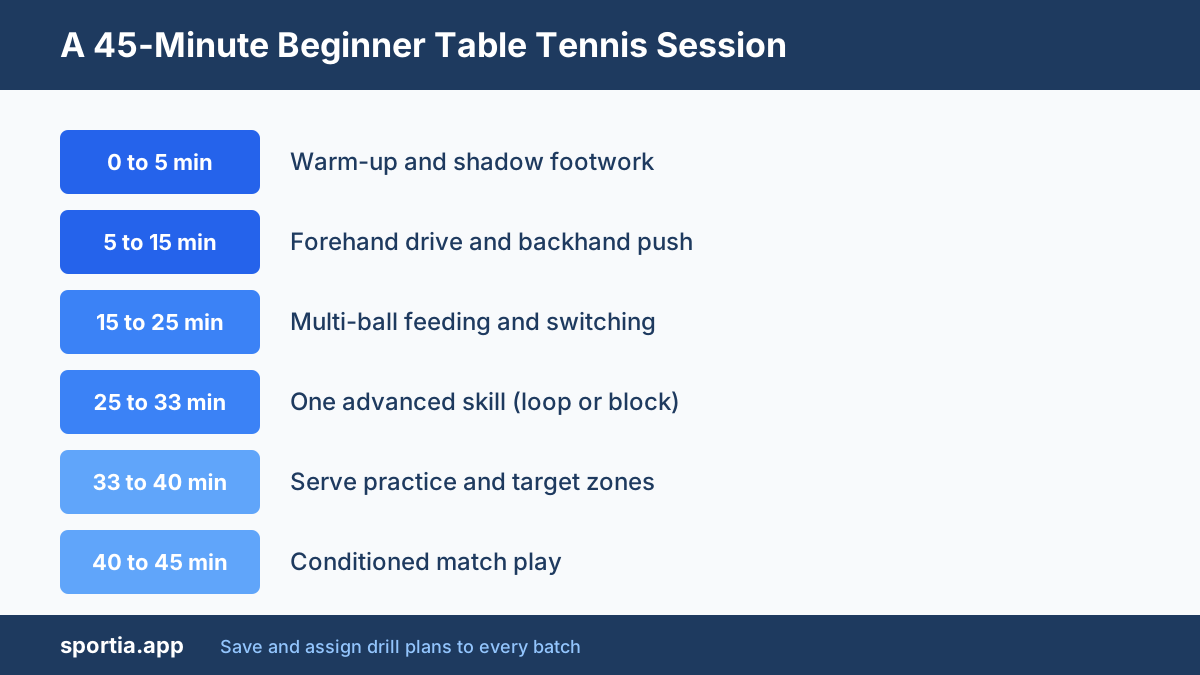
- 0 to 5 minutes: Warm-up. Light jog, arm circles, and shadow footwork (drill 3).
- 5 to 15 minutes: Stroke control. Forehand drive (drill 1) and backhand push (drill 2).
- 15 to 25 minutes: Multi-ball. Reaction feeding (drill 4) and switching (drill 6).
- 25 to 33 minutes: One advanced skill. Rotate the loop (drill 7) or block (drill 8) across sessions.
- 33 to 40 minutes: Serves and targets. Serve practice (drill 5) and target zones (drill 9).
- 40 to 45 minutes: Conditioned match play (drill 10) to end on a fun, competitive note.
Repeat this plan two or three times a week. Keep notes on what each player can do, so you raise the difficulty at the right time. A player who lands 80 forehand drives in a row is ready for faster multi-ball, while one still missing at 20 needs more reps on the basics.
For an Indian academy running several batches, the hard part is not the drills. It is remembering which drill each batch did, who attended, and what to assign next. You can save your full drill plans in Sportia 's coaching library and assign them to specific batches, so every coach runs the same structure even when you are not on court. The training log also lets you record how each athlete progressed through these drills over a term.
Adapting Drills for Different Levels
Not every beginner is the same. A 7-year-old in their first month needs simpler patterns than a 13-year-old who has played for a year. Use these adjustments to keep every player at a 70 to 80 percent success rate.
- To make a drill easier: slow the feed, hit to one fixed spot, shorten the rally target, or stand closer to the table.
- To make a drill harder: speed up the feed, add a second placement, increase the rep target, or add a footwork step.
This same approach works across sports. If you also coach other games, our guides on badminton drills for junior players and football drills for young players follow the same build-up logic. And if you want to avoid the habits that push kids out of sport, read about the coaching mistakes that drive athletes away .
Frequently Asked Questions
What are the most important table tennis drills for beginners?
The forehand drive, backhand push, and side-to-side footwork are the three core drills. Master these first, since every advanced stroke builds on them. Add multi-ball and serve practice once the basics are steady.
How long should a beginner table tennis practice session be?
A focused 45-minute session works best for most beginners, especially children. It is long enough to cover warm-up, stroke drills, and match play, but short enough to keep concentration high. Two or three sessions a week build skill faster than one long weekend session.
How many forehand drives should a beginner be able to do in a row?
A solid beginner target is 30 to 50 forehand drives in a row without a miss, building toward 80 over time. Counting consecutive shots gives a clear, motivating measure of control. Once a player hits 80 cleanly, they are ready for faster, more varied drills.
Do I need a coach to practice table tennis drills?
A coach or feeding partner helps a lot, especially for multi-ball and loop drills. But you can practice serves, shadow footwork, and target hitting alone. A robot feeder is a useful option for academies that want consistent feeding without a second person.
What equipment do I need to start table tennis drills in India?
You need a standard table, a net, a few bats, and a bucket of 30 to 40 training balls for multi-ball drills. Three-star balls are best for matches, but cheaper one-star balls are fine for drilling. A bat with a basic inverted rubber suits beginners better than a fancy attacking blade.
How do I track my players' progress through these drills?
Keep a simple record of each player's rep counts, like consecutive drives or serves on target, and update it every few weeks. This shows clear improvement to both the athlete and their parents. A coaching tool like Sportia lets you log drill results, set goals, and assign drill plans to each batch in one place.
Build Better Players, One Drill at a Time
Beginners do not need fancy strokes or expensive gear. They need a clear set of table tennis drills for beginners, run often, with high success rates and steady progress. Start with control, add reaction and footwork, then bridge to match play. Keep the success rate high and the sessions consistent.
When you are ready to run multiple batches without losing track of who did what, save these drills in Sportia 's coaching library and assign them to your batches. Your coaches stay aligned, your players progress in order, and you can prove that progress to parents. Start your free 14-day trial and bring structure to every session on your court.