
Return to Play: Safely Bringing a Young Athlete Back After Injury
A young athlete can return to play after injury only when three things are true. They must move without pain, have full strength and range of motion, and feel confident again. Rushing this is the single biggest cause of re-injury. The safest path is a graded return, where the athlete climbs one step at a time and earns each stage.
Every coach knows the pressure. A talented child gets hurt, sits out for a few weeks, and then begs to play. The parent wants them back too, and the child hates missing sessions with friends. So the athlete returns early, and within days the same injury flares up again. This guide shows you how to avoid that trap and bring a young athlete back safely.
Why rushing back is the biggest re-injury risk
Young bodies are still growing, so their bones, joints, and growth plates need extra care. An injury that looks small can still be healing deep inside, and when an athlete returns before that healing is done, the weak tissue gives way easily. This is why the same ankle or knee often gets hurt again and again in the same season.
The numbers here are striking. Research shows that following simple, criteria-based return rules can cut re-injury risk after an ACL reconstruction by up to 84 percent. In plain words, waiting for clear signs of recovery, instead of guessing by feel, protects the child, while a rushed return does the exact opposite.
There is also a hidden trap that catches many good coaches. A child often feels ready long before their body truly is, because the pain fades and they assume they are fine. But strength, balance, and control take much longer to come back than simple comfort does. Your job as a coach is to look past "it does not hurt" and check the deeper signs of real recovery.
Pain-free is not the same as fully recovered
This is the most important idea in the whole guide, so it is worth repeating often. Pain going away is only the first step, not the finish line. A knee can feel perfectly fine while walking and still buckle during a hard sprint or a sudden jump.
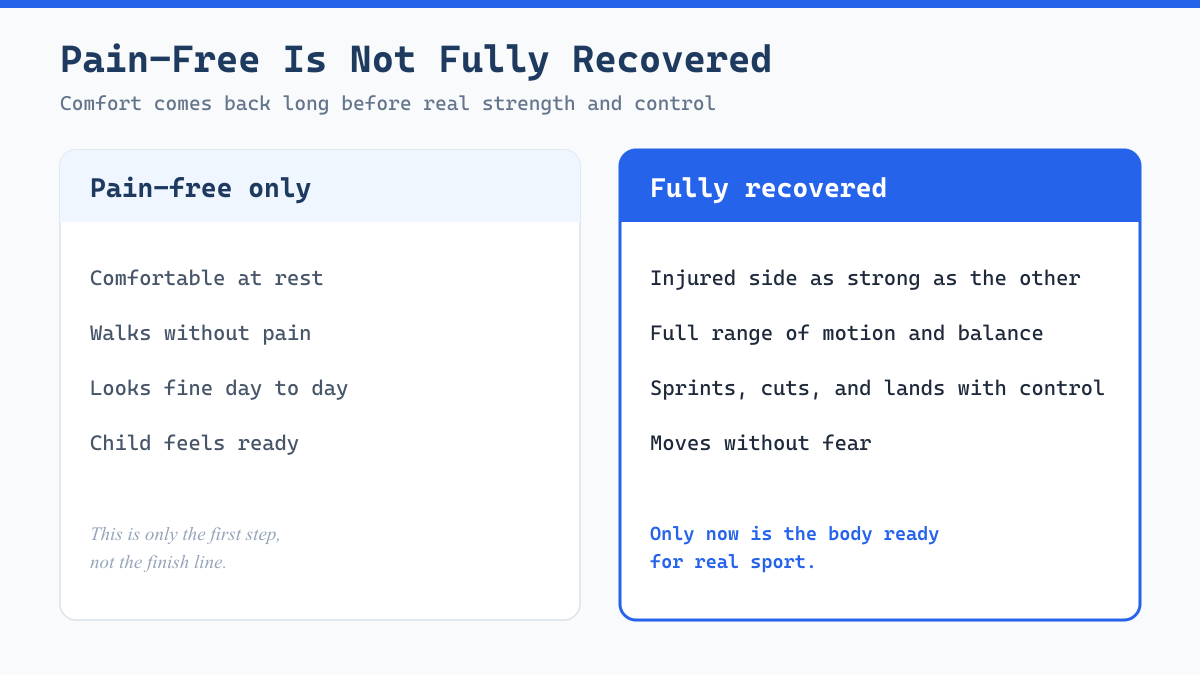
Full recovery means much more than the absence of pain. It means the injured side is as strong as the other side. It means full range of motion, good balance, and steady control under load. It also means the athlete can change direction and land without fear. Only then is the body ready for real sport.
Many overuse injuries start this way, with a child pushing through early warning signs. If you want to spot those signs sooner, read our guide on the signs of overtraining in young athletes. Catching problems early makes every recovery shorter and safer.
The graded return-to-play ladder
A graded return is a step-by-step ladder that runs from full rest all the way to full competition. The athlete must complete each step without pain or swelling before they are allowed to move up. If symptoms come back, they simply drop back one step and try again a few days later. This one simple rule keeps the whole return process honest and safe.
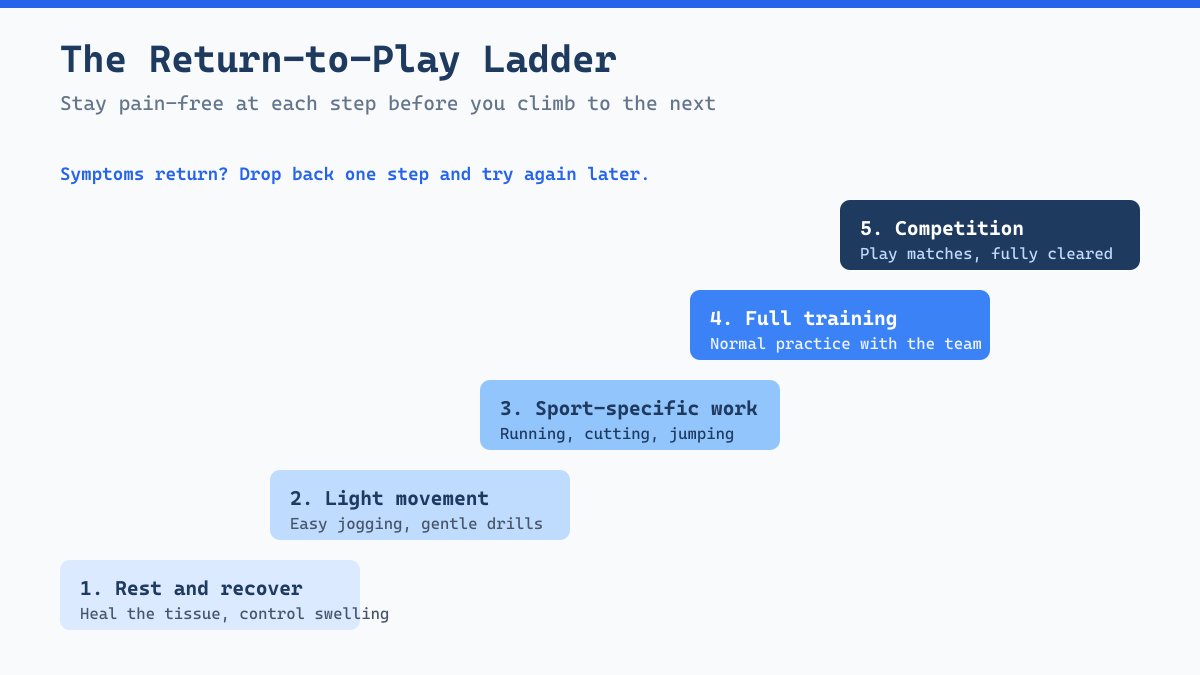
Here is a simple five-step ladder you can use as a starting point:
- Rest and recover: follow medical advice, control swelling, and let the tissue heal.
- Light movement: gentle jogging, easy drills, and range-of-motion work with no pain.
- Sport-specific training: add running, cutting, jumping, and skill drills at higher effort.
- Full training: join normal practice with the team, including contact where the sport needs it.
- Return to competition: play matches only after full training feels easy and safe.
Never skip a step just to save time, because each stage quietly checks that the body can handle the next one. A child who breezes through light movement has earned the right to try harder drills. A child who limps through it clearly has not, no matter how much they want to play.
Sport-specific return markers
Different sports stress the body in different ways, so the final tests should match the sport. A footballer and a swimmer do not need the same checks. Before you clear an athlete, make sure they can do the movements their sport demands, at full speed and without fear.
- Running sports: the athlete should sprint, stop, and change direction with no limp or hesitation.
- Jumping sports: they should jump and, more importantly, land softly on both legs and one leg.
- Contact sports: they must take and give safe contact without guarding the injured part.
- Throwing sports: they should throw at full power with no pain and no drop in accuracy.
Test these markers in training first, never in a match. A controlled session lets you watch closely and stop the moment something looks wrong. A match does not give you that control.
Red flags that mean stop and see a doctor
Some signs are not part of normal recovery. They mean you should stop the return and get medical help. As a coach, you are not there to diagnose, but you are there to notice and act.
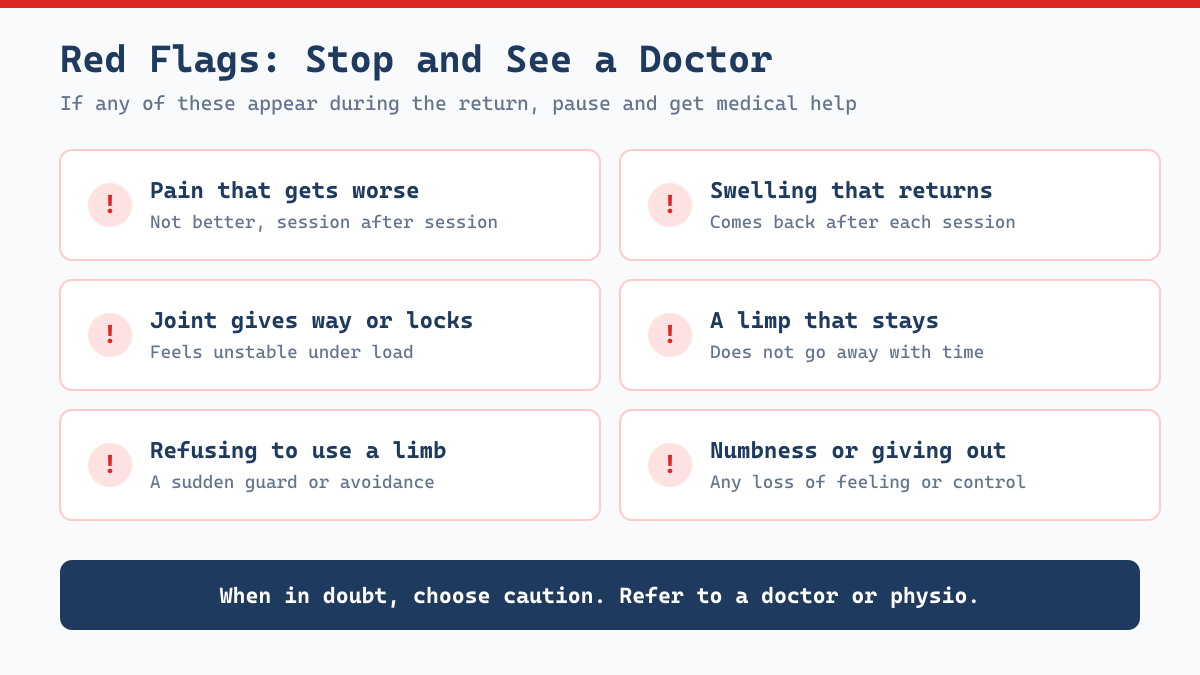
Watch for pain that gets worse instead of better, or for swelling that keeps coming back after every session. A joint that gives way, locks, or feels unstable is another clear warning sign. So is a limp that will not go away, or a child who suddenly refuses to use a limb at all. If you see any of these signs, stop the return at once and refer the athlete to a doctor or physio.
When you are in doubt, always choose the cautious path. One missed match is a very small price to pay. A serious injury that is made worse can cost a child many months of play, or even their whole love for the sport.
The coach, parent, and physio each have a role
A safe return works best when three people share the load. Each one sees a different part of the picture, and none should work alone.
The physio or doctor leads on the medical side. They diagnose the injury, guide the rehab, and give the final medical clearance. The coach manages the training load and watches how the athlete moves in each session. The parent supports recovery at home, keeps appointments, and reports how the child feels day to day.
Good communication ties it all together. When these three talk to each other, nothing gets missed. When they do not, a child can get cleared by one and pushed too hard by another. Injuries and their first aid are a shared topic too, and our guide on common sports injuries in children helps every adult speak the same language.
Rebuild confidence, not just fitness
Physical healing is only half the job. Many young athletes carry fear long after the body has healed. They hold back, avoid the movement that hurt them, and play at half speed. That fear itself raises the risk of another injury.
Rebuild that trust slowly and with real patience. Start with drills the athlete already knows they can do well, and then build up from there. Praise good, brave movement whenever you see it, and never mock a child for being cautious, because that only deepens the fear. Confidence comes back when small successes stack up, one steady win at a time.
Talk openly about the fear too. A child who can say "I am scared to land on that foot" is easier to help than one who hides it. Make it normal to feel nervous, and show them a clear plan to get past it.
Document recovery so nothing is rushed or forgotten
A recovery can stretch over many weeks, and memory is not reliable across that time. Writing things down keeps everyone honest and on the same page. It also protects you if a parent asks why a decision was made.
Keep a simple record for each injured athlete. Note the injury, the date, the current ladder step, and how each session went. Track pain levels, swelling, and any red flags. Log the physio's advice and the date of medical clearance. When it is written down, no one skips a step by accident.
This is where good tools help a busy coach. With Sportia, you can log wellness and training notes for each athlete in one place, so recovery is tracked alongside attendance and training load. If your academy uses wearables, you can also watch readiness and load data to guide a careful return. A clear record turns a risky guess into a safe, planned decision. The same care applies to seasonal health risks, like those in our guide on monsoon health for young athletes.
Frequently Asked Questions
When can a child return to sport after an injury?
A child can return only when they move without pain, have full strength and range of motion, and feel confident again. They should also pass sport-specific tests, like sprinting or landing, in training first. Always get medical clearance before returning to competition.
What is a return-to-play protocol?
A return-to-play protocol is a graded, step-by-step plan that moves an athlete from rest to full competition. The athlete must complete each step without pain or swelling before moving up. If symptoms return, they drop back a step and try again later.
Why is pain-free not enough to return to play?
Pain fades long before strength, balance, and control fully return. A joint can feel fine at rest but still give way during a sprint or jump. True recovery means the injured side is as strong and stable as the other side.
How can I lower the risk of re-injury in young athletes?
Use a graded return and clear criteria instead of guessing by feel. Research shows criteria-based rules can cut re-injury risk after an ACL reconstruction by up to 84 percent. Never let a child skip a step just to play sooner.
What warning signs mean a young athlete should stop and see a doctor?
Watch for pain that worsens, swelling that keeps returning, or a joint that gives way or locks. A limp that will not go away is another red flag. If you see any of these, stop the return and refer the athlete to a doctor.
How do I help a young athlete regain confidence after injury?
Rebuild trust slowly with drills the athlete knows they can do well. Praise brave, controlled movement, and never mock caution. Talk openly about fear, and give the child a clear, steady plan to move past it.