
Winter Nutrition for Young Athletes in India: Foods for Energy, Immunity and Bones
Winter looks like the easy season for young athletes in India. The heat is gone, sessions feel lighter and nobody faints on the ground in December, yet coaches see the same pattern every year. Players catch more colds, miss more sessions, complain of tired legs and pick up niggles that refuse to heal.
Most of this comes down to three hidden gaps that winter opens up: less useful sunlight, less thirst and fewer fresh foods on the plate. The good news is that a winter diet for young athletes in India does not need imported superfoods. Ragi, til, bajra, groundnuts, jaggery, seasonal greens, eggs and fish already cover most of what a growing athlete needs. This guide explains what changes in winter, what Indian data shows, and what a training teenager should eat on a normal winter day.
After Diwali Sweets: Getting Young Athletes Back on Track
Diwali falls in early November, so most homes still have boxes of mithai and namkeen in the cupboard. A few sweets are fine, but the real problem is the slow drift over two or three weeks: sweets after school, namkeen before practice and fewer proper meals.
A simple reset works better than a strict ban. Ask parents to try these three rules for the rest of November:
- One sweet a day, after a meal. Avoid them on an empty stomach right before training.
- Real food before practice. A banana, a chikki or a roti roll beats a packet of chips.
- Back to three full meals. Festival weeks often replace dinner with snacking.
Coaches can help by sharing these rules in the parents' group in the week after Diwali, because parents tend to listen more when the advice comes from the coach rather than from home.
Why Winter Is Different for Young Athletes
Winter changes three things that matter for performance and health.
1. Less useful sun
The body makes vitamin D when sunlight with enough UVB reaches the skin. In winter, the sun is lower, smog is worse in north Indian cities and children wear full sleeves. A multi-city Indian study found that UVB peaks between about 11 AM and 1 PM, so early morning batches at 6 AM, which many academies shift to in winter, give almost none of it.
2. Less thirst
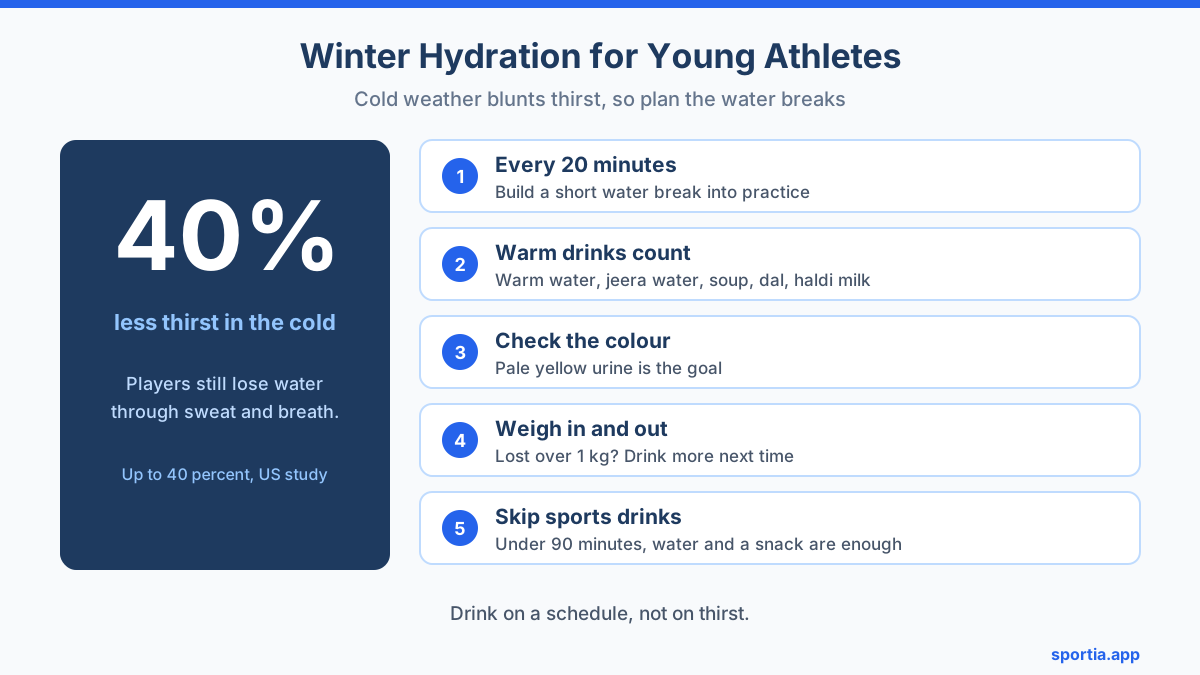
Players simply feel less thirsty when it is cold, and a US study found that cold weather can reduce the thirst response by up to 40 percent, even though players still lose water through sweat and breathing. Many teenagers finish a two-hour winter session without finishing a single bottle.
3. More colds and coughs
Crowded classrooms, closed windows and late-night study before exams all raise the risk of infections. A player who trains hard while sleeping five hours and eating poorly is usually the first to fall sick. Food alone cannot prevent every cold, but a good diet shortens recovery and reduces missed sessions.
Vitamin D and Calcium: What Indian Data Shows
Vitamin D and calcium work together to build strong bones, and the teenage years are when most adult bone mass is laid down, so a gap now can show up later as stress fractures.
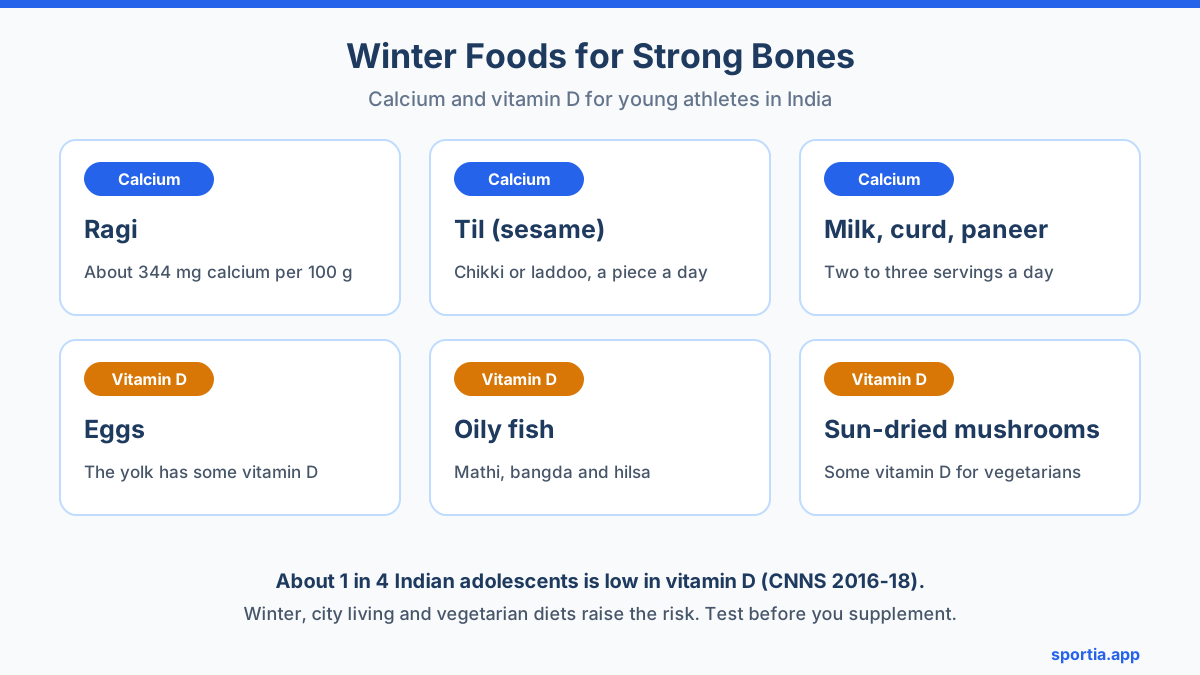
The Comprehensive National Nutrition Survey (CNNS 2016-18), analysed in Indian Pediatrics in 2023, found that about 24 percent of Indian adolescents aged 10 to 19 were deficient in vitamin D. The odds were higher for:
- Children tested in winter
- Children living in cities
- Girls, and teenagers with less than three hours of physical activity a week
- Children on a vegetarian diet
One more finding should make coaches pause: in a winter study of Delhi schoolchildren, 30 minutes of sun around noon with face and arms exposed did not raise vitamin D levels. In other words, during a north Indian winter, "just get some sun" is not a complete answer for growing athletes.
Foods that help with vitamin D and calcium
- Ragi (finger millet). One of the richest grain sources of calcium, at roughly 344 mg per 100 g, and you can use it in rotis, dosa, porridge or laddoos.
- Til (sesame seeds). Til chikki and til laddoo are winter classics in many states for good reason, and a small daily piece adds useful calcium.
- Milk, curd and paneer. Two to three servings a day cover a large share of a teenager's calcium needs.
- Eggs. The yolk contains some vitamin D, so players should eat the whole egg, not just the white.
- Fish. Oily fish such as sardines (mathi), mackerel (bangda) and hilsa are among the few natural food sources of vitamin D.
- Sun-dried mushrooms. Mushrooms exposed to sunlight contain some vitamin D, which helps vegetarian families.
Food sources of vitamin D are limited, especially for vegetarians, which is why the testing advice later in this guide matters.
Seasonal Indian Winter Foods for Energy
Winter training burns a lot of energy, and teenagers are still growing. Indian winter food traditions already lean towards warm, energy-dense foods, so use them deliberately.
- Bajra and makki rotis. Rich in energy and iron, they keep players full through long sessions, especially when paired with saag or dal.
- Groundnuts and chikki. Protein, healthy fats and energy in a pocket-sized snack. A groundnut chikki 60 to 90 minutes before training works well.
- Jaggery (gur). Quick energy with a little iron, but treat it as a sweetener rather than a health food, and keep portions small.
- Sweet potato (shakarkandi). Roasted or boiled, it is an easy pre-training carbohydrate and costs very little in winter.
- Seasonal greens. Sarson, methi, palak and bathua are at their best now and add iron, folate and fibre.
- Amla, oranges and guava. Cheap winter sources of vitamin C, which helps the body absorb iron from greens and millets.
For more ideas on getting enough protein from Indian foods, see our guide to protein-rich Indian foods for young athletes .
Hydration in Cold Weather: Why Players Drink Less
Dehydration in winter is easy to miss because nobody is dripping with sweat, yet a player who is only 2 percent short on fluids can feel heavier, slower and less sharp.
Simple fixes that work at most academies:
- Drink on a schedule, not on thirst. Build a short water break into every 20 minutes of practice.
- Warm drinks count. Warm water, jeera water, soups, dal and haldi milk all add to the day's fluids.
- Check urine colour. Pale yellow is the goal, while dark yellow means the player needs to drink more.
- Weigh before and after. For older players, a weight drop of more than 1 kg after a session means they need more fluids next time.
- Do not rely on sports drinks. For most sessions under 90 minutes, water and a snack are enough.
A Sample Winter Day of Meals for a Training Teenager
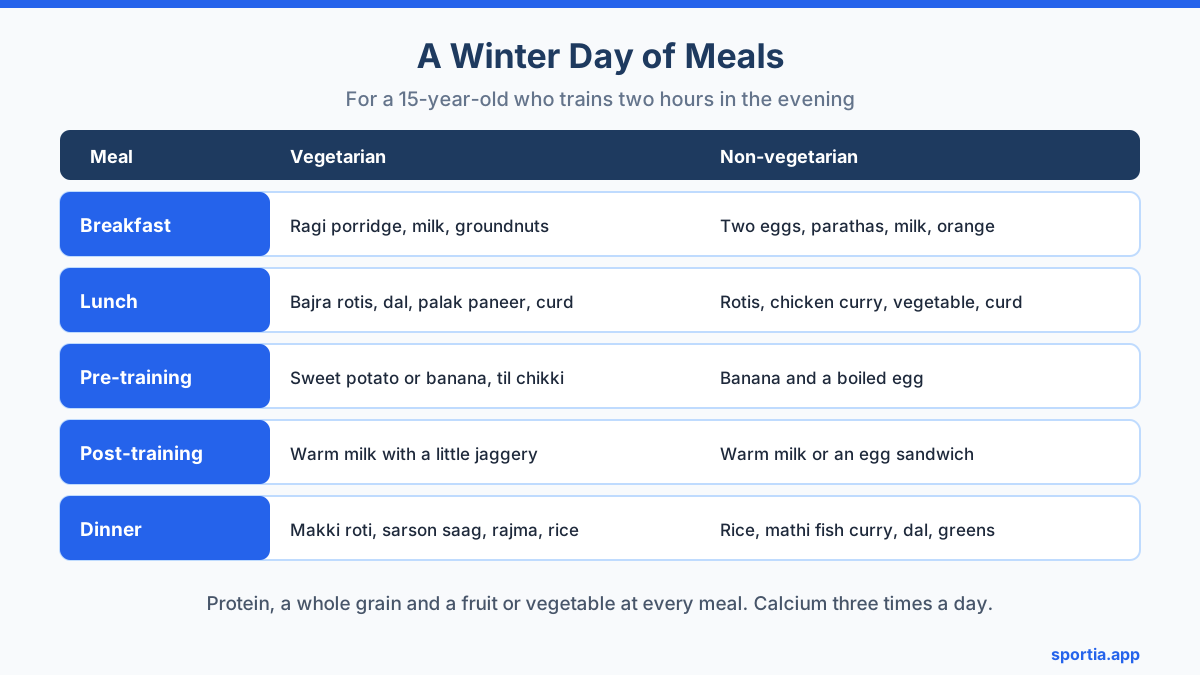
Here is a sample day for a 15-year-old who trains for about two hours in the evening. Adjust portions for age, size and sport, since a swimmer or a footballer will need more than a table tennis player.
| Time | Vegetarian | Non-vegetarian |
|---|---|---|
| Breakfast | Ragi dosa or ragi porridge with milk, a handful of groundnuts, an orange | Two eggs with two parathas, a glass of milk, an orange |
| School lunch | Two bajra or wheat rotis, dal, palak paneer, curd | Two rotis, chicken curry, a vegetable, curd |
| Before training | Roasted sweet potato or a banana, and a small til chikki | A banana and a boiled egg |
| After training | Warm milk with a little jaggery, or a curd and fruit bowl | Warm milk, or an egg sandwich |
| Dinner | Makki roti with sarson saag, rajma or chole, rice, salad with amla or guava | Rice, fish curry (mathi or bangda), dal, a green vegetable |
The pattern matters more than the exact dishes: every meal has a source of protein, a whole grain or millet, and a vegetable or fruit. Calcium comes from dairy, ragi or til at least three times a day.
Families on a fully vegetarian diet can find more options in our vegetarian diet plan for Indian athletes .
When to See a Doctor, and Why Not to Self-Prescribe
Diet can fix a lot, but not everything, so ask parents to see a doctor if a player shows any of these signs for more than two or three weeks:
- Tiredness that does not improve with rest
- Bone or shin pain, or a stress fracture
- Frequent muscle cramps or weakness
- Colds or coughs that keep coming back
- For girls, missed or irregular periods during heavy training
A simple blood test for vitamin D, haemoglobin and iron can show what is really going on, and then the doctor can decide the right dose.
The most common mistake is self-prescription. Weekly 60,000 IU vitamin D sachets are easy to buy over the counter, and some parents give them for months without a test. Too much vitamin D can raise calcium levels in the blood and cause real harm, including kidney problems. The same caution applies to iron tablets and protein powders. Supplements should follow a test and a doctor's advice, not a WhatsApp forward. Our guide to supplements for young athletes explains what is worth taking and what is not.
How Coaches Can Spot Problems Early
Coaches see players every day, so they often notice changes before parents do. Watch carefully for players who are slower than usual, more often sick, or sore for longer. Keep a simple note of who missed sessions due to illness each week, and if the same names keep appearing, speak to the parents.
Academies that run a High Performance programme can go a step further. With Sportia's High Performance add-on, athletes fill in a one-minute Daily Wellness Check covering sleep quality, sleep hours, fatigue, soreness, stress and mood. Coaches can see these scores next to training load, so a run of poor sleep or high soreness stands out before it turns into an injury or illness.
Frequently Asked Questions
What should young athletes eat in winter in India?
Focus on warm, energy-dense Indian foods such as bajra and makki rotis, ragi, groundnuts, til, sweet potato and seasonal greens. Add protein at every meal from dal, paneer, curd, eggs, chicken or fish, and fruit such as oranges, amla or guava for vitamin C.
Do young athletes need vitamin D supplements in winter?
Some do, but only after a blood test shows a deficiency. Vitamin D deficiency is common in Indian teenagers, especially in winter and in cities. A doctor should decide the dose, because too much vitamin D can cause harm.
Which Indian foods are rich in calcium for athletes?
Ragi, til (sesame), milk, curd and paneer are among the best everyday sources. Leafy greens such as methi and amaranth also add some calcium. Aim for a calcium-rich food at least three times a day.
How much water should athletes drink in winter?
Players should drink on a schedule, with short water breaks every 20 minutes of practice, rather than waiting until they feel thirsty. Warm water, soups and milk all count. Pale yellow urine is a good sign of enough fluids.
Is morning sunlight enough for vitamin D?
Early morning sunlight before about 9 AM has very little of the UVB needed to make vitamin D. In north Indian winters, even midday sun may not be enough to raise levels, so food and testing matter.
Can young athletes eat sweets after Diwali?
Yes, in moderation, and one sweet a day after a meal is fine. Avoid sweets and fried snacks on an empty stomach right before training, and return to three full meals a day.
Make This Winter a Strong Season
Winter can be the best training season of the year if players stay healthy. Share the sample day of meals with parents, build water breaks into every session and watch for players who keep falling sick. If you want an easier way to track attendance, wellness and training load through the winter, try Sportia free for 14 days .